Creative Biolabs specializes in the development and optimization of robust differentiation protocols to guide induced pluripotent stem cells (iPSCs) toward specific germ layers. This protocol outlines a streamlined and reproducible method for generating mesoderm lineage cells from iPSCs, enabling downstream applications in basic research, regenerative medicine, and drug discovery.
As one of the three primary germ layers formed during gastrulation, the mesoderm is responsible for generating a wide range of tissues and organ systems, including the cardiovascular system (heart, blood vessels), musculoskeletal structures (bone, cartilage, muscle), kidneys, and the hematopoietic system (blood and immune cells). Therefore, robust and reproducible generation of mesodermal cells is a critical step for modeling developmental processes, studying congenital disorders, and developing novel cellular therapies.
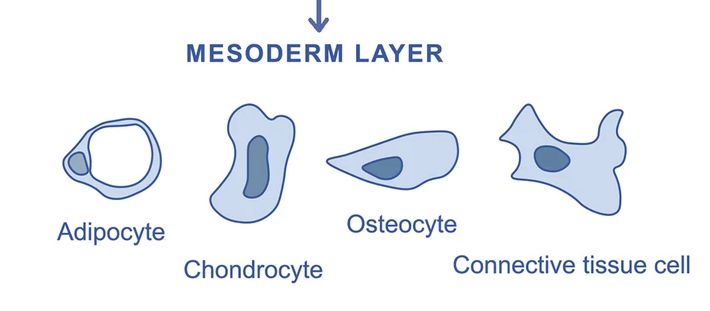 Fig.1 The mesoderm is responsible for generating a wide range of tissues and organ systems.1,2
In recent years, protocols for mesoderm induction from iPSCs have evolved from complex, serum-based systems to chemically defined, xeno-free, and GMP-compliant formats suitable for translational research. The process is largely governed by temporal modulation of key signaling pathways such as Wnt/β-catenin, TGF-β/Activin, and BMP. Early activation of the Wnt pathway, typically via small molecules like CHIR99021, initiates mesoderm commitment, while precise dosing of BMP4 and Activin A directs the specification toward primitive streak-like cells and further mesodermal subtypes.
At Creative Biolabs, we integrate the latest findings in stem cell biology with extensive hands-on expertise to design a scalable, feeder-free protocol that ensures high differentiation efficiency and cell viability. Our protocol not only supports the generation of early mesoderm progenitors but also provides a foundation for downstream lineage-specific differentiation into cardiovascular, hematopoietic, or renal lineages.
| Item | Specification |
|---|---|
| iPSC culture | Feeder-free, pluripotent, Mycoplasma-negative |
| Culture matrix | Basal medium |
| Cytokines & small molecules | CHIR99021 (GSK3β inhibitor), Activin A, BMP4 |
| Enzymes | For gentle dissociation |
| Cell culture plates | Tissue culture-treated 6-well plates |
| Sterile PBS | Calcium and magnesium-free |
Coat 6-well plates with an alternative ECM at the recommended concentration. Culture iPSCs to 70–90% confluency in medium. Passage the cells and re-plate as single cells before induction.

Replace iPSC medium with RPMI + B27 minus insulin. Add CHIR99021 and incubate cells. CHIR99021 activates canonical Wnt signaling, initiating mesoderm commitment.
Remove CHIR-containing medium. Replace with fresh RPMI + B27 minus insulin supplemented with BMP4, Activin A. Incubate for 48 hours. BMP4 and Activin A synergistically promote primitive streak and mesodermal lineage formation.
Replace medium with RPMI + B27 complete (with insulin). Continue incubation for 2–3 more days to promote early mesoderm lineage maturation.
After 5 days of differentiation:
| Marker | Lineage | Expected Expression |
|---|---|---|
| Brachyury (T) | Early mesoderm | +++ |
| KDR/Flk-1 | Cardiovascular mesoderm | ++ |
| PDGFR-α | Paraxial mesoderm | ++ |
| MIXL1 | Primitive streak | + |
Flow cytometry or immunofluorescence can confirm the expression of these markers. Successful induction yields ≥80% mesoderm-positive cells under optimal conditions.
| Problem | Possible Cause | Solution |
|---|---|---|
| Low Brachyury expression | Suboptimal CHIR99021 concentration or timing |
|
| High cell death | Harsh dissociation |
|
| Mixed germ layer differentiation | Imprecise cytokine dosing or prolonged culture |
|
| Heterogeneous morphology | Inconsistent cell seeding density or uneven coating |
|
| Reduced attachment or detachment during induction | Inadequate matrix coating or degraded ECM |
|
| Unexpected lineage markers | Non-specific differentiation due to medium contamination or overgrowth |
|
| Batch-to-batch variation in results | New lot of cytokines or medium used without validation |
|
Ensuring consistent and efficient mesoderm differentiation requires careful attention to both pre-differentiation cell conditions and induction parameters. Below are key tips for optimizing outcomes and maintaining quality control throughout the protocol.
We provide a comprehensive suite of stem cell research services tailored to support your entire iPSC-to-lineage workflow. Our mesoderm differentiation protocol can be further customized or integrated with downstream services to meet your specific research or development needs.
We offer feeder-free, xeno-free iPSC culture services, ensuring high pluripotency, genomic stability, and scalability. Ideal for clients seeking consistent starting material for differentiation protocols.
Harness mesoderm progenitors to generate highly pure, contractile cardiomyocytes. Our service includes functional testing such as calcium flux assays and electrophysiology.
For clients exploring ectodermal fates, we offer robust protocols for neural progenitor cells, cortical neurons, dopaminergic neurons, and glial populations.
References
For Research Use Only. Not For Clinical Use.