
Precision Hybridoma Discovery for Companion-Animal Antibody Programs
Hybridoma technology remains a dependable route for generating monoclonal antibodies with strong binding performance, stable clone continuity, and practical downstream handling. Creative Biolabs configures each pet antibody discovery project around the target species, antigen format, mechanism of action, screening readout, and later engineering needs.
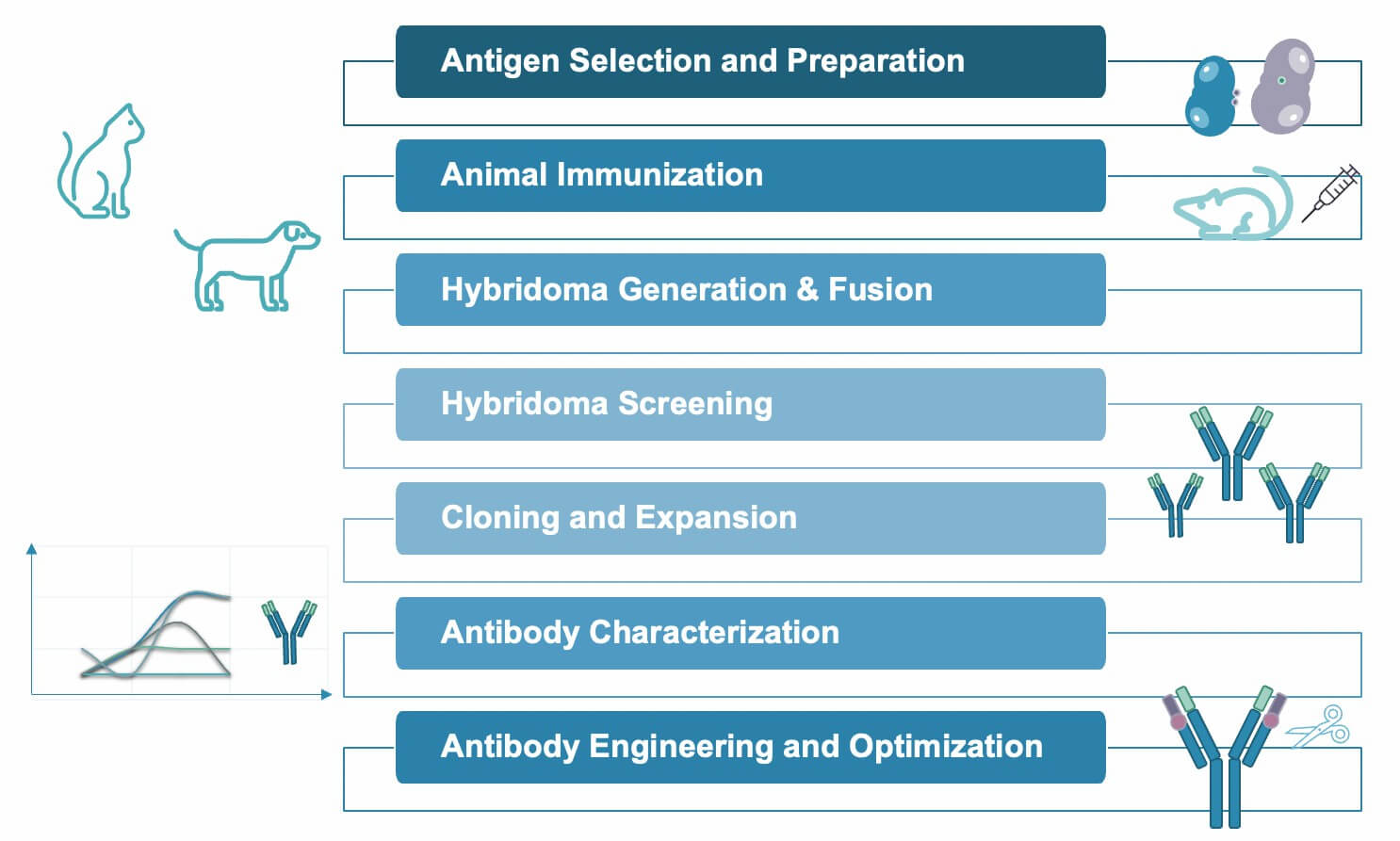
Our hybridoma based pet antibody discovery service connects antigen design, immunization, cell fusion, hybridoma screening, monoclonal subcloning, antibody purification, sequence recovery, and functional characterization into a traceable workflow. Lead clones can move into canine or feline framework adaptation, affinity improvement, Fc design, and preclinical evaluation modules.
From Antigen Planning to Species-Adapted Antibody Candidates
Creative Biolabs can perform a focused hybridoma campaign or connect discovery with downstream pet antibody R&D modules. The scope is customized to the available antigen, target biology, antibody format, and final research use.
| Key Step | Description | Typical Timeline | Decision Output |
|---|---|---|---|
| Antigen and Strategy Design | Target review, peptide or recombinant antigen planning, expression feasibility, immunization route selection, and assay design. | Project dependent | Antigen strategy and screening plan. |
| Immunization | Mouse or other host immunization with optimized adjuvant, schedule, route, and serum titer monitoring. | 8-10 weeks | Responder selection and fusion readiness. |
| Hybridoma Generation and Fusion | Spleen or lymph node cells from selected responders are fused with myeloma cells. | 1-2 weeks | Hybridoma pools ready for screening. |
| High-Throughput Screening | Supernatants are screened by ELISA, flow cytometry, cell-based binding, ligand-blocking, or custom functional readouts. | 1-2 weeks | Positive clone shortlist. |
| Subcloning and Characterization | Positive clones undergo subcloning, stability checks, isotyping, specificity assessment, and preliminary affinity ranking. | 2-4 weeks | Stable monoclonal clones and candidate data. |
| Caninization or Felinization | Lead variable regions can be grafted, optimized, and expressed with canine or feline framework and constant-region designs. | Project dependent | Species-adapted antibody sequence and material. |
Recommended Starting Information
- Target sequence and source species
- Intended canine or feline research use
- Preferred antigen format or existing material
- Desired binding, blocking, or functional activity
- Available ELISA, flow, or cell-based assays
- Downstream engineering and material goals
Typical Final Deliverables
- Stable hybridoma cell lines
- Purified antibody material
- Isotype, specificity, and affinity ranking data
- Variable-region nucleotide and amino acid sequences
- Caninized or felinized antibody when requested
- Final methods, results, and recommendation report
Start with your target, antigen, or assay concept
Our team can recommend a pilot or full hybridoma discovery campaign after reviewing your target species, antigen format, desired antibody function, and downstream application.
Hybridoma Based Pet Antibody Discovery Workflow
The workflow moves from antigen and immunization strategy to stable monoclonal hybridoma lines and decision-ready antibody candidates, with assays selected for soluble proteins, peptides, cell-surface targets, receptor-ligand pathways, or functional screening priorities.
Published Data Supporting Hybridoma-Derived Pet Antibody Discovery and Species Adaptation
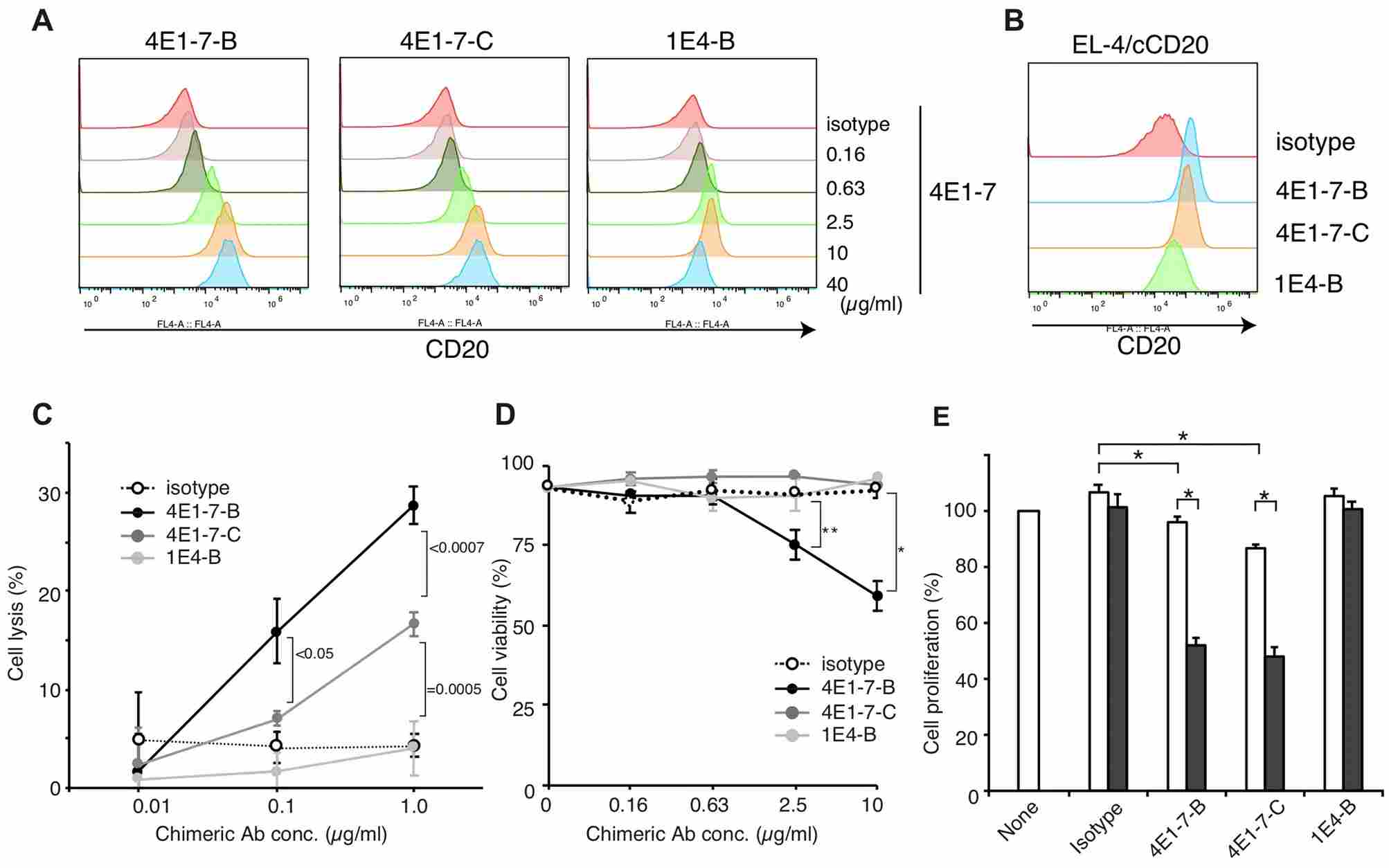
In a 2020 open-access study, Mizuno et al. established a rat anti-canine CD20 monoclonal antibody, clone 4E1-7, and generated rat-canine chimeric antibody formats for canine lymphoma research. The displayed figure shows binding and functional readouts for chimeric anti-canine CD20 antibodies, including dose-dependent cell binding, ADCC, CDC, and cell-proliferation assays in canine B-cell lymphoma models.
The study illustrates several decision points that are directly relevant to hybridoma based pet antibody discovery: target-specific monoclonal antibody generation, clone binding confirmation, chimeric antibody construction, Fc-format comparison, and in vitro activity testing. Creative Biolabs connects these needs through hybridoma discovery, antibody characterization, caninization or felinization, and pet therapeutic antibody evaluation services.
Service Advantages for Hybridoma-Based Pet Antibody Discovery
Our platform supports pet antibody programs that need reliable monoclonal clone generation, practical screening design, and a path toward canine or feline therapeutic formats.
Veterinary Antibody Expertise
Species-aware discovery planning for companion-animal antibody programs.
Integrated Discovery and Engineering
Hybridoma leads can move directly into caninization or felinization.
Flexible Screening Formats
ELISA, flow cytometry, cell-based, and functional assays are available.
Quality-Focused Deliverables
Traceable clones, material, sequences, datasets, and final reports.
Hybridoma Based Pet Antibody Discovery FAQs
References
- Mizuno, Takuya, et al. "Generation of a canine anti-canine CD20 antibody for canine lymphoma treatment." Scientific Reports 10 (2020): 11476. https://doi.org/10.1038/s41598-020-68470-9
- Distributed under Open Access license CC BY 4.0, without modification.