
Species-Relevant Models for Pet Therapeutic Biologicals
Preclinical programs for pet therapeutics often rely on human, rodent, or generic immortalized cell systems that do not fully represent canine or feline biology. Creative Biolabs customizes in vitro models for veterinary therapeutic biologicals development, helping teams bridge discovery, lead optimization, and translational decision-making with species-aware cellular evidence.
Our scientists combine primary-cell culture, organoid and spheroid strategies, co-culture formats, matrix optimization, reporter engineering, and functional assay design to build platforms around the intended tissue, species, disease biology, and candidate modality. Each project is scoped to generate actionable data rather than a one-size-fits-all assay.
Common R&D Challenges We Address
- Limited translatability from surrogate human or rodent assay systems.
- Long cycles caused by repeated assay redesign and late animal-study learning.
- Need for potency, MoA, efficacy, and early safety readouts in pet-relevant biology.
- Ethical and financial pressure to reduce unnecessary in vivo testing.
Customized In Vitro Platforms Built Around Your Pet Health Program
Creative Biolabs develops validated, species-specific cell and tissue-based models that closely replicate selected aspects of companion-animal biology. Instead of forcing your veterinary biological into a generic assay, we match the model design to the target tissue, mechanism, readout, sample availability, and development stage.
Canine and Feline Cell Models
Primary cells, established lines, differentiated cultures, and engineered reporter systems for species-aware target and candidate evaluation.
3D and Tissue-Mimetic Formats
Organoids, spheroids, matrix-supported cultures, Transwell formats, and co-cultures for physiologically relevant assay architecture.
Biologicals-Focused Assays
Readouts for antibody binding, immune modulation, cytokine response, barrier function, cytotoxicity, potency, and MoA confirmation.
| Project Need | Model Strategy | Representative Readouts | Typical Deliverables |
|---|---|---|---|
| Target validation | Species-specific cells or engineered reporter lines expressing the target pathway. | Target expression, pathway activation, ligand response, biomarker release. | Model rationale, culture SOP, validation data, assay-readiness summary. |
| Lead optimization | Comparative canine or feline assay panels with dose-response and time-course design. | Potency, efficacy window, receptor engagement, cytokine modulation, cellular viability. | Raw data, analyzed curves, ranked candidates, technical interpretation. |
| Tissue relevance | 3D cultures, organoids, spheroids, or epithelial monolayers configured for target tissue biology. | Barrier integrity, morphology, phenotype markers, transport, tissue-like architecture. | Characterization package, images, assay conditions, recommended next studies. |
| Early safety insight | Fit-for-purpose cytotoxicity, immune response, and off-target functional assays. | Viability, apoptosis, cytokine panels, stress markers, cross-reactive cell response. | Risk-oriented report, assay limitations, refinement recommendations. |
Need a model that reflects your target species?
Share your candidate format, target tissue, species, and decision point. Our team can propose a practical model-building and validation plan.
Workflow of In Vitro Model Customization
Our workflow turns biological context into a testable, documented model. Each phase is adapted to your companion-animal species, model complexity, available materials, assay endpoints, and translational milestone.
Published Data Supporting Veterinary In Vitro Model Development
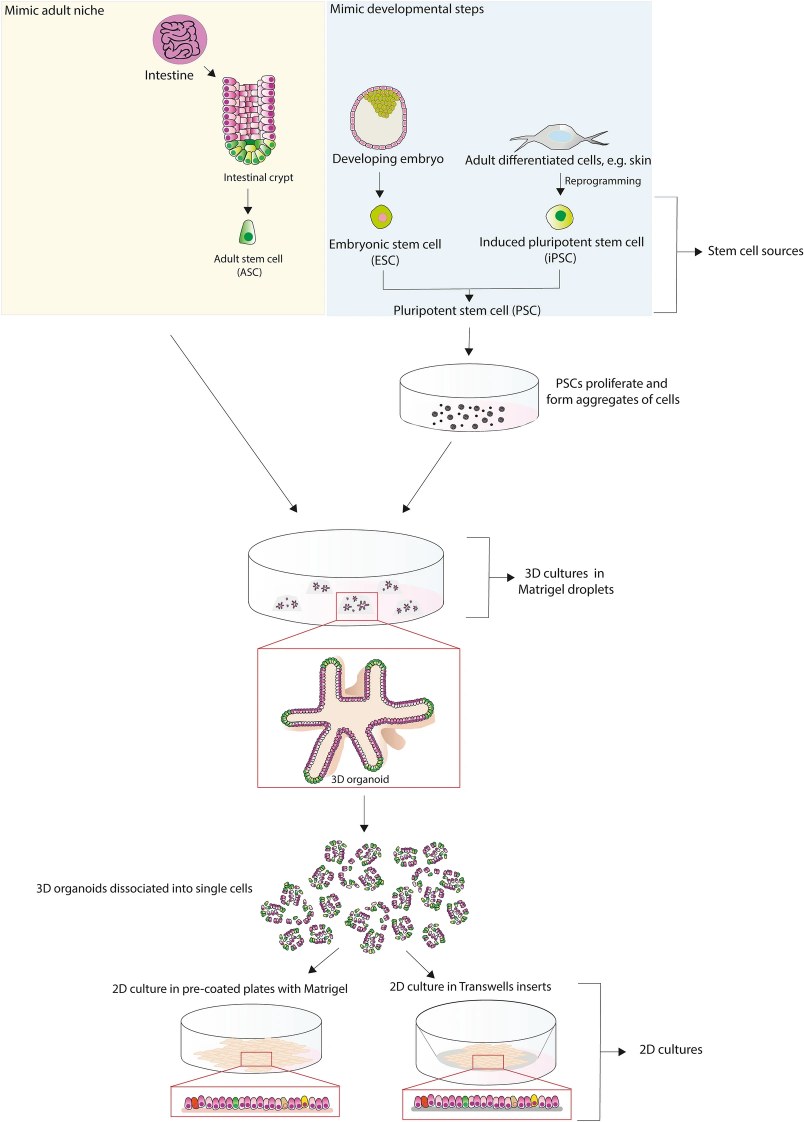
The figure summarizes how animal organoid models can be derived from adult stem cells or pluripotent stem cells, expanded in extracellular matrix-supported 3D culture, and adapted into 2D monolayer systems. This is relevant to pet health in vitro model customization because model format, matrix, differentiation cues, and assay access strongly influence whether a system can support meaningful veterinary biologicals testing.
The reviewed veterinary literature highlights canine and feline organoid examples, including intestinal and liver models, and discusses validation needs such as morphology, functional assays, transcriptomic comparison, long-term stability, and practical throughput. Creative Biolabs applies the same project logic when designing companion-animal cell models, tissue-mimetic cultures, assay readouts, and reports for target validation, MoA studies, potency testing, and early safety assessment.
Why Choose Creative Biolabs?
Our service is built for veterinary biologicals teams that need decision-ready data, not just cultured cells. We balance biological relevance, assay practicality, validation depth, and downstream translation.
Species-Specific Relevance
Companion-animal cells reduce dependence on poorly matched surrogate systems.
Physiological Model Design
Culture conditions reflect tissue, matrix, endpoint, and candidate modality.
Biologicals-Focused Readouts
Functional assays connect efficacy, MoA, potency, and early safety signals.
Traceable Deliverables
Reports connect raw data, assay limits, and next-study decisions.
Pet Health In Vitro Model Customization FAQs
References
- Kar, Soumya K., et al. "Organoids: a promising new in vitro platform in livestock and veterinary research." Veterinary Research 52.1 (2021): 43. https://doi.org/10.1186/s13567-021-00904-2
- Distributed under Open Access license CC BY 4.0, without modification.