
Predictive In Vitro Evaluation for Pet Therapeutic Antibody Candidates
Companion-animal antibody development can be slowed by unpredictable in vivo outcomes, limited species-specific reagents, and uncertain links between binding, function, immunogenicity risk, and dose planning. Creative Biolabs provides mechanism-aware in vitro evaluation services that help characterize pet antibody candidates before animal studies.
Each assay plan is configured around the target species, antibody format, mechanism of action, available cells or reagents, and the evidence needed for candidate ranking. The result is a practical data package for lead selection, study design, and next-stage veterinary therapeutic antibody development.

How Creative Biolabs' Antibody In Vitro Evaluation Can Assist Your Project
We provide a comprehensive suite of in vitro evaluation services covering cell binding, specificity and cross-reactivity, biological functionality, immunogenicity risk, and PK/PD-oriented response modeling. Each assay is customized to the antibody mechanism, target biology, species context, and decision point so clients can prioritize candidates with clearer translational rationale.
In Vitro Cell Binding Evaluation
Quantitative cell-surface binding assessment using platforms such as flow cytometry to confirm target engagement, estimate apparent binding potency, and rank candidates by target-positive cell recognition.
→ 02In Vitro Specificity & Cross-Reactivity Evaluation
Specificity testing against related proteins, target orthologs, and selected species- or breed-relevant targets to clarify off-target concerns and support candidate risk assessment.
→ 03In Vitro Biological Functionality Evaluation
Mechanism-tailored assays for blocking, neutralization, receptor internalization, signaling, apoptosis, proliferation, ADCC, CDC, ADCP, and other functional endpoints using relevant veterinary cell models.
→ 04In Vitro Immunogenicity Evaluation
Species-adapted T-cell activation, PBMC-based cytokine release, and immune-response assays to compare candidates and flag unwanted immunogenicity or cytokine-response risks.
→ 05In Vitro PK/PD Evaluation
Concentration-response, binding-affinity, target-occupancy proxy, and functional-potency datasets to support early PK/PD assumptions and rational design of downstream dose-ranging studies.
→Pet Antibody In Vitro Evaluation Service Workflow
Our workflow keeps assay selection, model customization, execution, interpretation, and reporting connected to the candidate decision that each study must support.
Recommended Starting Information
- Target name, species, and sequence context
- Antibody format, concentration, and purity
- Expected mechanism of action
- Available cells, antigens, or prior assay data
- Desired lead-ranking criteria
- Planned downstream in vivo study type
Typical Final Deliverables
- Customized assay design and acceptance criteria
- Raw and analyzed binding or functional data
- Specificity and cross-reactivity interpretation
- Immunogenicity or cytokine-response summaries
- PK/PD-oriented dose-response guidance
- Publication-ready report and next-step recommendations
Select the Right In Vitro Endpoint for Your Candidate Decision
Different veterinary antibody questions require different models, readouts, and controls. Creative Biolabs helps align each assay module with the specific risk or decision point in your program.
| Evaluation Module | Representative Assays | Project Question Addressed | Decision-Oriented Outputs |
|---|---|---|---|
| Cell Binding | FACS binding curves, target-positive cell percentage, competitive binding, apparent affinity analysis. | Does the antibody engage the target on relevant cells? | Binding rank order, EC50/signal intensity, target-engagement confirmation. |
| Specificity & Cross-Reactivity | Related protein panels, ortholog binding, species or breed-relevant antigen comparison, counter-screening. | Is binding selective enough for advancement? | Off-target risk summary, cross-reactivity profile, assay-based safety considerations. |
| Biological Functionality | Blocking, neutralization, internalization, pathway signaling, apoptosis/proliferation, ADCC, CDC, ADCP. | Does the candidate produce the intended biological effect? | Potency, mechanism confirmation, functional rank order, lead-selection matrix. |
| Immunogenicity | T-cell activation, PBMC cytokine release, immune-cell proliferation, species-specific response profiling. | Could the candidate trigger unwanted immune responses? | Immunogenicity-risk indicators, cytokine-response data, candidate comparison. |
| PK/PD-Oriented Testing | Concentration-response modeling, target occupancy proxies, potency-to-exposure correlation. | What dose range should later studies explore? | Early dose-response rationale and study-design support. |
Discover how we can help your pet antibody program
Share your target, species, antibody format, and current data. Our scientists can recommend a focused pilot or a complete in vitro evaluation package.
Published Data Supporting In Vitro Immunogenicity Screening by Helper T-Cell Proliferation
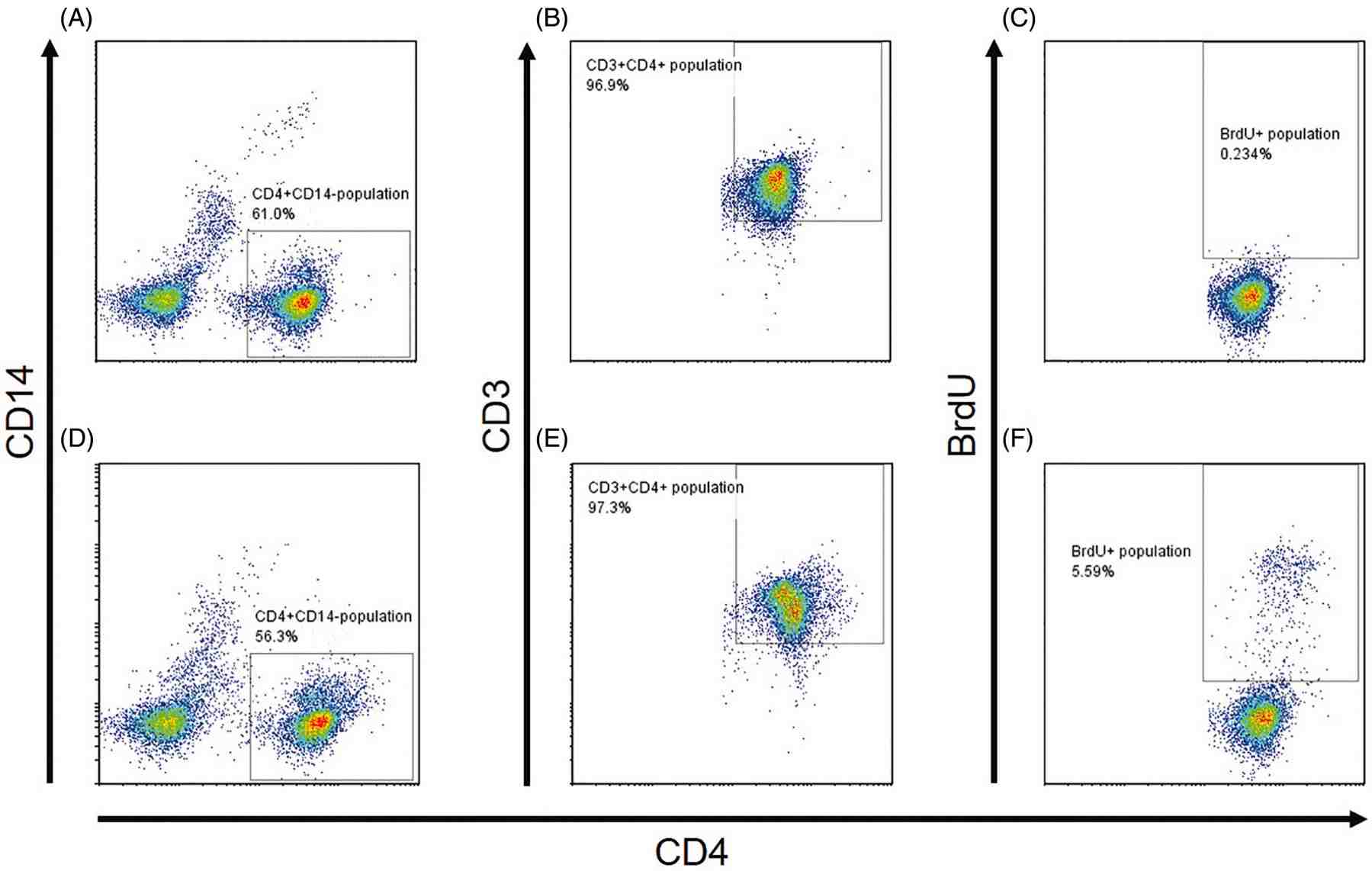
Ito et al. reported a flow-cytometry-based helper T-cell assay in which PBMC-derived CD4+ T-cell proliferation was measured by BrdU incorporation after exposure to monoclonal antibody drugs. Fig.1 shows the gating strategy used to identify proliferating BrdU+CD3+CD4+CD14− helper T cells, making it directly relevant to antibody immunogenicity-risk evaluation.
The study design connects PBMC culture, antibody exposure, donor-level response measurement, threshold setting, and comparative interpretation across antibodies with different clinical immunogenicity profiles. Creative Biolabs applies the same decision logic to veterinary antibody projects by adapting T-cell activation, cytokine release, cell-binding, specificity, and functional assay modules to the species and mechanism under investigation.
Service Advantages for Veterinary Antibody In Vitro Evaluation
Creative Biolabs combines veterinary antibody expertise, adaptable assay development, and quantitative reporting to help teams advance better-supported candidates.
Deep Veterinary Specialization
Canine and feline assay choices reflect species biology and therapeutic context.
Precision-Tailored Design
Every assay is matched to mechanism, target, format, and endpoint.
Data You Can Trust
Validated methods, controls, and replicates support reproducible candidate comparison.
Development-Ready Reporting
Reports connect quantitative results with practical next-stage recommendations.
Pet Antibody In Vitro Evaluation FAQs
References
- Ito, Shunsuke, et al. "In vitro human helper T-cell assay to screen antibody drug candidates for immunogenicity." Journal of Immunotoxicology 16.1 (2019): 125-132. https://doi.org/10.1080/1547691X.2019.1604586
- Distributed under Open Access license CC BY 4.0, without modification.