
Complement-targeted therapeutics are gaining momentum across immunology, hematology, nephrology, ophthalmology, neurology, oncology, transplantation, infection-related inflammation, and rare disease research. As the biological understanding of the complement system continues to deepen, more drug discovery programs are being built around C3, C5, C5a, C5aR, C1q, C1s, MASPs, Factor B, Factor D, Factor H, Factor I, properdin, terminal pathway components, and complement regulatory mechanisms.
However, complement drug development is not only a target discovery challenge. It is also a functional validation challenge.
A candidate molecule may bind strongly to a complement protein but fail to inhibit pathway activation in serum. A promising inhibitor may suppress one readout but leave downstream inflammatory fragments unaffected. A molecule may show activity in a purified-protein system but lose potency in a disease-relevant matrix. A therapeutic antibody may reduce one complement effector function while unexpectedly enhancing another. These scenarios are common because the complement system is proteolytic, cascade-driven, surface-sensitive, amplification-dependent, and tightly regulated by both soluble and membrane-bound proteins.
For research teams developing complement inhibitors, the central question is not simply: “Does this molecule bind the target?” The more important question is: “Does this molecule functionally control complement activation in a biologically meaningful and development-relevant setting?”
This is where complement inhibition functional assays become essential. By connecting target engagement with pathway-specific activity, effector inhibition, dose-response behavior, species cross-reactivity, and cell-based biological outcomes, functional assays help researchers transform early candidate molecules into decision-ready preclinical data.
Where Functional Assays Fit in a Complement Drug Discovery Program
A complement inhibitor program usually progresses through several stages: target selection, molecule generation, binding evaluation, preliminary activity testing, lead optimization, mechanism-of-action confirmation, preclinical validation, translational biomarker planning, and eventually clinical assay development. Functional testing contributes to nearly every stage.
At the discovery stage, functional assays help screen early hits and eliminate molecules that bind but do not inhibit. At the lead optimization stage, they support potency ranking and structure-activity relationship analysis. During mechanism-of-action studies, they clarify where and how the candidate interferes with the cascade. In preclinical development, they support species selection, pharmacodynamic assay design, and translational relevance. For later development, they can help shape biomarker strategies and companion assay planning.
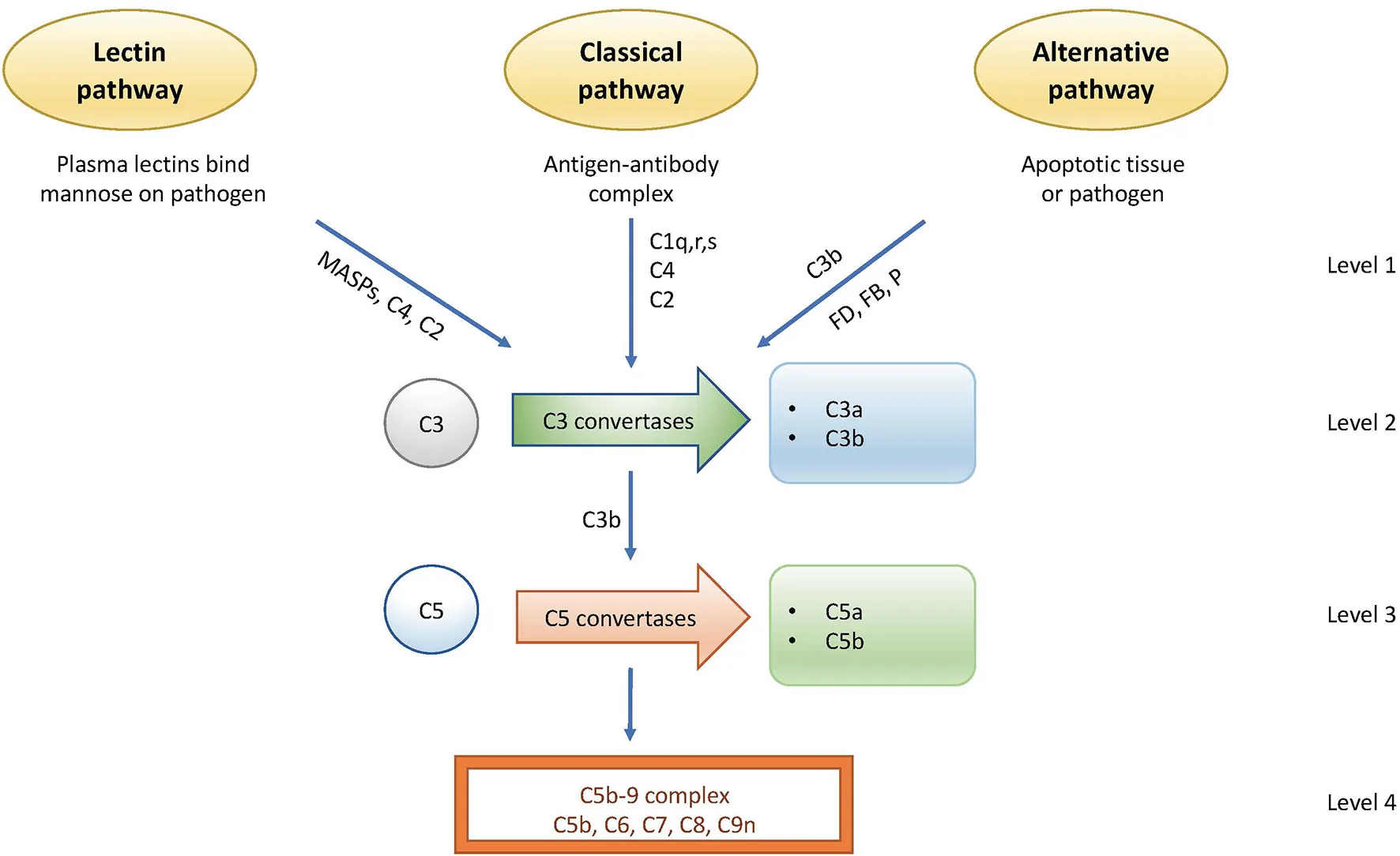
Fig.1 Complement activation through the lectin, classical, and alternative pathways.1,3
A well-designed complement inhibition workflow may include several layers of testing:
- Target binding or target engagement assay
- Purified-protein functional assay
- Pathway-specific serum activity assay
- Total complement activity assay
- Component-specific activity test
- Depleted serum or reconstitution assay
- Effector readout assay, such as C3b, C5a, or C5b-9 measurement
- Hemolysis or liposome lysis assay
- Cell-based complement activity assay
- Species cross-reactivity assessment
- Biomarker or multiplex complement profiling
Not every project requires every assay. The ideal workflow depends on the target, molecule format, disease indication, sample type, and development question. However, robust programs often rely on orthogonal evidence rather than a single assay format.
Key Assay Formats for Complement Inhibitor Evaluation
Pathway-Specific Complement Activity Assays
Pathway-specific assays are commonly used to determine whether a candidate can inhibit classical, lectin, or alternative pathway activation. These assays are especially useful when the therapeutic strategy is pathway-selective.
A classical pathway assay may be suitable for evaluating inhibitors that affect C1q, C1r, C1s, C2, C4, antibody-triggered activation, immune-complex-mediated activation, or Fc-associated complement responses. A lectin pathway assay may be relevant for MASP inhibitors, MBL-associated activation studies, or disease models involving lectin pathway dysregulation. An alternative pathway assay is particularly important for Factor B, Factor D, properdin, C3 convertase, amplification loop, and alternative pathway inhibitor programs.
Pathway-specific assays can help determine whether a candidate selectively suppresses one route of complement activation or causes broader inhibition. This distinction is important for balancing therapeutic efficacy with preservation of protective immune function.
Total Complement Activity Assays
Total complement activity assays, such as CH50 and AH50/AP50-style approaches, are useful for evaluating the functional capacity of complement pathways in serum-based systems. These assays can help determine whether complement activity is intact, consumed, deficient, restored, or inhibited.
For inhibitor development, total activity assays provide a high-level functional view. They can be used to compare untreated serum, treated serum, disease-state samples, inhibitor-treated samples, and control conditions. They are particularly useful when the goal is to evaluate overall pathway suppression or compare candidate potency in a serum matrix.
However, total activity assays should often be paired with more specific downstream readouts. A reduction in total complement activity can indicate inhibition, but additional assays may be needed to determine whether the candidate reduces C3 activation, C5 cleavage, C5a generation, terminal complex formation, or surface deposition.
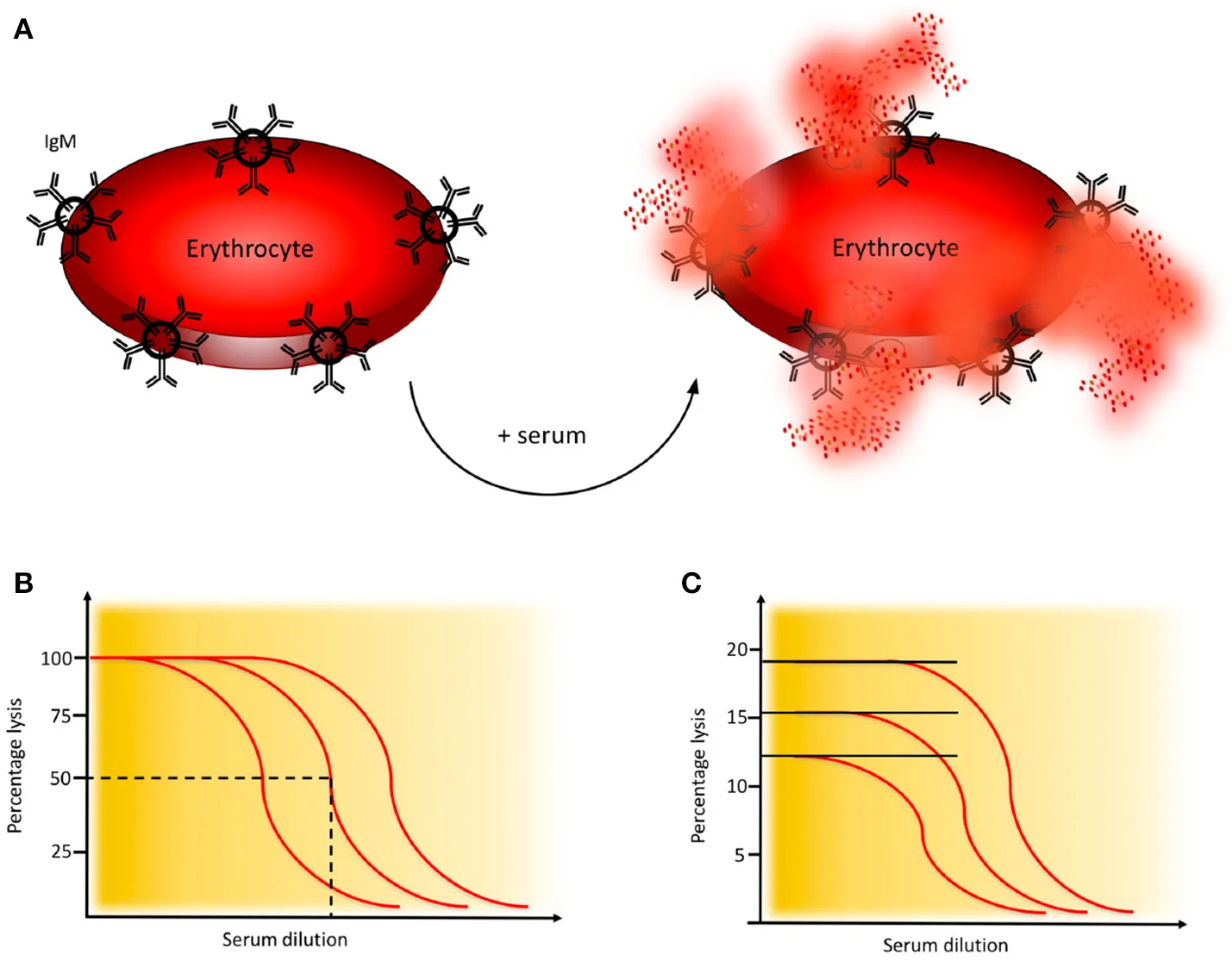
Fig. 2 Haemolytic assay for detection of complement classical pathway (CP) function.2,3
Individual Complement Component Activity Tests
Component-specific assays are valuable when the candidate targets a defined complement protein, such as C2, C3, C5, Factor B, Factor D, Factor H, Factor I, or properdin. These assays can help determine whether the functional activity of a specific component is altered by a therapeutic candidate.
For example, a Factor D inhibitor program may require assays that measure Factor D-mediated cleavage events, alternative pathway amplification, and downstream suppression of complement activation. A C5-targeted program may require evaluation of C5 cleavage, C5a generation, C5b-9 formation, and terminal pathway activity. A Factor H-related program may need assays that evaluate regulatory function, cofactor activity, decay acceleration, surface protection, and alternative pathway control.
Component-specific testing is particularly useful for mechanism-of-action confirmation. It helps clarify whether a candidate directly affects the intended protein or produces secondary pathway effects.
Effector Readout Assays
Complement inhibition should often be evaluated by measuring biologically meaningful effector outputs. These may include C3b deposition, iC3b formation, C3a generation, C5a generation, C5b-9 formation, opsonization, hemolysis, liposome lysis, cell lysis, immune-cell activation, or inflammatory mediator production.
Effector readouts help answer the question: “Does inhibition matter biologically?”
For example, a candidate may reduce upstream activation but still allow enough C5a generation to drive inflammation. Another candidate may reduce C5b-9 formation but leave C3b deposition unchanged. Depending on the disease mechanism, one profile may be acceptable while another may not.
Effector readouts are especially important for programs targeting inflammatory diseases, hemolytic disorders, renal diseases, antibody-mediated cytotoxicity, transplant-related injury, biomaterial-induced complement activation, and complement-driven tissue damage.
Cell-Based Complement Activity Assays
Cell-based assays add an important layer of biological relevance. Many complement-mediated effects occur on cell surfaces, where activation, deposition, regulation, and lysis depend on membrane context, antigen density, antibody binding, regulatory protein expression, surface charge, and local complement concentration.
Cell-based complement assays can evaluate whether a therapeutic candidate protects target cells from complement-mediated damage, reduces surface deposition, suppresses terminal pathway activation, modulates complement-dependent cytotoxicity, or prevents opsonization. They can also be used to study therapeutic antibodies, engineered cells, disease-relevant cell models, tumor cells, endothelial cells, erythrocytes, immune cells, nanoparticles, or biomaterial-exposed systems.
For antibody programs, cell-based assays can determine whether complement activation is a desired mechanism, an unwanted liability, or a property requiring Fc engineering. For complement inhibitor programs, they can demonstrate whether pathway inhibition translates into cellular protection.
Matching Assay Strategy to Complement Target
C3 Inhibitors
C3 is a central convergence point of complement activation. C3 inhibitors may require broad evaluation across classical, lectin, and alternative pathway systems. Important readouts may include C3 cleavage, C3b deposition, iC3b generation, downstream C5 activation, C5a release, C5b-9 formation, hemolysis, and cell-surface opsonization.
Because C3 sits upstream of many effector functions, C3 inhibitor assays should carefully evaluate both potency and breadth of inhibition. It may also be useful to assess residual downstream activation and compare serum-based activity with cell-based deposition assays.
C5 Inhibitors
C5-targeted candidates are often evaluated for their ability to block C5 cleavage, C5a generation, and C5b-9 formation. Since C5 inhibition does not necessarily prevent upstream C3 activation or C3 fragment deposition, assays should be selected to distinguish terminal pathway blockade from upstream complement suppression.
Relevant readouts may include C5a quantification, sC5b-9 measurement, hemolysis inhibition, terminal complex deposition, and cell-based protection from complement-mediated lysis.
Factor D Inhibitors
Factor D is essential for alternative pathway activation and amplification. Factor D inhibitor assays should focus on alternative pathway-specific systems, Factor B cleavage, C3 convertase formation, amplification loop suppression, C3b deposition, and downstream effector reduction.
Because alternative pathway amplification can contribute to disease even when complement is initiated through other pathways, Factor D inhibitor evaluation may benefit from both alternative pathway assays and cross-pathway amplification readouts.
Factor B Inhibitors
Factor B plays a central role in alternative pathway C3 convertase formation. Factor B inhibitor programs may require assays measuring Factor B activation, Bb generation, alternative pathway activity, C3bBb formation, amplification suppression, and downstream C3/C5 effector outputs.
Depleted serum and reconstitution assays may be especially useful for confirming direct Factor B-related mechanisms.
C1q, C1s, and Classical Pathway Inhibitors
Classical pathway inhibitors are relevant for immune-complex-mediated disease, antibody-triggered complement activation, autoimmune conditions, and therapeutic antibody safety evaluation. Assays may include C1q binding, classical pathway activity, C4 activation, C3b deposition, C5a generation, C5b-9 formation, and complement-dependent cytotoxicity.
For therapeutic antibody development, classical pathway assays can help evaluate whether Fc-mediated complement activation is desirable or should be minimized.
MASP and Lectin Pathway Inhibitors
MASP-targeted or lectin pathway-directed programs require lectin pathway-specific activation systems. Important readouts may include pathway activity, C4 cleavage, downstream C3 activation, C5 activation, and inflammatory effector generation.
Because lectin pathway biology may overlap with coagulation, infection, ischemia-reperfusion injury, and inflammatory disease models, assay design should be closely aligned with disease context.
Complement Regulatory Protein Modulators
Programs involving Factor H, Factor I, CD46, CD55, CD59, properdin, or related regulators require more specialized assays. These molecules often modulate complement rather than simply blocking one enzymatic step. Assays may need to evaluate cofactor activity, decay acceleration, surface protection, terminal pathway regulation, convertase stability, or regulatory restoration in disease-relevant matrices.
Common Mistakes in Complement Inhibitor Testing
Mistake 1: Relying Only on Binding Data
High-affinity binding does not guarantee functional inhibition. Complement proteins may undergo conformational changes, assemble into complexes, interact with surfaces, or exist in different activation states. Functional assays are necessary to determine whether binding translates into pathway control.
Mistake 2: Using the Wrong Pathway Assay
A candidate designed to inhibit alternative pathway amplification should not be evaluated only in a classical pathway system. Similarly, a classical pathway inhibitor may appear inactive if tested under conditions dominated by alternative pathway activation. Pathway alignment is critical.
Mistake 3: Ignoring Matrix Effects
Complement activity can differ between serum, plasma, depleted serum, reconstituted systems, biological fluids, and cell culture matrices. Anticoagulants, sample handling, freeze-thaw cycles, complement consumption, donor variability, and disease status can all influence results.
Mistake 4: Measuring Only One Effector Output
Complement inhibition may affect C3 activation, C5 activation, C5a generation, C5b-9 formation, deposition, or lysis differently. A single readout may provide an incomplete picture. Orthogonal readouts improve interpretation.
Mistake 5: Overlooking Species Cross-Reactivity
Preclinical model selection depends on whether the candidate interacts with complement proteins from relevant species. A molecule with strong human activity may not inhibit mouse, rat, or non-human primate complement. Early species testing can prevent costly downstream delays.
Mistake 6: Missing Surface-Based Biology
Complement activation on a biological surface may differ from fluid-phase activation. For programs involving therapeutic antibodies, cells, tissues, nanoparticles, or biomaterials, cell-based assays can reveal functional effects that purified systems cannot capture.
Partnering with Creative Biolabs for Complement Inhibition Functional Assays
Creative Biolabs provides comprehensive complement therapeutics solutions to support researchers working on complement inhibitor discovery, functional testing, mechanism validation, and preclinical assay development. With pathway-aware assay design, component-level testing capabilities, serum-based functional platforms, cell-based complement activity evaluation, and customized project support, Creative Biolabs helps clients generate data that are directly relevant to development decisions.
Depending on the project goal, Creative Biolabs can support:
- Complement inhibitor screening
- Pathway-specific activity assays
- Classical, lectin, and alternative pathway evaluation
- Total complement activity testing
- Individual complement component activity tests
- C3, C5, Factor B, Factor D, Factor H, Factor I, and other component-focused assays
- C3b deposition analysis
- C5a generation analysis
- C5b-9 formation and terminal pathway assessment
- Hemolysis and lysis-based assays
- Cell-based complement activity evaluation
- Therapeutic antibody complement activation assessment
- Species cross-reactivity studies
- Depleted serum and reconstitution assay design
- Complement biomarker and multiplex analysis
- Custom assay development for special sample types or novel mechanisms
Complement therapeutics are advancing rapidly, but successful development depends on more than target selection and binding affinity. Because the complement system is pathway-dependent, amplification-driven, matrix-sensitive, and biologically complex, functional validation is essential for determining whether a candidate molecule has real therapeutic potential.
Complement inhibition functional assays help researchers answer the most important development questions: Does the candidate inhibit the intended pathway? Is the effect dose-dependent? Which effector outputs are reduced? Does the mechanism match the target biology? Does activity translate across matrices and species? Can the data support lead selection or preclinical advancement?
By integrating pathway-specific assays, component-level testing, total activity evaluation, effector readouts, depleted serum systems, cell-based models, and translational biomarker strategies, research teams can build stronger and more informative complement inhibitor development programs.
Creative Biolabs offers customized complement inhibition functional assay services to help clients evaluate candidate molecules, confirm mechanism of action, compare lead compounds, and generate decision-ready data for complement therapeutic development.
If you are developing a complement-targeted antibody, small molecule, peptide, aptamer, engineered protein, biologic, or other therapeutic candidate, Creative Biolabs can help design a functional assay strategy tailored to your target, pathway, sample type, and development stage.
Contact Creative Biolabs today to discuss your complement inhibitor project and develop a customized functional validation plan.
References
- Mohebnasab, Maedeh, et al. “Current and Future Approaches for Monitoring Responses to Anti-complement Therapeutics.” Frontiers in Immunology, vol. 10, 2019, article 2539. https://doi.org/10.3389/fimmu.2019.02539
- Ekdahl, Kristina N., et al. “Interpretation of Serological Complement Biomarkers in Disease.” Frontiers in Immunology, vol. 9, 2018, article 2237. https://doi.org/10.3389/fimmu.2018.02237
- Distributed under Open Access license CC BY 4.0, without modification.