Overview of Complement Factor D Activity
Among the three major complement activation routes, the alternative pathway has a unique role as an amplification loop. Even when complement activation begins through the classical or lectin pathway, the alternative pathway can magnify C3 activation and intensify downstream effector functions. Complement Factor D is essential for this amplification process. Unlike many proteases that act on multiple substrates, Factor D displays exceptional substrate specificity. Its principal natural substrate in the complement cascade is Factor B, but Factor B must first bind C3b or C3(H2O) to become an appropriate substrate. Factor D then cleaves Factor B into Ba and Bb. The Bb fragment remains associated with C3b to form C3bBb, the active alternative pathway C3 convertase. This convertase cleaves additional C3 molecules, generating more C3b and expanding the amplification loop.
Because Factor D acts at this pivotal point, even subtle changes in Factor D activity can influence the magnitude, duration, and localization of complement activation. Reduced activity may impair alternative pathway function and compromise host defense. Excessive or poorly regulated activity may contribute to inflammatory tissue damage. In therapeutic development, Factor D has become a strategic target for controlling complement-driven diseases while potentially preserving upstream recognition mechanisms. A carefully designed Factor D activity assay can therefore answer questions that simple protein quantification cannot address.
Creative Biolabs designs Factor D activity assays to bridge these gaps. Our services are built to provide functional, mechanism-relevant, and decision-ready data for complement research and drug development.
Great Minds Choose Creative Biolabs
Sample Types We Support
Creative Biolabs can work with a variety of sample types, including:

Purified recombinant Factor D, native Factor D preparations

Serum, plasma samples when appropriate for the intended assay

Cell culture supernatants, biological fluids

Drug candidates and inhibitor libraries
Workflow of Complement Factor D Activity Assay
Creative Biolabs proposes conducting the complement FD functional assay utilizing ELISA and hemolysis test.
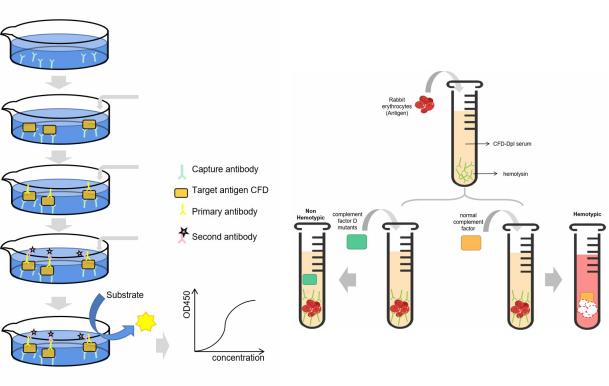 Fig. 1 Workflow of complement factor D functional test.
Design Your Workflow
Key Readouts of Complement Factor B Activity Assay
Creative Biolabs provides a broad range of readouts for complement Factor D activity assay projects. The final readout selection depends on whether the project is focused on direct enzymatic activity, alternative pathway formation, downstream complement activation, or therapeutic inhibition.
|
Readout
|
Description
|
|
Factor B Cleavage
|
Direct measurement of Factor B cleavage is one of the most mechanism-relevant readouts for Factor D activity. The assay can quantify intact Factor B depletion or generation of cleavage fragments, including Ba and Bb. This readout is useful for confirming catalytic function, comparing Factor D preparations, evaluating inhibitor effects, and establishing direct biochemical activity.
|
|
Bb Generation
|
Bb is a key marker of alternative pathway activation and C3 convertase formation. Quantifying Bb can provide a sensitive indication of Factor D-mediated Factor B cleavage. Bb detection may be performed using ELISA, immunoblotting, multiplex formats, or other immunoassay technologies depending on project requirements.
|
|
Ba Generation
|
Ba release provides another readout of Factor B cleavage. Measuring Ba can be useful in purified systems, serum assays, and inhibitor studies. Ba quantification may help distinguish upstream Factor B cleavage from downstream amplification effects.
|
|
C3b Deposition
|
C3b deposition reflects alternative pathway amplification on surfaces. In cell-based or surface-based formats, C3b detection can reveal whether Factor D activity results in biologically meaningful complement opsonization. This readout is especially useful for target-cell studies, biomaterial testing, antibody-mediated complement engagement, and disease-surface models.
|
|
iC3b and C3 Fragment Profiling
|
Downstream processing of C3b can generate iC3b and additional fragments involved in immune recognition. Measuring these fragments can help connect Factor D-dependent activation with complement regulation and opsonophagocytic potential.
|
|
C3a and C5a Generation
|
Anaphylatoxin generation provides insight into inflammatory complement signaling. While Factor D acts upstream in the alternative pathway, its activity can influence production of C3a and C5a through amplification. These readouts can be incorporated when inflammatory signaling potential is relevant to the project.
|
|
C5b-9 Formation
|
Terminal complement complex formation indicates progression toward membrane attack complex assembly. In serum or cell-based assays, C5b-9 detection can help determine whether Factor D-dependent amplification proceeds to terminal pathway activation.
|
|
Hemolysis or Cell Lysis
|
Functional cell lysis provides an integrated endpoint reflecting the combined effect of upstream activation, amplification, convertase activity, terminal pathway progression, and membrane attack complex formation. Hemolysis or cytotoxicity readouts are useful for inhibitor evaluation and biologically meaningful pathway suppression studies.
|
Design Your Customization
Case Studies
Case 1
Complement factor D is linked to platelet activation in human and rodent sepsis
The complement factor D exerts a regulatory role during infection. However, its physiological function in coagulopathy and its impact on the course of an infection remains unclear. Wild-type and CFD-deficient mice were subjected to cecal ligation and puncture to induce sepsis. At several time points, markers of coagulation and the host-immune response were determined. Furthermore, in patients with sepsis or SIRS, CFD levels were related to clinical characteristics, use of antiplatelet drugs and outcome.
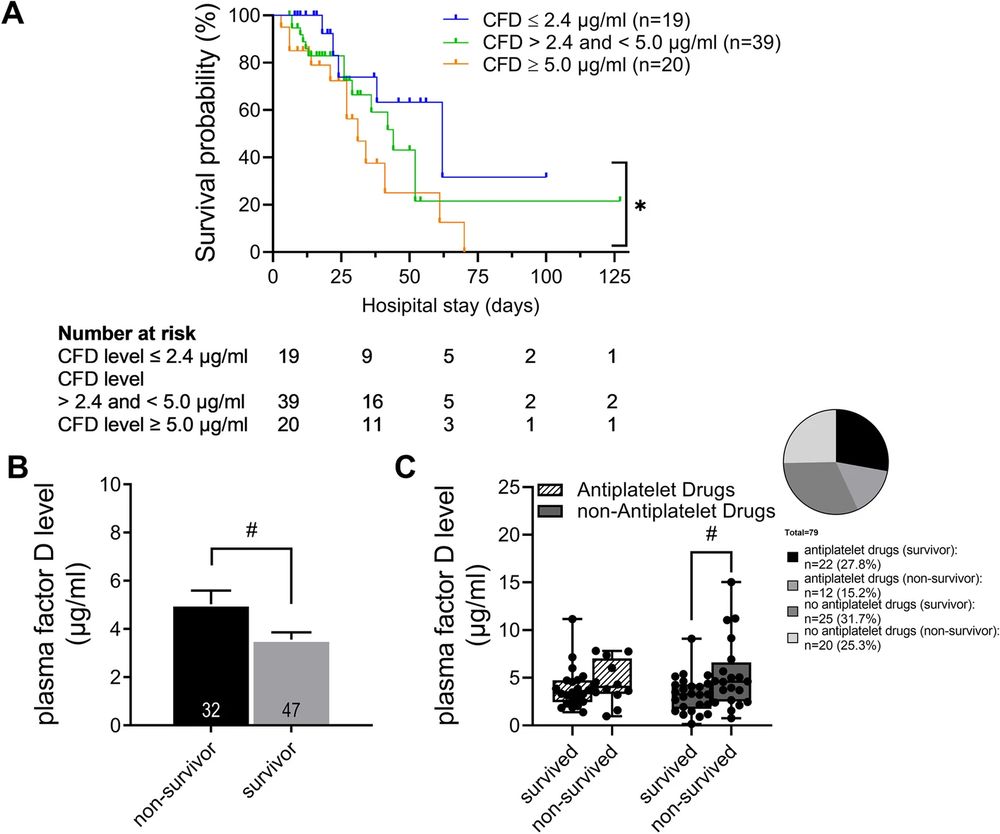 Fig. 2 Height of complement factor D level predicts disease severity.1,2
References
References
-
Sommerfeld, Oliver, et al. "Complement factor D is linked to platelet activation in human and rodent sepsis." Intensive Care Medicine Experimental 9.1 (2021): 41. https://doi.org/10.1186/s40635-021-00405-8
-
Distributed under Open Access license CC BY 4.0, without modification.
Frequently Asked Questions
Can the assay distinguish direct Factor D inhibition from downstream complement inhibition?
Yes, assay design can help distinguish these mechanisms. A direct purified-protein assay can evaluate whether a test article blocks Factor D-mediated Factor B cleavage. Serum-based and downstream assays can show whether alternative pathway activation is suppressed. Depleted serum, reconstitution controls, and paired upstream/downstream readouts can further clarify whether inhibition occurs at Factor D or another complement step.
What sample types can be tested?
Supported sample types may include purified Factor D, recombinant proteins, human serum, animal serum, depleted serum, reconstituted matrices, biological fluids, cell culture supernatants, test inhibitors, antibodies, small molecules, peptides, engineered proteins, target cells, erythrocytes, nanoparticles, biomaterials, and other customized materials. Feasibility depends on assay format and available detection reagents.
Can you perform species-specific Factor D activity assays?
Yes, species-specific assays may be available for human, mouse, rat, cynomolgus monkey, and other species depending on reagent availability and cross-reactivity. Species selection is especially important for preclinical studies because inhibitors and antibodies may behave differently across species.
How do you confirm alternative pathway specificity?
Alternative pathway specificity can be supported by using pathway-favoring buffers, appropriate activators, Factor D-depleted serum, reconstitution controls, known pathway inhibitors, heat-inactivated serum, and comparison with classical or lectin pathway controls when needed. The exact control strategy is customized to the assay format.
Can you develop a custom assay if my project does not fit a standard format?
Yes. Creative Biolabs specializes in customized complement assay development. If your project involves a non-standard sample type, unusual species, engineered cell model, novel therapeutic modality, or specialized readout, our team can design a fit-for-purpose workflow.
How should serum samples be collected and stored?
Complement-active serum should generally be collected, processed, aliquoted, frozen, and shipped under conditions that preserve complement function. Repeated freeze-thaw cycles should be avoided. Because optimal handling may vary by study, Creative Biolabs recommends discussing sample preparation before collection or shipment.