What is the Complement C5 Activity Assay?
The complement C5 activity assay is a functional testing service used to evaluate the activity, integrity, and downstream biological effects of complement C5. The assay can be designed to determine whether C5 in a sample can be cleaved by C5 convertase, generate bioactive C5a, initiate C5b-dependent terminal complex assembly, or support complement-mediated hemolysis or cytotoxicity. Depending on the assay format, C5 activity may be reflected by hemolytic readouts, C5a levels, C5b-9 formation, target cell lysis, deposition intensity, or inhibition curves.
Creative Biolabs provides C5 activity testing services using multiple assay formats. For classical terminal pathway activity, hemolytic assays can be applied to evaluate whether the sample supports C5-dependent lysis after upstream complement activation. For mechanistic or inhibitor studies, C5 cleavage assays and C5a/C5b-9 quantification may be used to distinguish upstream activation from downstream terminal complex formation. For drug discovery projects, inhibitor titration assays can be established to measure the potency of anti-C5 antibodies, peptides, aptamers, small molecules, recombinant proteins, or engineered complement regulators.
Our C5 activity assays can be customized for different sample types, species backgrounds, experimental activators, complement pathways, target cells, controls, detection methods, and reporting formats. We can also integrate C5 functional testing with other complement assays, such as CH50, AP50, C3 activity assays, C5a quantification, C5b-9 deposition assays, complement inhibitor validation, and cell-based complement activity assays, to generate a more complete view of complement function.
Great Minds Choose Creative Biolabs
Assay Methods Available at Creative Biolabs
Creative Biolabs offers multiple technologies for complement C5 activity assay development. The final method is selected based on sensitivity, specificity, sample matrix, throughput, assay purpose, and reporting needs.

Hemolysis-Based Detection

ELISA-Based Detection

Flow Cytometry-Based Detection

Multiplex Assay Integration
Workflow of Complement C5 Activity Assay
Creative Biolabs provides an efficient and customized workflow for complement C5 activity assay services. The general workflow includes the following steps.
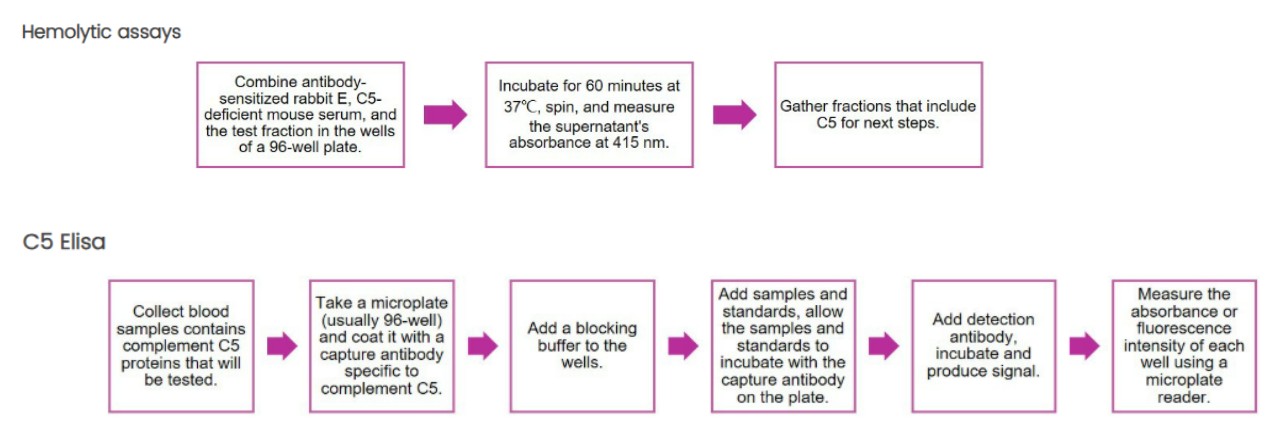 Fig. 1 Workflow of complement C5 functional test.
Design Your Workflow
Recommended Assay Selection Guide
Creative Biolabs can recommend appropriate C5 activity assay formats based on the purpose of the study.
|
Study
|
Recommended Assay
|
|
For general functional assessment of serum C5 activity
|
Hemolytic assays or terminal pathway assays
|
|
For anti-C5 inhibitor validation, hemolysis inhibition
|
C5a generation inhibition, C5 cleavage inhibition, and C5b-9 suppression assays
|
|
For recombinant C5 or mutant C5 characterization
|
C5-depleted reconstitution assays and cleavage assays
|
|
For inflammatory pathway studies
|
C5a generation assays
|
|
For terminal complement pathway research
|
C5b-9 formation and deposition assays
|
|
For biologically relevant cytotoxicity evaluation
|
Cell-based complement assays
|
|
For complex mechanism studies
|
A multi-readout panel combining C5a, C5b-9, hemolysis, and pathway-specific assays
|
Design Your Customization
Case Studies
Case 1
A macrocyclic peptide inhibitor of human complement component 5 uses a dual mode of action to prevent terminal complement pathway activation
C5a and sC5b9 (soluble MAC) levels in supernatants from the CP-mediated hemolysis assay were quantified using complement kits. Of the supernatant in the sample diluent, the C5a ELISA was performed at 1:5 dilution, and the sC5b9 ELISA was performed at 1:2 dilution. Data were converted to a percentage of C5a or sC5b9 production inhibition and fitted to a standard four-parameter dose-response inhibition function to calculate IC50 values.
 Fig. 2 ELISA measurement of C5a and sC5b9.1,3
Case 2
Functional characterization of alternative and classical pathway C3/C5 convertase activity and inhibition using purified models
In previous work, the researchers developed a model system to form purified alternative pathway (AP) C5 convertases on C3b-coated beads and quantify C5 conversion via functional analysis of released C5a. Then, they developed a C3aR cell reporter system that enables functional discrimination between C3 and C5 convertases. By regulating the C3b density on the bead surface, they observed that high C3b densities are important for conversion of C5, but not C3, by AP convertases. Screening of well-characterized complement-binding molecules revealed that differential inhibition of AP C3 convertases (C3bBb) and C5 convertases [C3bBb(C3b)n] is possible.
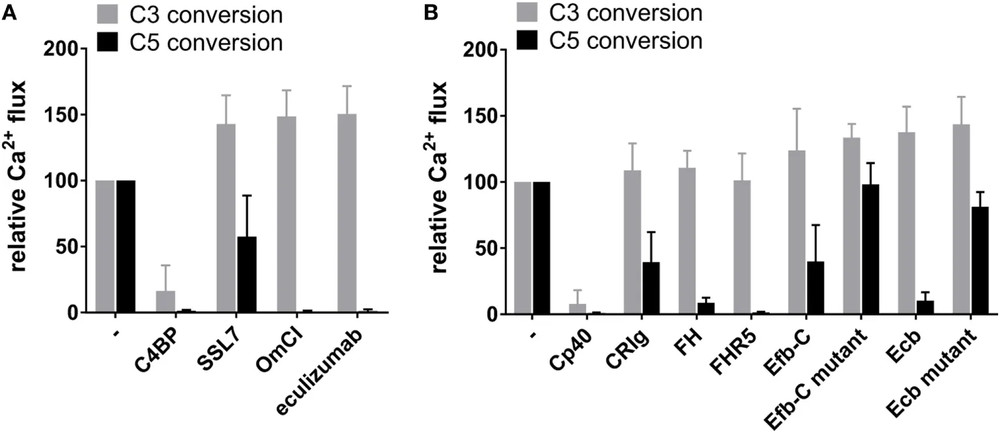 Fig. 3 The effect of inhibitors on classical pathway C3 and C5 conversion.2,3
References
-
Tang, Guo-Qing, et al. "Zilucoplan, a macrocyclic peptide inhibitor of human complement component 5, uses a dual mode of action to prevent terminal complement pathway activation." Frontiers in immunology 14 (2023): 1213920. https://doi.org/10.3389/fimmu.2023.1213920
-
Zwarthoff, Seline A., et al. "Functional characterization of alternative and classical pathway C3/C5 convertase activity and inhibition using purified models." Frontiers in immunology 9 (2018): 1691. https://doi.org/10.3389/fimmu.2018.01691
-
Distributed under Open Access license CC BY 4.0, without modification.
Frequently Asked Questions
Can Creative Biolabs customize the assay for my project?
Yes. Creative Biolabs provides customized complement C5 activity assay development according to the sample matrix, species, candidate molecule, assay purpose, readout preference, throughput requirement, and available sample volume. Assay conditions such as activation method, sample dilution, incubation time, target cell type, inhibitor concentration range, detection platform, and control design can be optimized to meet project-specific requirements.
How should serum samples be collected and stored?
Serum samples should generally be processed promptly after collection, aliquoted to avoid repeated freeze-thaw cycles, and stored at low temperature until testing. Improper handling may cause artificial complement activation or loss of functional activity. Hemolyzed, contaminated, repeatedly thawed, or poorly stored samples may affect assay performance. Creative Biolabs can provide assay-specific sample preparation instructions before project initiation.
Can Creative Biolabs test C5 activity in animal models?
Yes. Creative Biolabs supports C5 activity testing for human samples and multiple animal species, including mouse, rat, rabbit, guinea pig, non-human primate, and other model organisms. Species-specific feasibility depends on complement biology, reagent availability, assay format, and sample matrix. For less common species, assay development or feasibility testing may be recommended.
Can the assay measure C5a and C5b-9 at the same time?
Yes. Creative Biolabs can design multi-readout C5 activity assays that include C5a generation and C5b-9 formation in the same study. This is useful because C5a and C5b-9 represent different downstream consequences of C5 activation. Measuring both readouts can provide a more complete understanding of inflammatory signaling and terminal pathway activation.
Is hemolysis always required for C5 activity testing?
No. Hemolysis is a common functional readout for terminal pathway activity, but it is not the only option. C5 activity can also be evaluated through C5 cleavage, C5a generation, C5b-9 formation, surface deposition assays, flow cytometry, fluorescence-based cell lysis assays, immunoassays, and cell-based functional readouts. For samples or applications where hemolysis is not suitable, Creative Biolabs can recommend alternative assay formats.
What controls are included in the assay?
Control design depends on the assay format, but common controls may include normal serum controls, heat-inactivated serum controls, blank controls, matrix controls, C5-depleted serum controls, reconstitution controls, pathway activation controls, inhibitor-treated controls, positive inhibition controls, and untreated baseline controls. Proper controls are essential for confirming assay validity and interpreting C5-specific activity.