Why Measure Complement C3 Activity?
C3 is often described as the hub of the complement system because it connects upstream pathway initiation with downstream effector mechanisms. Classical pathway activation initiated by antibody-antigen complexes, lectin pathway activation triggered by carbohydrate pattern recognition, and alternative pathway activation driven by spontaneous hydrolysis or surface amplification all converge on C3 cleavage. Measuring C3 activity therefore provides a direct window into the functional state of the complement system.
-
For complement therapeutic development, C3 activity assays are especially valuable because many intervention strategies act either directly on C3 or indirectly influence C3 activation.
-
For antibody and biologics development, C3 activity assays can evaluate whether a molecule triggers complement deposition on target cells or immune complexes.
-
For disease research, abnormal C3 activation is associated with many immune-mediated, inflammatory, infectious, renal, hematological, neurological, and ocular disorders.
-
For biomaterials, nanoparticles, viral vectors, cell therapies, and delivery platforms, C3 activity assays can reveal whether a material or engineered system activates complement upon contact with serum.
Because C3 is involved in multiple layers of complement biology, no single readout is sufficient for every study. Creative Biolabs provides customized assay strategies that combine appropriate activation triggers, matrices, controls, pathway-dissection tools, and detection technologies to generate data that are meaningful for your model system.
Great Minds Choose Creative Biolabs
Available Sample Types
Creative Biolabs supports a broad range of sample types for complement C3 activity assay services. Commonly accepted sample types include:

Human/animal serum, plasma

Purified C3 protein, recombinant C3 protein or C3 variants

Cell culture supernatant, tissue homogenate, biological fluids

Disease model samples, preclinical study samples, antibody-treated samples
Service Workflow
Creative Biolabs has developed a streamlined workflow to ensure that each complement C3 activity assay project is scientifically appropriate, technically reliable, and aligned with customer objectives.
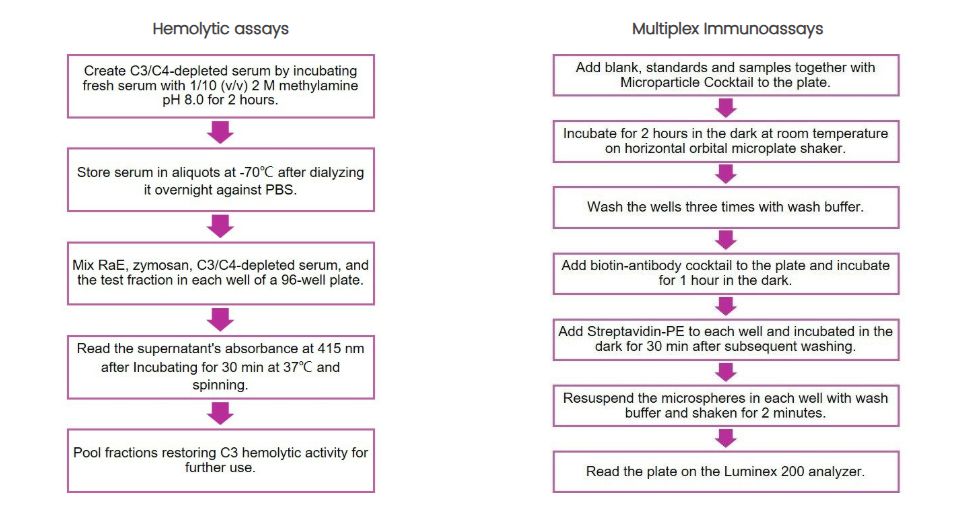 Fig. 1 Workflow of complement C3 functional test.
Design Your Workflow
Applications of Complement C3 Activity Assay
|
Application
|
Descriptions
|
|
Complement Biology and Mechanism Research
|
C3 activity assays are widely used to investigate how complement activation is initiated, amplified, regulated, and terminated. By analyzing C3 activity under different stimulation conditions, researchers can determine whether C3 activation is driven by the classical pathway, lectin pathway, alternative pathway, or amplification loop. C3 activity data can also help identify the roles of upstream components, convertases, regulators, and effector mechanisms in specific biological systems.
|
|
Autoimmune and Inflammatory Disease Studies
|
In autoimmune and inflammatory disease research, C3 activity testing can reveal complement consumption, abnormal activation, autoantibody-associated dysregulation, or tissue-directed complement injury. C3 activity assays can be applied to serum, plasma, tissue extracts, disease model samples, or cell-based systems to evaluate disease mechanisms and treatment responses.
|
|
Kidney Disease and C3 Glomerulopathy Research
|
C3 activity assays can support studies of complement activation in glomerular injury, alternative pathway dysregulation, C3 deposition, complement consumption, and complement-targeted therapeutic intervention. Creative Biolabs can combine C3 activity testing with C3b deposition analysis, C3 fragment measurement, Factor H-related assays, Factor I-related assays, C3 convertase testing, and complement inhibitor validation to provide a comprehensive complement profile.
|
|
Complement Therapeutic Development
|
C3 is a high-value target in complement therapeutic development. C3 activity assays help evaluate candidate molecules that inhibit C3 cleavage, reduce C3b deposition, block amplification, regulate convertase activity, or suppress downstream inflammatory and cytolytic responses.
|
|
Infection and Immune Defense Research
|
C3 plays an essential role in immune defense against pathogens through opsonization and complement amplification. C3 activity assays can support research on pathogen-complement interactions, immune evasion mechanisms, serum bactericidal activity, viral immune modulation, host-pathogen recognition, and infection-related inflammation. Customized assay systems can be developed for microbial surfaces, pathogen-derived components, immune serum, or complement regulatory proteins.
|
Design Your Customization
Case Studies
Case 1
Complement receptor 2 based immunoassay measuring activation of the complement system at C3-level in plasma samples from mice and humans
The researchers aimed at establishing a sensitive and robust assay for estimation of systemic complement activation at complement component C3 level in mouse and human plasma samples. In order to capture the activation products iC3b and C3dg in a specific and physiological relevant manner, they utilized a construct consisting of the iC3b/C3dg-binding site of human complement receptor 2 (CR2) attached to an Fc-part of mouse IgG. This construct binds C3dg and iC3b from both mice and humans.
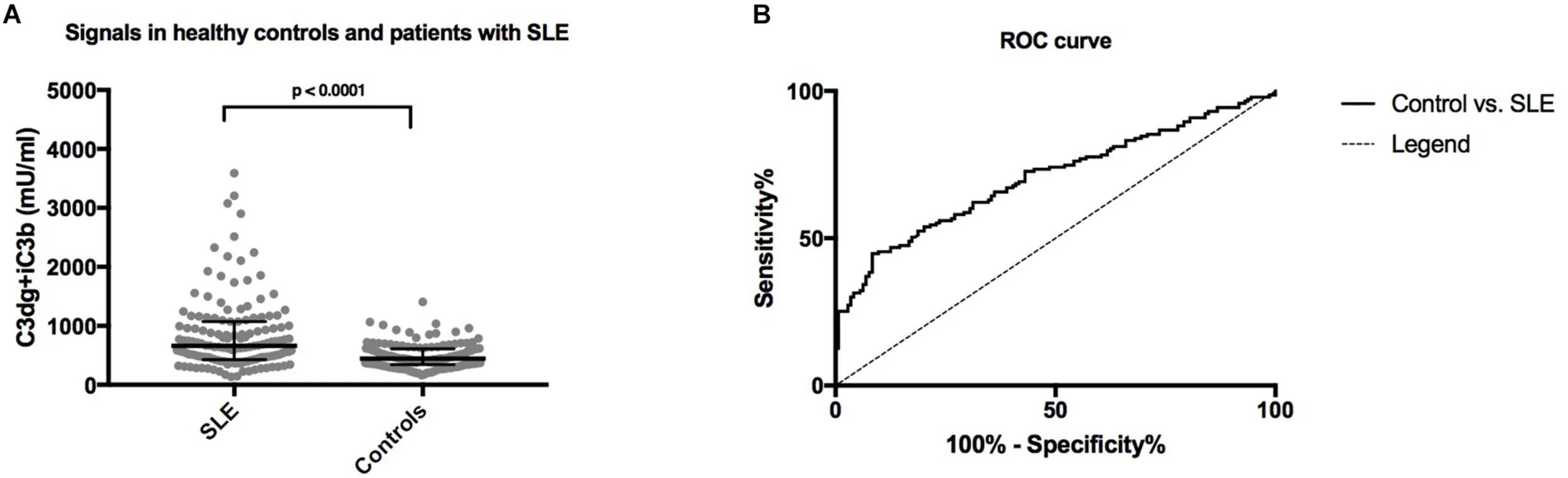 Fig. 2 Assay for human C3 fragments on EDTA samples from patients with SLE.1,2
References
-
Halkjær, Lene, et al. "Complement receptor 2 based immunoassay measuring activation of the complement system at C3-level in plasma samples from mice and humans." Frontiers in Immunology 11 (2020): 774. https://doi.org/10.3389/fimmu.2020.00774
-
Distributed under Open Access license CC BY 4.0, without modification.
Frequently Asked Questions
Can Creative Biolabs measure both C3 concentration and C3 activity?
Yes. Creative Biolabs can provide both C3 concentration measurement and C3 functional activity testing. We can also measure related activation products, such as C3a, C3b, iC3b, C3d, or other complement biomarkers, depending on the project requirements. Combining C3 quantity, C3 activity, and C3 activation product analysis can provide a more complete understanding of complement status.
Is serum or plasma better for C3 activity assays?
The choice between serum and plasma depends on the assay format and research purpose. Serum is commonly used in many complement activity assays because it contains active complement components and does not include anticoagulants that may interfere with complement activation. Plasma may be preferred in certain studies when the goal is to preserve the in vivo complement status at the time of collection. However, anticoagulant selection is important because some anticoagulants can interfere with complement activity. Creative Biolabs can recommend the most suitable sample type after reviewing your project.
How much sample volume is required?
The required sample volume depends on the assay format, number of replicates, sample dilution, number of readouts, and number of test conditions. A simple single-readout assay may require a relatively small volume, while a multi-readout study involving C3 activity, C3a generation, C3b deposition, inhibitor titration, and replicates will require more sample. Creative Biolabs can provide a project-specific sample volume estimate after confirming the assay plan.
Can C3 activity testing be combined with CH50 or AH50 assays?
Yes. C3 activity testing can be combined with CH50, AH50, or other pathway activity assays. CH50 reflects classical pathway-mediated terminal complement activity, while AH50 reflects alternative pathway-mediated hemolytic activity. C3 activity testing provides component-focused information. Combining these assays can help determine whether changes in total pathway activity are associated with C3-specific functional changes, upstream pathway effects, or downstream terminal pathway changes.
Can you perform cell-based C3 activity assays?
Yes. Creative Biolabs can develop cell-based C3 activity assays using target cells, antibody-coated cells, disease-relevant cells, engineered cell lines, endothelial cells, epithelial cells, immune cells, erythrocytes, or customer-provided cells. Readouts may include C3b deposition, iC3b formation, complement-mediated cytotoxicity, cell-associated complement activation, or inhibitor-mediated protection. Flow cytometry, fluorescence detection, imaging, or plate-based detection can be used depending on the study design.
Can C3 activity assays be used for biomaterial or nanoparticle testing?
Yes. Biomaterials, nanoparticles, drug delivery vehicles, and medical device surfaces can activate complement after contact with serum or plasma. C3b deposition assays and C3 activation product assays can help evaluate complement reactivity and surface compatibility. Creative Biolabs can customize assay conditions for coated surfaces, particles, hydrogels, membranes, implants, or other materials.