Fc receptors (FcRs) bridge antibody and cellular immunity, driving ADCC, ADCP, and cytokine release. Creative Biolabs optimizes antibody-FcR interactions to enhance drug efficacy, enabling tailored therapies for cancer, autoimmune diseases, and infections with improved specificity and immune engagement.
Learn More →
Overview Functions Features Publication Why Choose Us FAQs Customer Review Related Services Contact Us
ADCC, CDC, and ADCP Assay Services
We have the experience and expertise to provide complete ADCC/CDC/ADCP testing solutions.
Overview
ADCC, CDC, and ADCP are critical immune mechanisms that underlie the success of antibody-based therapies. Each of these mechanisms operates through distinct immune components but shares the goal of eliminating pathogenic or malignant cells. Creative Biolabs leverages its advanced technology platforms and extensive expertise to provide ADCC/CDC/ADCP levels detection services, helping you optimize antibody designs and give guidance on enhancing these effector functions for more effective therapies. Based on state-of-the-art laboratories, we can ensure the efficacy and potency of your therapeutic antibodies by implementing strict QC standards.
Get an Instant Quote →
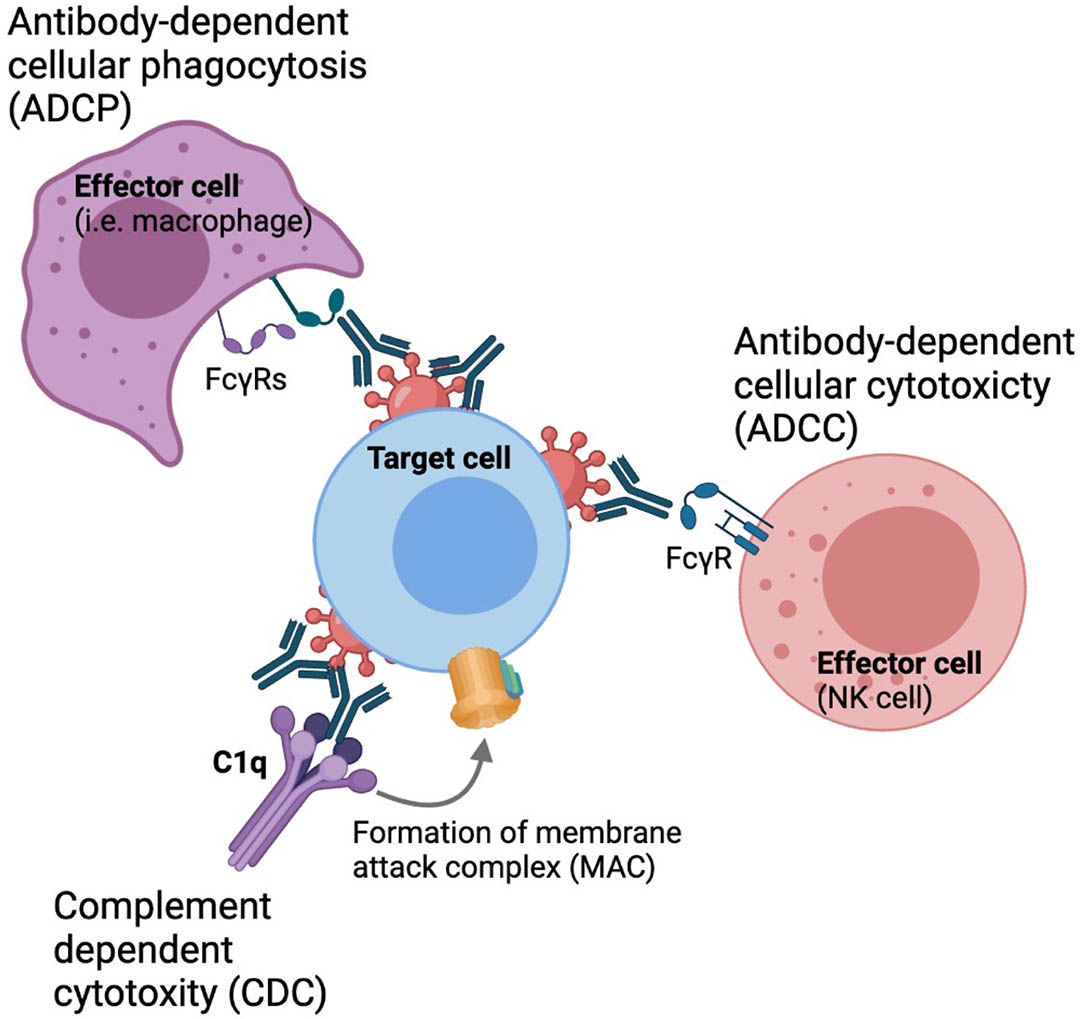 Fig.1 Fc-mediated Effector Functions.1
ADCC/CDC/ADCP in Antibody Development
Optimizing Antibody Therapeutic Efficacy
By measuring the levels of these activities during antibody discovery, researchers can assess and enhance the potential of therapeutic antibodies to elicit robust immune responses against target cells
Fine-tuning Antibody Design
Not all antibodies are designed to activate all three mechanisms (ADCC, CDC, ADCP). Some therapeutic strategies may prioritize one over the others, depending on the target disease and the desired immune response
Safety and Off-target Effects
Detecting these levels allows for a better understanding of the potential risks of non-specific immune activation.
Predicting Clinical Performance
The levels of ADCC, CDC, and ADCP detected during the discovery and development phases can serve as predictors of the clinical performance of the therapeutic antibody.
Regulatory and Quality Control
Accurate measurement of ADCC, CDC, and ADCP levels is important for meeting regulatory standards during the antibody development process.
Key Features of ADCC/CDC/ADCP
Antibody-dependent cellular cytotoxicity (ADCC)
In antibody-dependent cellular cytotoxicity (ADCC), the Fcγ receptor (FcγR or FCGR) on immune effector cells binds to the Fc region of an antibody, which is attached to a specific target cell. Immune cells like natural killer cells, macrophages, monocytes, and eosinophils can mediate ADCC. Once FCGR engages with the antibody, its ITAM domain is phosphorylated, leading to effector cell activation. This activation triggers the release of substances such as perforin, granzyme, lyase, and TNF, which contribute to the targeted cell’s destruction. At Creative Biolabs, our team of scientists has extensive experience in PBMC-mediated ADCC assay that is designed to accurately assess ADCC activity.
Complement-dependent cytotoxicity (CDC)
In complement-dependent cytotoxicity (CDC), C1q binds to antibodies, which triggers the complement cascade, resulting in the formation of a membrane attack complex (MAC) (C5b to C9) on the surface of target cells, and further resulting in a classical pathway of complement activation.
Antibody-dependent cellular phagocytosis (ADCP)
Antibody-dependent cellular phagocytosis (ADCP) is a key MOA for many antibody-based therapies. It is defined as a highly regulated process in which an antibody eliminates binding target and initiates phagocytosis by linking its Fc domain to a specific receptor on the phagocytic cell. Unlike ADCC, ADCP can mediate monocytes, macrophages, neutrophils and dendritic cells via FcγRIIa, FcγRI and FcγRIIIa, where FcγRIIa (CD32a) on macrophages represents the major pathway. To meet this need, Creative Biolabs has launched a primary cell-based ADCP assay service.
| Feature | ADCC | CDC | ADCP |
|---|---|---|---|
| Primary Immune Cells | NK cells, macrophages, eosinophils | No immune cells; relies on complement | Macrophages, dendritic cells, monocytes |
| Triggering Mechanism | Antibody binds FcγR on effector cells | Antibody binds complement proteins | Antibody binds FcγR on phagocytes |
| Effector Molecules | Perforin, granzymes from NK cells | Complement proteins (C1q, C3b, C5b-C9) | Lysosomal enzymes in phagocytes |
| Type of Cell Death | Apoptosis | Lysis by MAC formation | Phagocytosis and digestion of target cells |
| Clinical Applications |
|
|
|
Tab.1 Key Differences of ADCC/CDC/ADCP
Get Your Tailored Solutions
Publication
This publication describes a study that developed and utilized four assays to evaluate Fc-effector functions of SARS-CoV-2 antibodies. The assays measured ADCC, ADCP, ADNP, and CDC.
The study's key findings were:
- Before the XBB.1.5 booster, neutralizing antibodies against XBB.1.5 and EG.5 variants were minimally detectable, while Fc-effector antibodies were present at higher baseline levels.
- The COVID-19 XBB.1.5 booster vaccination significantly increased both neutralizing and Fc-effector antibodies in magnitude and breadth.
- The greatest increase in neutralizing antibodies was against the XBB.1.5 strain, while Fc-effector functional antibodies had similar fold-increases in antibody titers across the variants tested.
- Combining Fc-mediated functional and neutralizing antibody assays provides a more comprehensive model for understanding vaccine-induced immunity and optimizing vaccination strategies.
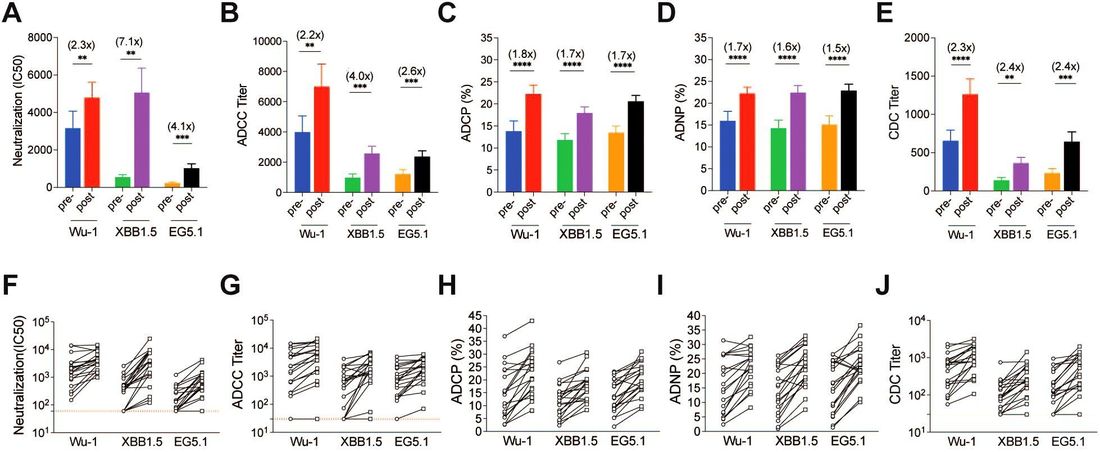 Fig.2 Antibody responses to SARS-CoV-2 variants (Wu-1, XBB.1.5, and EG.5) after XBB.1.5 booster vaccination in adults.2, 3
Why Choose Us?
Creative Biolabs combines deep scientific expertise with a decade of experience in antibody engineering and functional analysis. We deliver tailored solutions with flexible, high-throughput platforms, ensuring precise, reproducible results for biopharma and academia.
Highlights:
- Data readout driven by target cell lysis endpoint.
- High-throughput assay for large antibody screening.
- Extensive targeted tumor cell lines are used in ADCC assays to target cell surface antigens of interest to you.
- Automated, robust, and highly repeatable high-throughput assay for large-scale screening.
- Flexible inspection design, easy to customize according to your project.
- Highly enriched natural killer cells from multiple donors.
- More than 10 years of combined screening experience.
Request a consultation today to discuss your specific needs and unlock the full potential of your projects.
FAQs
Q1: How do I choose between ADCC, CDC, and ADCP assays for my project?
A1: The choice of assay depends on your therapeutic target and the desired mechanism of action. We recommend a consultation with our scientific team to discuss your project specifics. We will help you select the most relevant assays to generate the data you need to make informed decisions.
Q2: Can you test my antibody against a specific cell line that is not commercially available?
A2: Yes, we specialize in customizing our assays. We can develop and optimize assays using your specific cell lines or patient-derived cells, ensuring the data is as physiologically relevant as possible for your research.
Q3: How do your assays compare to other providers?
A3: Our assays are distinguished by our use of advanced technology, physiologically relevant systems, and a high degree of customization. We focus on providing high-quality, reproducible data backed by our extensive experience and published data.
Customer Review
-
Outstanding ADCC Data
Using Creative Biolabs' ADCC assay services in our research has significantly improved our understanding of our antibody's mechanism of action against solid tumors. The comprehensive data provided allowed us to confirm the key role of ADCC in the therapeutic effect, which was crucial for our project. - Dr. A. P***s
-
Reliable ADCP Analysis
The primary cell-based ADCP assays provided by Creative Biolabs were essential for our project. The data was highly reproducible and gave us confidence in our antibody's ability to engage macrophages for pathogen clearance. - L***n S
Related Services
FcR Binding Assay Service
Tissue Cross-Reactivity Evaluation Service
Tissue cross-reactivity (TCR) studies are essential for evaluating therapeutic antibodies before clinical trials. Creative Biolabs' TCR services use advanced immunohistochemistry to detect off-target binding in human tissues, helping assess safety risks early and refine antibody candidates for better clinical outcomes.
Learn More →Immune Checkpoint Assay Service
Immune checkpoints are key regulators of immune responses. Using advanced cell-based assays, Creative Biolabs precisely evaluates immunotherapeutic antibodies, providing quantitative insights into their mechanisms of action to accelerate drug development.
Learn More →Contact Us
Creative Biolabs is your trusted partner for therapeutic antibody development. Our comprehensive ADCC, CDC, and ADCP assay services provide the data and insights you need to accelerate your project with confidence. Contact our scientific team today to discuss how we can help you achieve your research and development goals.
References
- Phelps, Meredith, and Alejandro Benjamin Balazs. "Contribution to HIV prevention and treatment by antibody-mediated effector function and advances in broadly neutralizing antibody delivery by vectored immunoprophylaxis." Frontiers in Immunology 12 (2021): 734304. DOI: https://doi.org/10.3389/fimmu.2021.734304
- Chen, X., et al. "Fc-effector functional antibody assays for SARS-CoV-2 variants of concern." Frontiers in Immunology 16 (2025): 1571835. DOI: https://doi.org/10.3389/fimmu.2025.1571835
- Distributed under Open Access license CC BY 4.0, without modification.
Online Inquiry