
Canine Distemper Virus Therapeutic Antibody Development
Canine Distemper Virus (CDV) is one of the most lethal viral pathogens in dogs and several other carnivores, causing severe respiratory, gastrointestinal, and neurological symptoms. While vaccination remains the cornerstone of prevention, incomplete vaccine coverage, immune interference in young animals, and the emergence of variant strains have sustained the need for effective therapeutic interventions. Creative Biolabs is pioneering canine-specific therapeutic antibody development to combat CDV infection, offering comprehensive R&D solutions from discovery to preclinical evaluation. Our goal is to accelerate the creation of safe, potent, and species-optimized antibodies that can provide both prophylactic and post-exposure protection for dogs.
Platforms in Therapeutic Antibody Discovery
Creative Biolabs provides multiple advanced discovery platforms to support canine therapeutic antibody R&D, integrating molecular, cellular, and immunological tools optimized for veterinary applications.

- Phage Display: Using species-matched antibody libraries, we rapidly screen and identify high-affinity binders against CDV surface antigens, particularly the hemagglutinin (H) and fusion (F) proteins, which are critical for viral entry. This platform enables the generation of fully canine antibodies with reduced immunogenicity.
- Single-B Cell Sorting: Our platform isolates antigen-specific B cells from immunized or infected animals, allowing the discovery of potent neutralizing antibodies from natural immune repertoires. The identified leads can be further engineered and optimized for canine use.
- Hybridoma Technology: We generate monoclonal antibodies through hybridoma development, which can then be subjected to engineering processes for improved affinity, specificity, and therapeutic potential.
Comprehensive Antibody Development Services
Our services cover every phase of canine antibody development, ensuring a smooth transition from concept to preclinical evaluation.
Antibody Characterization
Comprehensive analysis including binding kinetics, epitope identification, cross-reactivity profiling, and neutralization assays against multiple CDV genotypes.
Antibody Engineering
Structural optimization to enhance binding affinity, stability, and manufacturability, as well as canine-specific Fc engineering to improve half-life and effector function.
Preclinical Evaluation
In vitro cell-based assays and canine infection models to assess neutralizing activity, viral clearance, and safety.
Antibody Development
End-to-end process including recombinant antibody production, purification, and formulation development for in vivo testing.

Why Focus on Canine Distemper Virus?

Canine Distemper Virus is a single-stranded RNA virus from the Paramyxoviridae family, closely related to the human measles virus. It primarily infects epithelial, lymphoid, and neural tissues, leading to high morbidity and mortality in unvaccinated or immunocompromised dogs. Current vaccination strategies are effective but not absolute; outbreaks continue in shelter populations and wild reservoirs. Targeting viral proteins such as the hemagglutinin (H) and fusion (F) glycoproteins with monoclonal antibodies offers a promising therapeutic approach. These surface antigens mediate host cell binding and membrane fusion, making them ideal candidates for antibody neutralization. Therapeutic antibodies can serve as emergency prophylactics or treatments for early-stage infections, potentially preventing systemic disease progression.
Mechanism of Action
CDV-neutralizing antibodies act by blocking viral entry and promoting immune clearance. The H protein binds to cellular receptors, such as SLAM (CD150) on immune cells and nectin-4 on epithelial tissues, initiating infection. Neutralizing antibodies directed against H or F proteins prevent this receptor interaction and subsequent membrane fusion, effectively halting viral spread. In addition to neutralization, Fc-dependent mechanisms, including antibody-dependent cellular cytotoxicity (ADCC) and complement activation, aid in the clearance of infected cells. This multi-layered mechanism provides both immediate viral inhibition and immune-mediated defense, positioning anti-CDV antibodies as powerful therapeutic tools for infected dogs.
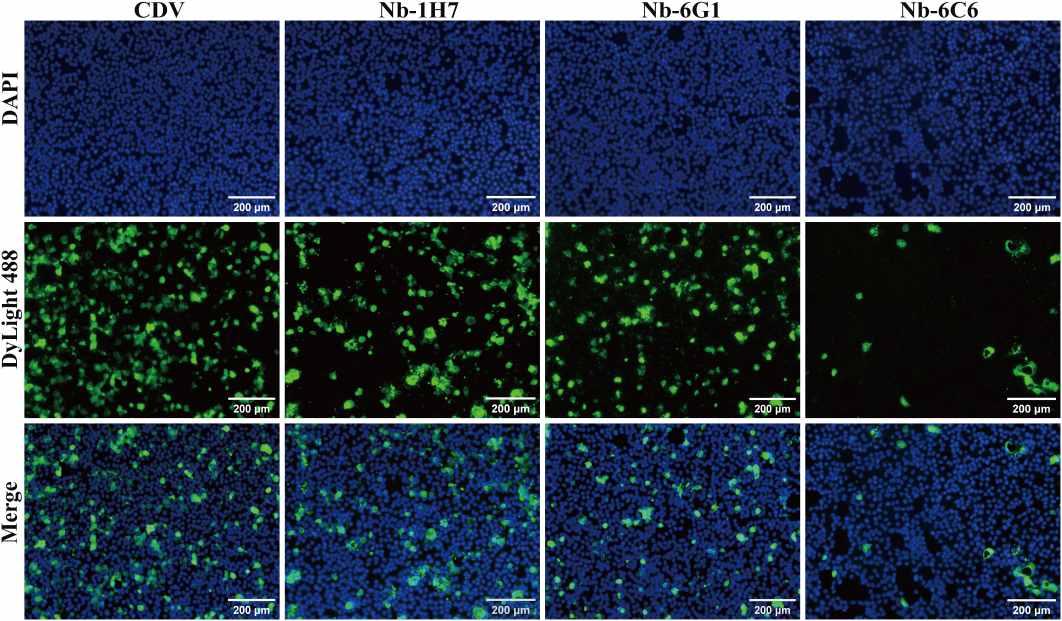 Fig 1. Identification of CDV-neutralizing activity of the antibodies with specific binding to CDV by IFA.
Our Advantages
Partner with Creative Biolabs
The continued threat of Canine Distemper underscores the need for next-generation veterinary therapeutics. Creative Biolabs is committed to empowering partners in the development of CDV-specific therapeutic antibodies, offering scientific rigor, flexible project design, and dedicated technical support. Whether your goal is to develop monoclonal antibodies for clinical use, evaluate cross-strain neutralization, or explore passive immunization strategies, our team is ready to collaborate.
Reference
- Xiao, Lirong, et al. "Development of a potent neutralizing nanobody against canine distemper virus hemagglutinin protein." Frontiers in Immunology 16 (2025): 1585793. Distributed under Open Access license CC BY 4.0, without modification. https://doi.org/10.3389/fimmu.2025.1585793