
Pet CD123 Therapeutic Antibody Development
Creative Biolabs is committed to advancing veterinary biotherapeutics through innovative antibody discovery and engineering platforms designed specifically for dogs and cats. Our Pet CD123 Therapeutic Antibody Development program focuses on generating potent and species-adapted antibody candidates targeting CD123, a critical cytokine receptor subunit involved in immune regulation and hematologic malignancies. By leveraging advanced technologies and deep expertise in veterinary immunology, we help partners translate immunotherapy breakthroughs into effective, species-specific treatments for companion animals.
Platforms in Therapeutic Antibody Discovery
Creative Biolabs integrates multiple discovery and optimization systems to accelerate the generation of veterinary-ready antibodies with high affinity and stability.

- Phage Display: Our proprietary species-specific phage display libraries enable efficient selection of antibodies compatible with the pet immune system, minimizing immunogenicity risks.
- Single-B Cell Sorting: This platform allows the isolation of antigen-specific B cells, leading to natural monoclonal antibodies that can be engineered and reformatted for dogs or cats.
- Hybridoma Technology: We utilize traditional hybridoma methods to generate murine anti-CD123 antibodies, followed by molecular optimization for species adaptation and therapeutic performance.
Comprehensive Antibody Development Services
If you aim to validate or optimize your CD123 antibody leads, Creative Biolabs offers comprehensive technical solutions to ensure efficient translation from research to veterinary application.
Antibody Characterization
Functional, biophysical, and epitope-level analysis to assess binding strength, selectivity, and stability.
Antibody Engineering
Fc optimization, affinity maturation, and isotype conversion to enhance safety and pharmacodynamics.
Preclinical Evaluation
Full biological assessment including cell proliferation assays, cytokine modulation studies, and target depletion in relevant animal models.
Antibody Development
End-to-end support from clone selection to process development, scale-up, and preclinical-grade antibody production.

Why Focus on CD123?
CD123, also known as the interleukin-3 receptor alpha chain, is a cell surface protein involved in regulating myeloid cell proliferation and differentiation. Overexpression of CD123 has been associated with certain leukemic conditions and chronic inflammatory diseases in both humans and animals. In dogs, abnormal CD123 signaling may contribute to hematopoietic malignancies such as acute lymphoblastic leukemia (ALL) and myeloproliferative disorders. Although less frequent in cats, dysregulated IL-3 receptor pathways can still influence chronic immune activation and bone marrow pathologies. Targeting CD123 provides a means to selectively eliminate aberrant immune cells while preserving essential hematopoietic balance, making it a valuable target for next-generation pet immunotherapies.
Mechanism of Action
Anti-CD123 therapeutic antibodies function by binding to the extracellular domain of the IL-3 receptor alpha chain, effectively blocking IL-3 signaling pathways. This inhibition suppresses downstream activation of the JAK/STAT and PI3K/AKT cascades, reducing abnormal cell proliferation and survival. In addition, CD123-targeted antibodies can induce cytotoxic effects through mechanisms such as antibody-dependent cellular cytotoxicity (ADCC) and complement-dependent cytotoxicity (CDC), contributing to selective depletion of diseased cell populations. For companion animals with hematologic or inflammatory disorders, modulating CD123 activity offers a precise and potentially transformative therapeutic approach.
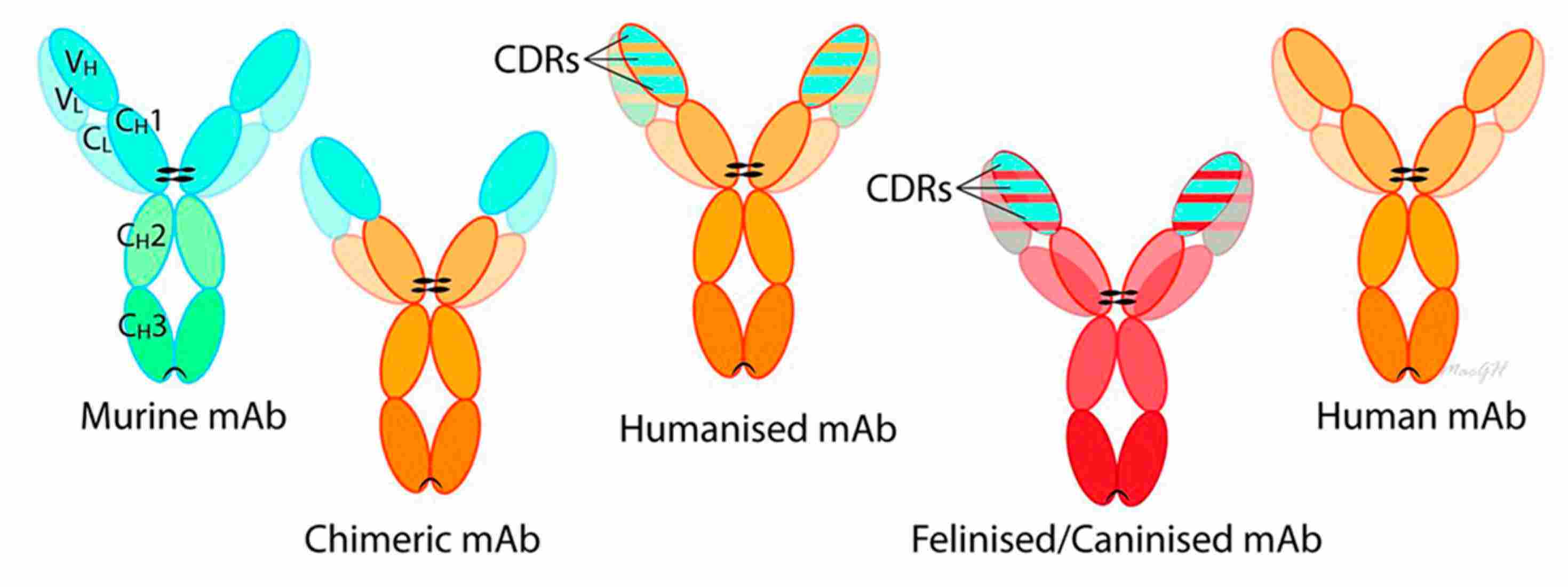 Fig 1. Composition of antibodies.1
Our Advantages
Partner with Creative Biolabs
Targeting CD123 in pets represents a promising frontier in veterinary oncology and immune therapy. Creative Biolabs provides the scientific infrastructure, molecular tools, and animal model expertise to help you advance your therapeutic candidates efficiently and confidently.
Connect with Creative Biolabs today to discuss your Pet CD123 Therapeutic Antibody Development goals and begin a partnership that drives veterinary innovation forward.
Reference
- Wang, Jianzhong, et al. "Current review of monoclonal antibody therapeutics in small animal medicine." Animals 15.4 (2025): 472. Distributed under Open Access license CC BY 4.0, without modification. https://doi.org/10.3390/ani15040472