
Pet CD276 Therapeutic Antibody Development
Creative Biolabs advances innovative biologics for companion animals through a strong focus on immune checkpoint modulation. Our Pet CD276 (B7-H3) Therapeutic Antibody Development program harnesses advanced antibody engineering to target the immune regulatory molecule CD276, a promising candidate for modulating tumor immunity and inflammatory balance in dogs and cats. CD276, also known as B7-H3, is a type I transmembrane protein within the B7 family that plays dual roles in immune activation and inhibition. Dysregulated expression of CD276 has been associated with tumor immune evasion, chronic inflammation, and autoimmune pathologies. By developing species-specific antibodies against this target, Creative Biolabs helps veterinary researchers and biopharma partners design next-generation immunotherapies tailored for companion animals.
Platforms in Therapeutic Antibody Discovery
Our comprehensive discovery platforms are designed for precision, efficiency, and compatibility with canine and feline immune systems. Each discovery pathway supports flexible integration into downstream development workflows. For collaborative research or contract development opportunities targeting CD276, Creative Biolabs offers complete project customization and end-to-end scientific guidance.

- Phage Display: Using proprietary phage display libraries derived from canine and feline antibody repertoires, we identify CD276-specific monoclonal antibodies with optimal affinity and minimal off-target reactivity. This platform accelerates lead discovery while maintaining species relevance.
- Single-B Cell Sorting: We isolate and characterize individual antibody-producing B cells responding to CD276 antigens. This method enables rapid identification of naturally occurring antibodies with favorable binding kinetics and immune functionality, ideal for downstream engineering.
- Hybridoma Technology: Traditional yet powerful, our hybridoma-based approach generates monoclonal antibodies that can be further optimized through sequence engineering, species adaptation, and affinity maturation.
Comprehensive Antibody Development Services
Creative Biolabs provides a full spectrum of antibody development services, ensuring robust characterization, optimization, and preclinical validation of CD276-targeted biologics.
Antibody Characterization
Includes antigen-binding validation, affinity assessment, cross-reactivity profiling, and functional immune assays to determine mechanism-specific effects on immune modulation.
Antibody Engineering
We refine antibody sequences for improved stability, reduced immunogenicity, and species compatibility (caninization/felinization). Engineering also encompasses Fc optimization for enhanced effector function or immune modulation depending on therapeutic intent.
Preclinical Evaluation
Our preclinical research services cover immune cell assays, cytokine profiling, tumor model evaluation, and pharmacokinetic/pharmacodynamic studies in companion animal systems.
Antibody Development
From high-yield recombinant production to analytical validation and formulation development, we deliver scalable, quality-controlled antibody materials for advanced research and preclinical stages.

Why Focus on CD276?

CD276 (B7-H3) is an immunoregulatory molecule expressed on antigen-presenting cells, epithelial tissues, and tumor cells. It functions as part of the immune checkpoint network, modulating T-cell activation and cytokine production. In dogs, overexpression of CD276 has been observed in several tumor types, including mast cell tumors, melanomas, and mammary carcinomas, where it is associated with immune evasion and poor prognosis. In cats, CD276 dysregulation may contribute to chronic inflammation and cancer progression, though mechanistic studies remain in early stages. Targeting CD276 represents a promising strategy to restore immune surveillance, inhibit tumor progression, and rebalance the immune microenvironment in companion animals. Creative Biolabs offers in-depth expertise in validating and engineering anti-CD276 antibodies specifically for these applications.
Mechanism of Action
CD276-targeted therapeutic antibodies exert their effects by modulating the immune checkpoint signaling network. CD276 interacts with T cells and natural killer (NK) cells, influencing their activation and cytokine secretion profiles. Overexpression of CD276 in tumors suppresses immune cell infiltration and promotes an immunosuppressive microenvironment. Neutralizing antibodies can block this interaction, thereby enhancing T-cell activation and cytotoxic responses against tumor cells. Alternatively, agonistic or engineered formats of anti-CD276 antibodies may modulate immune suppression in inflammatory or autoimmune disorders. In companion animals, these approaches hold potential for treating malignancies and immune-related diseases. Through high-throughput binding assays and functional screening, Creative Biolabs optimizes the therapeutic mechanism of each CD276 antibody to achieve disease-specific modulation.
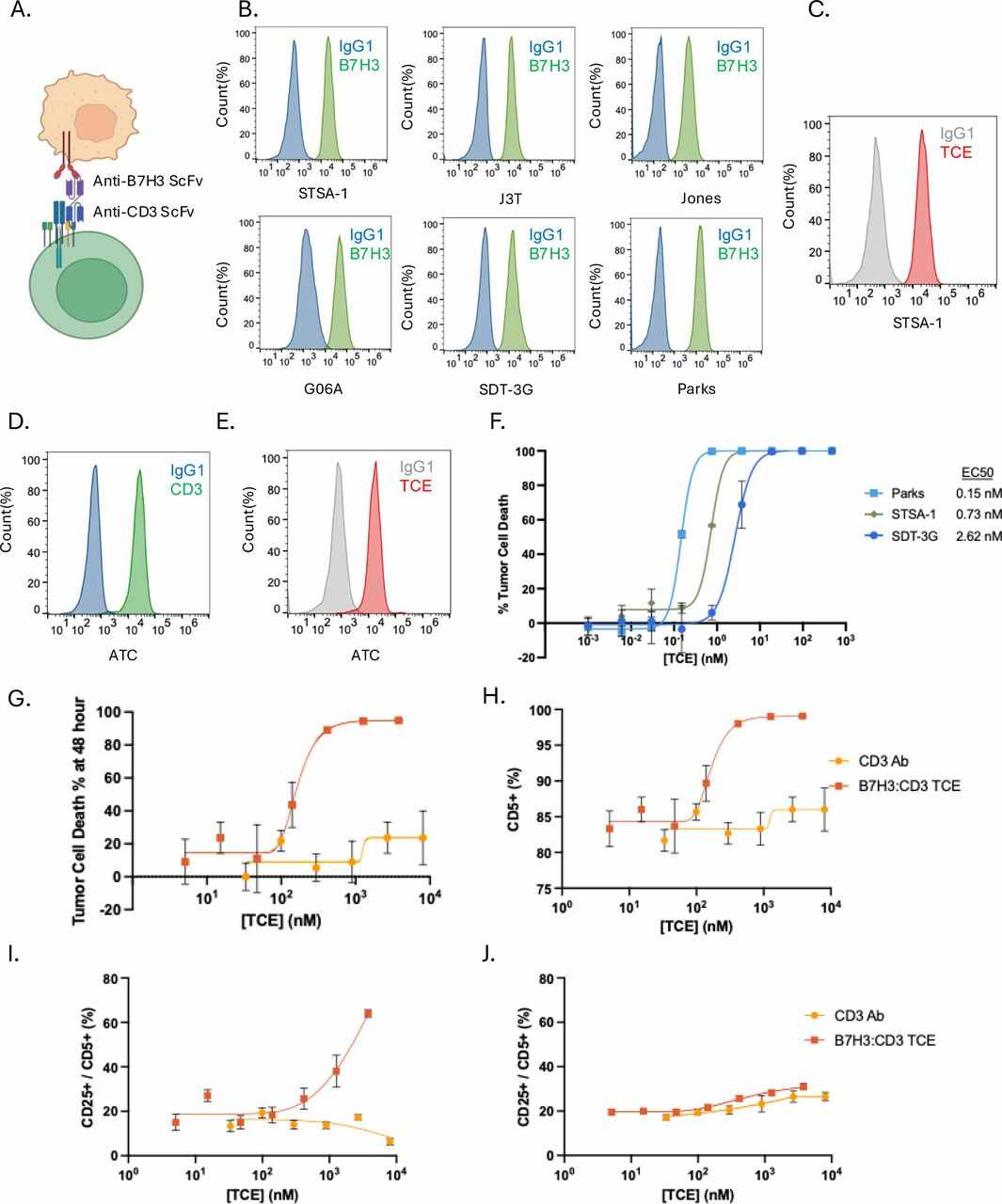 Fig 1. Molecular Characterization and Antigen-Dependent Activation of B7H3:CD3 Bi-specific T-cell engager (TCE).1
Our Advantages
Partner with Creative Biolabs
Creative Biolabs believes collaboration drives the future of veterinary immunotherapy. Our pet CD276 therapeutic antibody development program is open to partnerships with biopharmaceutical companies, research institutions, and veterinary clinical innovators. Together, we can advance the development of CD276-targeted biologics for canine and feline cancers, immune-mediated diseases, and chronic inflammatory conditions. If you are exploring immune checkpoint targets or oncology-focused antibody therapeutics in pets, we invite you to partner with Creative Biolabs. Connect with our scientific experts today to discuss your project objectives and initiate your CD276 antibody development collaboration.
Reference
- Suita, Yusuke, et al. "Intratumoral B7H3: CD3 Bispecific T-cell Engager Drives Localized T-cell Accumulation in Canine Sarcoma Patients." bioRxiv (2026): 2026-05. Distributed under Open Access license CC BY 4.0, without modification. https://doi.org/10.64898/2026.05.27.728355