
Pet CTLA-4 Therapeutic Antibody Development
Creative Biolabs is dedicated to advancing veterinary immunotherapy by translating breakthroughs from human medicine into safe, effective treatments for companion animals. One of the most promising immunoregulatory pathways for therapeutic intervention is cytotoxic T-lymphocyte-associated protein 4 (CTLA-4), a critical immune checkpoint that governs T-cell activation. Dysregulation of this pathway contributes to cancer immune evasion and autoimmune disorders in dogs and cats. Through our specialized antibody discovery and engineering capabilities, Creative Biolabs supports the full spectrum of CTLA-4-targeted therapeutic antibody development, from concept to preclinical evaluation. Our goal is to help veterinary biotech innovators and research institutions design next-generation immunotherapies that improve the lives of companion animals.
Platforms in Therapeutic Antibody Discovery
We offer a complete suite of antibody discovery technologies tailored for veterinary applications, allowing precise targeting of canine and feline CTLA-4. Each platform is selected based on target complexity, project timeline, and desired antibody format.

- Phage Display: Using proprietary species-adapted libraries, we identify high-affinity CTLA-4 binders with diverse epitope coverage and strong functional potential.
- Single-B Cell Sorting: Our single-cell workflows isolate naturally occurring antibody sequences from immunized hosts, enabling efficient transition to fully species-matched canine or feline therapeutic antibodies.
- Hybridoma Technology: A robust and proven approach to generate stable monoclonal antibody-producing cell lines, ideal for initial functional screening and subsequent engineering.
Comprehensive Antibody Development Services
Our comprehensive antibody development pipeline integrates all critical steps necessary for advancing CTLA-4-targeted therapeutics. For collaborators pursuing immune checkpoint therapies, we offer flexible project structures and experienced scientific support from discovery to preclinical proof of concept.
Antibody Characterization
We perform binding assays, receptor-ligand blocking tests, affinity measurement, and epitope mapping to confirm biological relevance.
Antibody Engineering
Optimization for canine or feline use, including Fc domain tuning for enhanced receptor engagement, stability improvements, and reduced immunogenicity.
Preclinical Evaluation
Functional testing in immune cell co-culture models and relevant animal disease models to assess immune modulation, safety, and pharmacokinetics.
Antibody Development
Process development and early-stage manufacturability studies to ensure scalability and regulatory readiness.

Why Focus on CTLA-4?

CTLA-4 is a key inhibitory receptor expressed on activated T cells and regulatory T cells, acting as a brake on immune activation. In dogs, upregulation of CTLA-4 has been linked to several cancers, including lymphoma, melanoma, and osteosarcoma, where it allows tumor cells to evade immune surveillance. In cats, CTLA-4 may also contribute to immunosuppression associated with chronic infections and neoplastic conditions. By blocking CTLA-4, therapeutic antibodies can unleash antitumor immune responses, enhancing T-cell activation and proliferation. Moreover, precise modulation of CTLA-4 can be explored for autoimmune diseases in pets, where immune balance is disrupted. These insights highlight the relevance of CTLA-4 as a high-value immunotherapeutic target for both canine and feline health.
Mechanism of Action
Anti-CTLA-4 antibodies function by blocking the interaction between CTLA-4 and its ligands, CD80 and CD86, on antigen-presenting cells. Normally, this binding suppresses T-cell activation by outcompeting the costimulatory receptor CD28. When CTLA-4 is inhibited, T cells receive stronger activation signals, leading to robust proliferation and cytokine secretion. In oncology applications, this mechanism helps restore antitumor immunity by reactivating cytotoxic T lymphocytes. In autoimmune models, modulating CTLA-4 activity may help re-establish immune homeostasis by selectively adjusting Treg function. Through careful antibody design and preclinical evaluation, it is possible to fine-tune this mechanism for optimal therapeutic outcomes in pets.
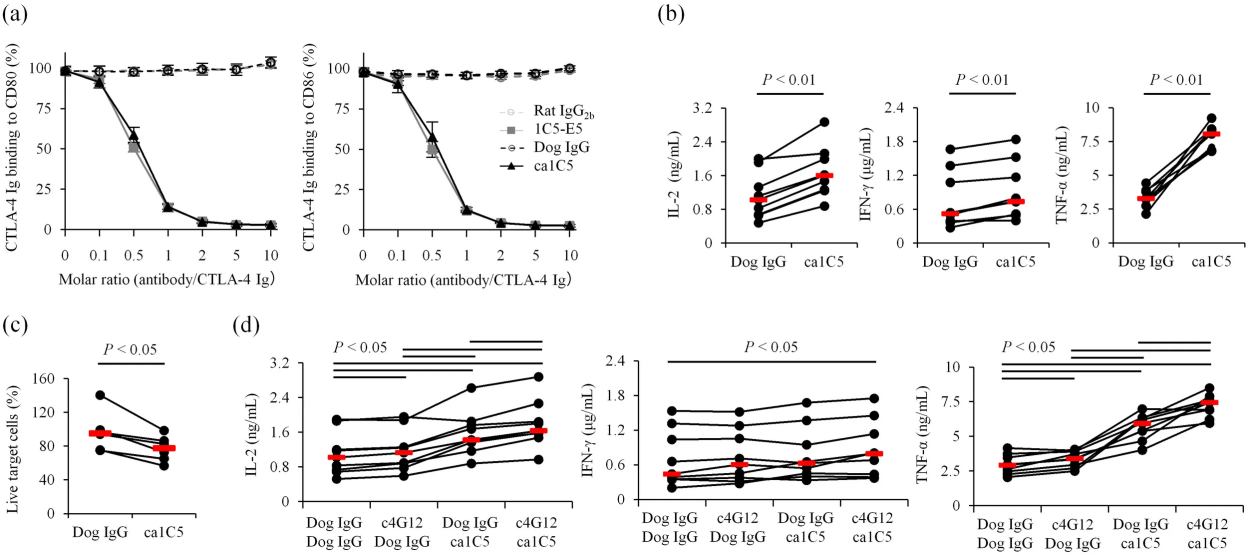 Fig 1. Characterization of caninized anti-CTLA-4 monoclonal antibody.1
Our Advantages
Partner with Creative Biolabs
Targeting CTLA-4 represents a frontier in veterinary immunotherapy, offering the potential to transform cancer and immune disorder management in dogs and cats. Creative Biolabs combines deep immunological insight with advanced antibody technologies to bring your therapeutic concepts to life. Contact our scientific team today to discuss your CTLA-4 antibody development project and explore collaborative opportunities. Let's advance immune checkpoint therapy for companion animals together.
Reference
- Maekawa, Naoya et al. "Development of caninized anti-CTLA-4 antibody as salvage combination therapy for anti-PD-L1 refractory tumors in dogs." Frontiers in immunology vol. 16 1570717. 20 May. 2025. Distributed under Open Access license CC BY 4.0, without modification. https://doi.org/10.3389/fimmu.2025.1570717