
Pet CXCR4 Therapeutic Antibody Development
Creative Biolabs focuses on advancing veterinary biotherapeutics by targeting pathways that shape immunity, inflammation, and disease progression. One such promising pathway involves the chemokine receptor CXCR4, which plays a crucial role in immune cell trafficking, tissue repair, and cancer metastasis. Dysregulated CXCR4 signaling contributes to inflammatory, infectious, and oncological diseases in companion animals. With expertise in antibody discovery and engineering, Creative Biolabs helps partners design therapeutic antibodies against CXCR4 for canine and feline health. If you are exploring this pathway for veterinary applications, our specialized services provide the tools and expertise to bring your project forward.
Platforms in Therapeutic Antibody Discovery
To support CXCR4 antibody development, Creative Biolabs offers multiple complementary discovery platforms. Each platform offers unique advantages, and projects can be tailored to specific therapeutic goals.

- Phage Display: Species-adapted canine and feline antibody libraries enable rapid generation of diverse high-affinity binders against CXCR4.
- Single-B Cell Sorting: Isolation of antigen-specific B cells yields natural antibody candidates that can undergo engineering for enhanced affinity, stability, or reduced immunogenicity.
- Hybridoma Technology: A time-tested approach to generate monoclonals with strong binding capacity, suitable for downstream engineering and preclinical development.
Comprehensive Antibody Development Services
Our integrated workflow ensures that CXCR4-targeted antibody programs progress smoothly from discovery through validation.
Antibody Characterization
Determining binding kinetics, epitope specificity, and functional activity against CXCR4.
Antibody Engineering
Optimization for canine and feline use, including Fc modifications for therapeutic effect, half-life extension, or reduced immunogenicity.
Preclinical Evaluation
In vitro studies on immune cell signaling and migration, coupled with in vivo models of inflammation or oncology for functional validation.
Antibody Development
Full pipeline support from lead optimization to pre-manufacturing assessments, ensuring candidates are robust and ready for translation.

Why Focus on CXCR4?

CXCR4 is a G-protein-coupled receptor that binds its ligand CXCL12 (SDF-1), regulating leukocyte migration, hematopoiesis, and tissue repair. In veterinary medicine, CXCR4 dysregulation has been linked to tumor metastasis in canine cancers such as lymphoma, mast cell tumors, and osteosarcoma. It also plays roles in chronic inflammation, fibrosis, and viral pathogenesis. Cats may similarly experience CXCR4-driven inflammatory or immune-related disorders. By targeting CXCR4 with therapeutic antibodies, it becomes possible to disrupt pathological signaling pathways that underlie tumor progression or inflammatory disease in pets, offering a new therapeutic avenue.
Mechanism of Action
Anti-CXCR4 antibodies act by binding to the extracellular domains of the receptor, preventing the interaction between CXCR4 and its ligand CXCL12. This blockade interrupts downstream signaling cascades responsible for cell migration, proliferation, and survival. In oncology, this mechanism limits metastatic spread by disrupting tumor cell homing to distant tissues. In inflammatory conditions, inhibition reduces leukocyte infiltration and the perpetuation of chronic inflammation. Such targeted modulation allows for selective therapeutic benefits without broadly suppressing immune function, making CXCR4 antibodies highly attractive candidates for canine and feline therapies.
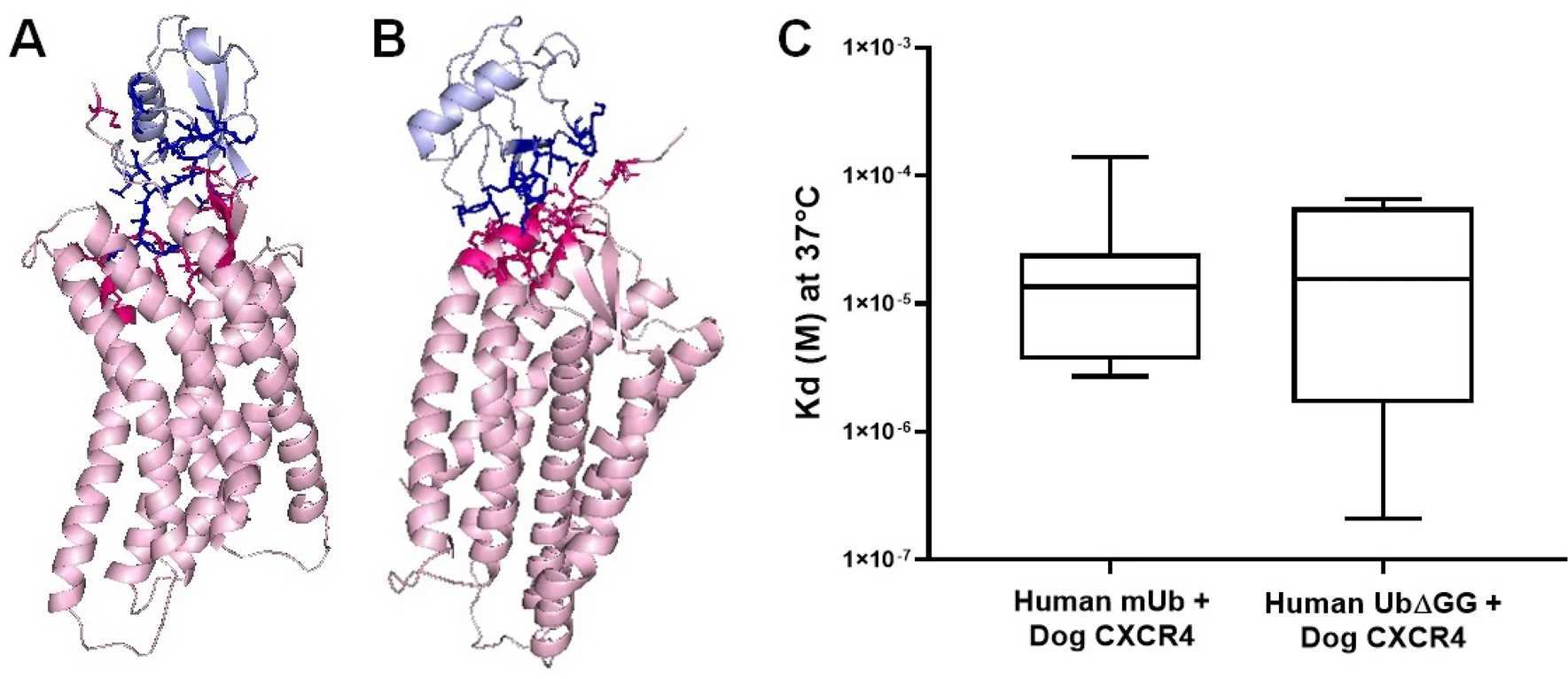 Fig 1. In silico analysis of binding of dog CXCR4 with mUb or Ub∆GG.1
Our Advantages
Partner with Creative Biolabs
Targeting CXCR4 opens opportunities to address unmet needs in veterinary oncology and inflammatory disease management. Creative Biolabs provides the scientific expertise, advanced discovery platforms, and integrated services to help partners bring novel therapies to companion animals.
Contact us today to discuss your CXCR4 therapeutic antibody development goals and discover how our tailored solutions can accelerate your program.
Reference
- Muñoz, Adriana I et al. "Increased survival in puppies affected by Canine Parvovirus type II using an immunomodulator as a therapeutic aid." Scientific reports vol. 11,1 19864. 6 Oct. 2021. Distributed under Open Access license CC BY 4.0, without modification. https://doi.org/10.1038/s41598-021-99357-y