
Pet ICOS/ICOS-L Therapeutic Antibody Development
Creative Biolabs specializes in advancing therapeutic antibody development for companion animals, with a focus on targets of high translational value such as inducible T-cell co-stimulator (ICOS) and its ligand (ICOS-L). These immune checkpoint molecules are central to T-cell regulation and offer promising avenues for addressing autoimmune diseases, chronic inflammation, and even oncology in dogs and cats. By combining advanced discovery platforms with veterinary-specific expertise, we help our partners transform early concepts into clinically relevant antibody therapeutics. If ICOS / ICOS-L modulation is part of your research or development strategy, we encourage you to initiate a discussion with our team.
Platforms in Therapeutic Antibody Discovery
We provide multiple complementary discovery platforms, enabling flexibility and efficiency in the pursuit of ICOS / ICOS-L therapeutic antibodies. These platforms can be tailored depending on program requirements, from rapid lead generation to deeper structural and functional antibody exploration.
- Phage Display: Using canine- and feline-specific phage display libraries, we screen for diverse antibody candidates with high affinity and precision. This method ensures rapid lead identification while accommodating the species-specific immune context of pets.
- Single-B Cell Sorting: By isolating murine B cells that produce ICOS or ICOS-L-specific antibodies, we generate natural monoclonals that can then undergo species reformatting and optimization for therapeutic use in dogs or cats.
- Hybridoma Technology: Hybridomas remain a reliable platform for producing stable antibody candidates, which we subsequently engineer and refine for therapeutic properties suited to veterinary medicine.
Comprehensive Antibody Development Services
Our services span the full development lifecycle to ensure that ICOS / ICOS-L antibodies move seamlessly from concept to preclinical readiness.
Antibody Characterization
Detailed profiling of binding affinity, epitope recognition, and specificity across species to validate therapeutic potential.
Antibody Engineering
Optimization for stability, species compatibility, Fc modifications, and reduced immunogenicity in canine and feline systems.
Preclinical Evaluation
In vitro and in vivo testing to establish proof-of-concept efficacy and safety in relevant veterinary models.
Antibody Development
Integrated workflows supporting progression into translational studies, including scale-up-ready constructs and data packages for regulatory planning.
Why Focus on ICOS / ICOS-L?
ICOS and ICOS-L are co-stimulatory molecules expressed on activated T cells and antigen-presenting cells, respectively. They regulate immune cell proliferation, differentiation, and survival, making them critical players in adaptive immunity. In dogs, aberrant ICOS signaling has been associated with chronic inflammatory disorders and autoimmune conditions such as atopic dermatitis and inflammatory bowel disease. In cats, dysregulation of T-cell activation pathways contributes to immune-mediated diseases and chronic viral infection responses. Targeting ICOS / ICOS-L with therapeutic antibodies provides a means to fine-tune immune responses—either by dampening pathological overactivation or enhancing antitumor immunity—thus offering translational opportunities across multiple disease areas in both species.
Mechanism of Action
Antibodies targeting ICOS or ICOS-L function by blocking or enhancing the interaction between the receptor and its ligand. In cases of autoimmune or inflammatory disease, antagonistic antibodies inhibit ICOS–ICOS-L binding, reducing pathological T-cell activation and subsequent cytokine release. Conversely, in oncology, agonistic ICOS antibodies can amplify T-cell proliferation and effector function, strengthening antitumor immunity. This dual potential makes ICOS / ICOS-L a versatile therapeutic target, with antibodies designed to modulate the pathway according to disease-specific needs in canine and feline medicine.
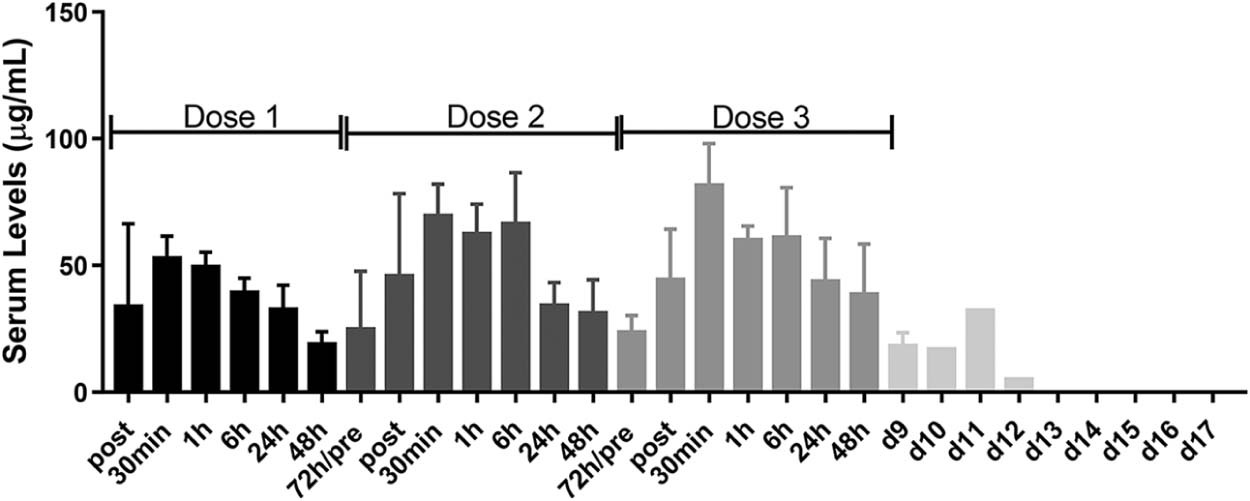 Fig 1. Serum levels of α-ICOS after injection of anti-ICOS mAb.1
Our Advantages
Partner with Creative Biolabs
The therapeutic potential of ICOS / ICOS-L modulation in veterinary medicine is just beginning to be realized. Whether your program is focused on autoimmunity, inflammation, or oncology, Creative Biolabs offers the tools and expertise to bring your ICOS-targeted antibodies from discovery to preclinical validation. Our collaborative approach ensures that every stage of development is strategically aligned with your goals.
Contact us today to explore how Creative Biolabs can support your ICOS / ICOS-L therapeutic antibody development program and help you unlock new possibilities in pet health.
Reference
- Parker, Maura H et al. "Anti-ICOS mAb Targets Pathogenic IL-17A-expressing Cells in Canine Model of Chronic GVHD." Transplantation vol. 105,5 (2021): 1008-1016. Distributed under Open Access license CC BY 4.0, without modification. https://doi.org/10.1097/tp.0000000000003489