
Pet IL-10 Therapeutic Antibody Development
Creative Biolabs delivers advanced solutions for therapeutic antibody discovery and development in companion animals, focusing on targets with high relevance to chronic disease and immune regulation. IL-10 represents a unique therapeutic opportunity, as this cytokine can act as both an anti-inflammatory regulator and, paradoxically, a contributor to disease progression when dysregulated. By combining cutting-edge discovery platforms with integrated preclinical and development services, Creative Biolabs provides comprehensive support to research teams pursuing IL-10 therapeutic antibodies for veterinary applications. For groups considering IL-10 modulation in canine and feline health, we offer tailored pathways to translate promising leads into impactful therapies.
Platforms in Therapeutic Antibody Discovery
We provide multiple discovery platforms, which can be customized or combined to accelerate discovery efficiency.
- Phage Display: Leveraging canine and feline phage display libraries, we rapidly identify antibody candidates targeting IL-10. This platform supports high-throughput screening and ensures the isolation of molecules with strong affinity and specificity.
- Single-B Cell Sorting: Through murine-derived single-B cell sorting, we capture naturally occurring antibody leads against IL-10, which can then undergo downstream engineering and adaptation for canine or feline use.
- Hybridoma Technology: Hybridoma-based methods remain reliable for generating stable monoclonal antibodies against IL-10. Hybridoma discovery is paired with modern engineering workflows to ensure antibody candidates meet the performance requirements of veterinary therapies.
Comprehensive Antibody Development Services
By combining these services, Creative Biolabs ensures a streamlined workflow designed to de-risk projects and accelerate therapeutic readiness. We welcome inquiries from partners seeking tailored IL-10 development strategies.
Antibody Characterization
Comprehensive assessment of binding strength, functional inhibition or enhancement, and cross-reactivity across species.
Antibody Engineering
Optimization of IL-10 antibodies for veterinary applications, including affinity maturation, Fc engineering, and immunogenicity reduction.
Preclinical Evaluation
Rigorous testing of safety, efficacy, and pharmacokinetics using both cell-based assays and relevant animal models.
Antibody Development
Scalable production strategies with robust quality control, enabling smooth transition from research to preclinical and beyond.
Why Focus on IL-10?
IL-10 is a cytokine with potent anti-inflammatory activity that helps regulate immune responses. However, its dysregulation has been linked to a variety of chronic and infectious diseases in companion animals. In dogs, abnormal IL-10 signaling is associated with conditions such as chronic enteropathies and autoimmune disorders, while in cats, it has been implicated in FIV viral infections where immune suppression compromises the host's ability to clear pathogens. In both species, IL-10 modulation presents opportunities for treating inflammatory skin diseases, gastrointestinal disorders, and immune-mediated conditions. Targeting IL-10 allows for therapeutic approaches that either block excessive immune suppression or enhance its protective functions, depending on the disease context.
Mechanism of Action
Therapeutic antibodies directed against IL-10 or its receptor modulate cytokine signaling by either inhibiting or enhancing its interaction with target cells. Blocking antibodies can prevent IL-10 from binding to its receptor, thereby restoring immune activity in contexts where excessive IL-10 leads to immune suppression and chronic infection persistence. Conversely, agonistic antibodies can stabilize IL-10 activity in inflammatory diseases, reinforcing its role as an immune dampener. By fine-tuning the balance of immune activation and regulation, IL-10 therapeutic antibodies provide a targeted mechanism for controlling disease processes in companion animals, offering a more precise alternative to broad immunosuppressants.
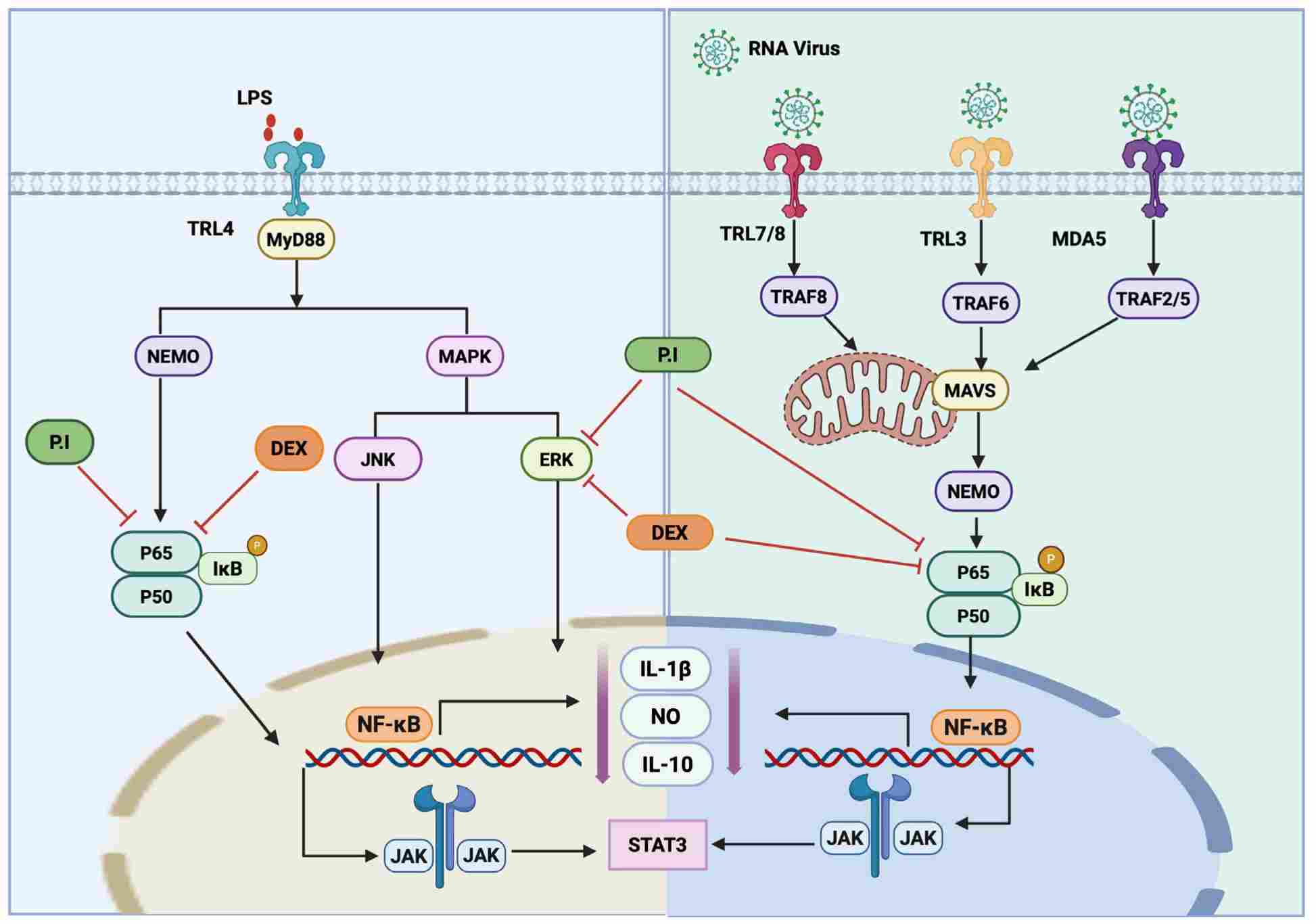 Fig 1. P. indusiatus extract and dexamethasone differentially modulate LPS- and virus-induced inflammatory pathways.1
Our Advantages
Partner with Creative Biolabs
IL-10 represents a complex yet promising therapeutic target for canine and feline health, with applications spanning autoimmune disease, chronic inflammation, and infectious conditions. Creative Biolabs integrates discovery, engineering, and development expertise to unlock the therapeutic potential of this cytokine in pets. By working together, we can design custom strategies that align with your scientific vision and accelerate progress toward new veterinary treatments.
We invite you to connect with our team today. Let's explore how your IL-10 antibody project can move from early-stage discovery to a robust therapeutic candidate with the support of Creative Biolabs.
Reference
- Hlaoperm, Chularat et al. "Immunomodulatory Effects of Phallus indusiatus Extract on Cytokine Responses in PBMCs: Implications for Feline Infectious Peritonitis." International journal of molecular sciences vol. 27,3 1437. 31 Jan. 2026. Distributed under Open Access license CC BY 4.0, without modification. https://doi.org/10.3390/ijms27031437