
Pet JAK1 Therapeutic Antibody Development
Creative Biolabs provides advanced solutions for developing therapeutic antibodies that address the unmet medical needs of companion animals. Our expertise in veterinary biotechnology extends to targeting Janus kinase 1 (JAK1), a key regulator in immune signaling pathways that play central roles in inflammation, immune-mediated disorders, and cancer progression. By integrating discovery platforms, characterization, engineering, and translational development, we support clients in generating high-quality canine- and feline-specific antibody therapeutics. If you are exploring JAK1 inhibition as a strategy for managing chronic diseases in pets, our team can help guide your program from concept to preclinical validation.
Platforms in Therapeutic Antibody Discovery
We offer a suite of complementary discovery platforms to ensure robust and diverse antibody pipelines. We help choose the platform that aligns best with research goals, or combine multiple strategies for increased candidate diversity.
- Phage Display: Using proprietary species-focused libraries, we screen large antibody repertoires for high-affinity binders to JAK1. This method provides rapid access to therapeutic candidates that are optimized for veterinary applications.
- Single-B Cell Sorting: This approach isolates naturally occurring JAK1-specific antibodies from immunized animals, preserving authentic heavy- and light-chain pairing. The resulting candidates are highly functional starting points for downstream engineering.
- Hybridoma Technology: A well-established platform, hybridomas provide stable monoclonal antibody sources that can be subsequently optimized for improved potency, safety, and developability in canine and feline models.
Comprehensive Antibody Development Services
Our service portfolio ensures antibody candidates progress seamlessly through each stage of development. Our integrated workflow minimizes risk and ensures continuity, making it easier for clients to achieve their therapeutic milestones efficiently.
Antibody Characterization
We evaluate binding affinity, specificity, epitope recognition, stability, and biological activity to confirm candidate suitability.
Antibody Engineering
We refine antibodies for enhanced therapeutic properties, including affinity maturation, Fc modifications, and species-specific optimizations.
Preclinical Evaluation
In vitro assays and in vivo models assess efficacy, pharmacokinetics, and safety to support translational decision-making.
Antibody Development
We provide scalable antibody expression systems, purification, and quality control to deliver material ready for preclinical or veterinary clinical studies.

Why Focus on JAK1?

JAK1 is a tyrosine kinase that plays a pivotal role in the JAK-STAT signaling pathway, mediating cytokine receptor signaling involved in immunity and inflammation. Dysregulated JAK1 activity contributes to chronic inflammatory diseases, autoimmune disorders, and certain cancers in companion animals. In dogs, aberrant JAK1 signaling is linked to allergic dermatitis and inflammatory arthritis, while in cats, immune-mediated conditions such as dermatitis and chronic gastrointestinal inflammation are of concern. Since JAK1 is central to multiple disease pathways, therapeutic antibodies targeting this kinase represent a promising opportunity to develop safer and more precise alternatives to small-molecule inhibitors for both species.
Mechanism of Action
JAK1-targeting antibodies function by binding to the kinase or interfering with receptor-associated signaling, thereby blocking the downstream phosphorylation events that activate STAT transcription factors. This inhibition disrupts the cascade of inflammatory gene expression, reducing pathological immune activation. By modulating JAK1 selectively, these antibodies can diminish inflammation while preserving other signaling pathways necessary for normal immune function. In companion animals, this mechanism translates into potential therapies that alleviate chronic pruritus, joint inflammation, and immune-mediated disease symptoms while minimizing side effects associated with broader immunosuppressive approaches.
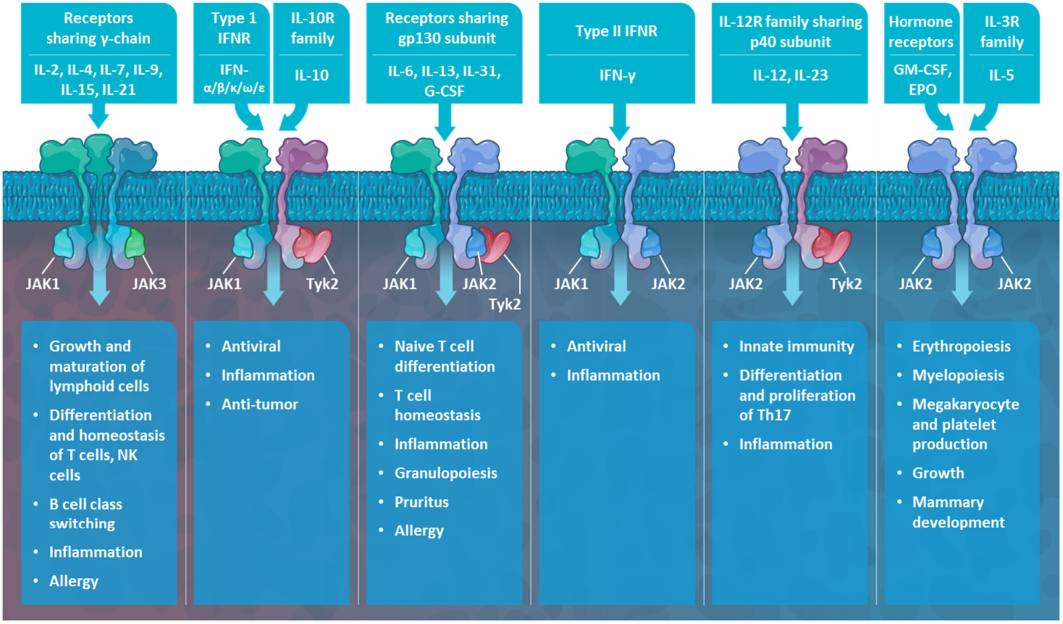 Fig 1. Cytokine cell surface receptor families and associated receptor complexes that utilize intracellular JAK enzymes for signaling.1
Our Advantages
Partner with Creative Biolabs
The demand for innovative therapies addressing chronic inflammatory and immune-mediated diseases in pets is rapidly increasing. JAK1-targeted antibody development represents a forward-looking strategy to provide safe and effective treatments for companion animals. Creative Biolabs is committed to helping partners translate this opportunity into reality with scientifically rigorous, species-specific solutions. Whether you are initiating early discovery or preparing for preclinical evaluation, our team is ready to collaborate. Contact us today to begin a conversation about advancing your JAK1 therapeutic antibody program.
Reference
- Nederveld, Steven M et al. "Safety of the Selective JAK1 Inhibitor Oclacitinib in Dogs." Journal of veterinary pharmacology and therapeutics vol. 48,3 (2025): 135-145. Distributed under Open Access license CC BY 4.0, without modification. https://doi.org/10.1111/jvp.13503