
High-Quality Recombinant Antigens for Veterinary R&D Decisions
Reliable Recombinant Veterinary Antigens for Discovery, Assay, and Vaccine Research
The development of novel pet therapeutics, monoclonal antibodies, vaccines, and diagnostic tools depends on high-quality antigens. Recombinant expression is a cornerstone technology for producing these critical reagents by inserting a defined gene into a suitable host system, such as bacteria, yeast, insect cells, or mammalian cells, so the desired protein can be generated in a controlled and reproducible manner.
Creative Biolabs supports veterinary antigen projects from sequence review and codon optimization through expression, purification, and quality control, helping reduce yield, solubility, activity, and timeline uncertainty. Each project is configured around the target sequence, species origin, required post-translational modifications, downstream use, and preferred delivery format, providing validated material and documentation suitable for downstream veterinary antibody discovery and translational research.
Protein Antigen Generation Workflow from Gene Design to QC Release
Creative Biolabs uses a transparent, stepwise workflow to minimize expression risk and keep veterinary R&D teams informed from concept to purified recombinant antigen delivery.
Recommended Starting Information
- Target sequence and source species
- Preferred antigen domain or full-length format
- Required tag, cleavage, or secretion strategy
- Expected downstream assay or immunization use
- Desired purity, quantity, and timeline
- Known solubility or PTM requirements
Typical Deliverables
- Codon-optimized gene and construct summary
- Pilot expression and optimization data
- Purified recombinant antigen
- SDS-PAGE, Western blot, and concentration results
- Purity and batch documentation
- Recommendations for downstream use
Comparison of Recombinant Veterinary Antigen Expression Platforms
Choosing the right host system is critical for producing a functional veterinary antigen. Creative Biolabs offers a multi-platform approach and helps match the system to target complexity, activity needs, yield, and downstream application.
| Expression System | Key Advantages | Common Limitations | Ideal For |
|---|---|---|---|
| Bacterial (E. coli) |
|
|
Non-glycosylated proteins, antibody screening antigens, and prokaryotic targets. |
| Yeast (P. pastoris) |
|
|
Cost-effective production of secreted or moderately glycosylated veterinary proteins. |
| Insect (Baculovirus) |
|
|
Viral glycoproteins, intracellular enzymes, and targets requiring disulfide bonds. |
| Mammalian (HEK293, CHO) |
|
|
Therapeutic antibody targets, hormones, and proteins requiring authentic biological activity. |
Not sure which system fits your veterinary antigen?
Share the target sequence, species, and intended application. Our scientists can recommend an expression route and pilot strategy before full production begins.
Published Data on Recombinant Veterinary Antigen Construction, Purification, and Assay Use
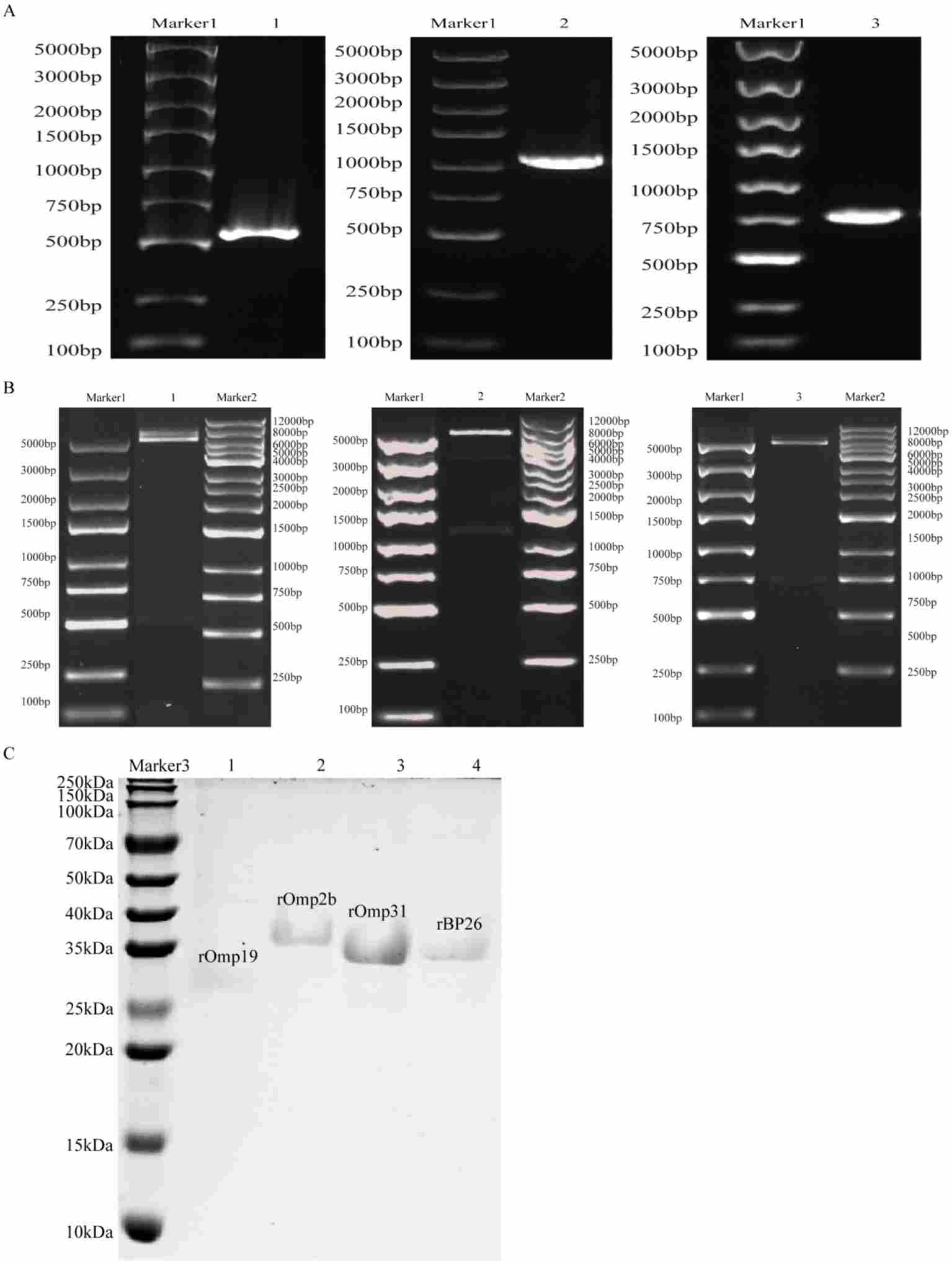
In a 2026 study, Guo et al. cloned multiple Brucella outer membrane protein genes into pET-30a constructs, expressed recombinant antigens in E. coli, and verified purified proteins by Coomassie-stained SDS-PAGE. The figure is relevant to recombinant veterinary antigen expression because it connects gene amplification, vector confirmation, and purified antigen QC in a single workflow.
The study elements align with Creative Biolabs' service scope, including sequence-to-construct planning, bacterial expression, purification, SDS-PAGE-based purity assessment, concentration analysis, and use of recombinant antigens in veterinary serological assay development. These evidence points support a practical service strategy that balances expression system selection, pilot optimization, QC documentation, and downstream antibody or diagnostic application.
Service Advantages for Recombinant Veterinary Antigen Expression
Creative Biolabs combines veterinary protein science, expression platform flexibility, and practical QC documentation to help antigen projects progress with confidence.
Species-Specific Solutions
Species-matched antigen designs support canine, feline, and other veterinary research programs.
Multi-Platform Expression
Flexible bacterial, yeast, insect, and mammalian platforms match protein complexity.
Transparent Workflow
Pilot optimization reduces expression, solubility, and purification risks before scale-up.
Comprehensive QC
QC packages document identity, purity, concentration, and downstream readiness.
Recombinant Veterinary Antigen Expression FAQs
References
- Guo, Mixue, et al. "Optimizing ovine brucellosis serodiagnosis: evaluation of recombinant Brucella antigens and multi-antigen combinations for iELISA." Frontiers in Veterinary Science 13 (2026): 1775573. https://doi.org/10.3389/fvets.2026.1775573
- Distributed under Open Access license CC BY 4.0, without modification.