
Purpose-Built Phage Display Libraries for Veterinary Antibody Programs
Custom phage display library construction creates a project-specific repertoire when an existing library cannot adequately represent the required species, immune history, breed, disease context, antibody format, or sequence design. The resulting genotype–phenotype linkage enables large antibody populations to be enriched against a defined antigen through iterative selection.
Creative Biolabs connects repertoire design, molecular construction, library quality control, biopanning, clone confirmation, sequencing, and optional antibody production within one workflow. Each program is configured around target biology and downstream use, helping veterinary research teams obtain traceable scFv, Fab, or other antibody candidates supported by sequence and binding data.
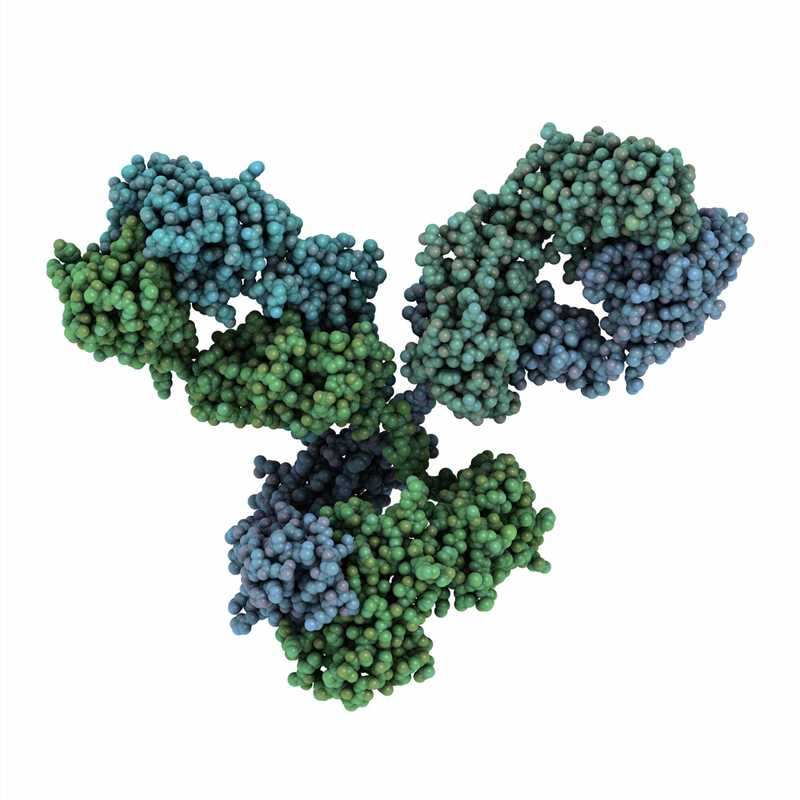
Library Formats Selected for Repertoire, Target, and Development Needs
The most useful custom library is not defined by clone count alone. Source material, variable-gene coverage, insert integrity, display performance, and the planned selection strategy must work together.
Immune Library Construction
Immune libraries capture antibody variable-region repertoires after exposure to a relevant antigen or disease context. We can evaluate species, donor strategy, sample type, immune response, RNA quality, and desired antibody format before primer design and amplification. This route can enrich the starting repertoire for antigen-experienced sequences, making it useful when a strong and relevant immune source is available for a canine, feline, or other veterinary program.
Naïve and Synthetic Library Design
Naïve libraries draw variable genes from non-immunized repertoires and can support screening across multiple target classes. Synthetic or semi-synthetic designs introduce planned diversity into selected complementarity-determining regions while retaining chosen frameworks. We align framework choice, CDR randomization, codon design, length distribution, theoretical diversity, and expression constraints with the desired fragment format and downstream engineering strategy.
Library QC and Target-Specific Screening
Constructed libraries are assessed for transformation output, insert rate, sequence diversity, frame correctness, display, and representative clone quality before screening. Biopanning can then incorporate purified antigen, captured antigen, cells, homolog depletion, tag depletion, competitive selection, or off-rate pressure. Clone-level assays and sequencing identify confirmed, nonredundant binders that can advance into soluble expression and characterization.
From Repertoire Planning to Sequence-Defined Antibody Leads
Stage gates connect library quality, enrichment behavior, clone specificity, and lead-selection evidence throughout the discovery workflow.
| Stage | Technical Activities | Representative Outputs | Key Decision |
|---|---|---|---|
| Project Design | Review species, donor or sequence source, antibody format, target presentation, controls, and performance criteria. | Library architecture, sample plan, antigen plan, and acceptance criteria. | Which repertoire and format best fit the program? |
| Library Construction | Prepare RNA and cDNA when applicable, amplify variable genes, assemble scFv or Fab inserts, clone into phagemid, transform, and rescue. | Custom phage display library with documented construction records. | Has construction produced adequate scale and integrity? |
| Library QC | Measure transformants, insert frequency, sequence diversity, reading-frame quality, display, and soluble-expression indicators. | QC dataset defining functional library readiness. | Does the library meet screening specifications? |
| Panning and Hit Screening | Perform iterative selection, depletion, enrichment monitoring, clone isolation, and primary binding confirmation. | Confirmed target-binding clones and enrichment data. | Which clones are specific and reproducible? |
| Sequence and Characterization | Sequence positive clones, cluster unique families, express selected fragments, and run agreed orthogonal assays. | Sequence-defined leads, optional purified material, and final report. | Which candidates should progress to engineering? |
Recommended Starting Information
- Target name, sequence, species relevance, and mechanism
- Available antigen, cells, DNA, RNA, lymphocytes, or tissues
- Immune status and collection details for donor-derived material
- Preferred scFv, Fab, VHH, or other display format
- Required counter-targets and cross-reactivity profile
- Desired final material, assays, and sequence package
Typical Final Deliverables
- Library design and construction summary
- Library size, insert, diversity, and display QC
- Biopanning enrichment and clone-screening results
- Unique DNA and amino acid sequences
- Optional purified fragments or reformatted antibodies
- Final report with candidate-selection rationale
Choose a library strategy before committing valuable samples
Share the available repertoire source, antigen, target class, species context, and downstream goal. We can help define whether an immune, naïve, synthetic, or premade route is appropriate.
Published Data on Antibody Phage Library Construction
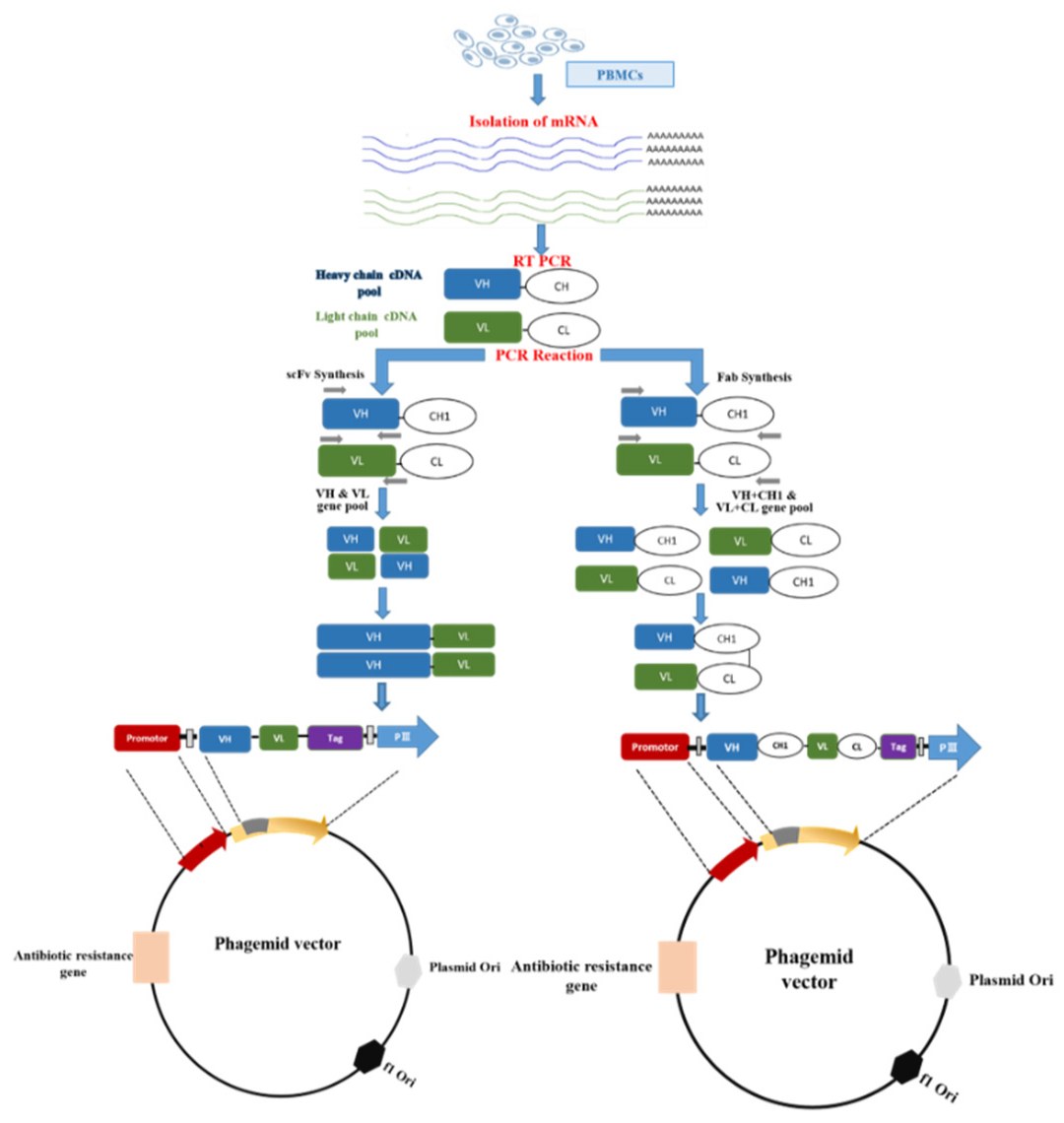
Bashir and Paeshuyse summarized the construction of antibody phage libraries for veterinary applications. The figure traces donor-derived peripheral blood mononuclear cells through mRNA isolation, reverse transcription, variable-region amplification, scFv or Fab assembly, and phagemid cloning, illustrating the molecular decisions that establish genotype–phenotype linkage before library screening.
These study elements align with Creative Biolabs' custom library service scope: sample and repertoire assessment, species-aware primer strategy, variable-gene recovery, fragment assembly, vector construction, bacterial transformation, and library quality control. The resulting library can then enter target-specific biopanning, clone confirmation, sequence analysis, soluble expression, and downstream veterinary antibody characterization.
Why Choose Creative Biolabs for Custom Library Discovery?
Our service connects veterinary repertoire design with measurable library QC, target-aware selection, and downstream antibody development options.
Species-Aware Repertoire Design
Library architecture reflects veterinary species, sample source, target biology, and intended format.
Documented Library Quality
Size, insert integrity, diversity, sequencing, and display metrics support screening readiness.
Target-Adapted Selection
Positive, negative, cell-based, competitive, and off-rate strategies address challenging antigens.
Connected Lead Development
Expression, characterization, reformatting, and engineering can continue from documented hit sequences.
Custom Library Construction and Screening FAQs
Partner with Creative Biolabs
Build a traceable, screening-ready repertoire around your veterinary species, biological material, antigen, and downstream objectives. Our team can connect custom library construction with hit discovery and antibody development.
References
- Bashir, Shahbaz, and Jan Paeshuyse. "Construction of Antibody Phage Libraries and Their Application in Veterinary Immunovirology." Antibodies 9.2 (2020): 21. https://doi.org/10.3390/antib9020021
- Panagides, Nadya, et al. "Evaluation of Phage Display Biopanning Strategies for the Selection of Anti-Cell Surface Receptor Antibodies." International Journal of Molecular Sciences 23.15 (2022): 8470. https://doi.org/10.3390/ijms23158470
- Distributed under Open Access license CC BY 4.0, without modification.