


Anti-Glycan Antibody related Services
Accelerate Your Antibody Development!
Are you currently facing challenges in identifying novel therapeutic targets, achieving highly specific diagnostic reagents, or navigating the complexities of glycan-related research? Anti-Glycan Antibody Related Services at Creative Biolabs help you accelerate discovery and develop highly specific antibodies through advanced immunization strategies and cutting-edge phage display technology.
Contact our team to get an inquiry now!
Background
Carbohydrates, biochemically termed glycans, form an essential class of biomolecules prevalent across all life forms, present in blood components, immunological cells, and microbial organisms. Anti-glycan antibodies are specialized immunoglobulins concentrated on erythrocyte membranes. These glycans are vital in mediating cell adhesion, protein conformation, intracellular transport, signal transduction, developmental processes, and immune modulation. Aberrant glycosylation is a pathogenic factor in conditions like neoplastic transformation, inherited glycosylation defects, autoimmune conditions, and metabolic dysfunctions. Antibody-based methods serve as vital tools for spatial analysis, quantification, and functional characterization of glycan distribution and activity. Moreover, serum anti-glycan antibodies exhibit potential as precision therapies for diverse cancers.
Anti-Glycan Antibody
While glycans ubiquitously coat cellular and viral surfaces, they typically fail to induce adaptive immune activation comparable to proteinaceous epitopes. Notably, glycan-binding immunoglobulins constitute significant fractions across antibody isotypes. Immunogenic carbohydrate motifs triggering humoral responses typically comprise non-host saccharide configurations—either singular hexose units or short-chain glycopolymers.
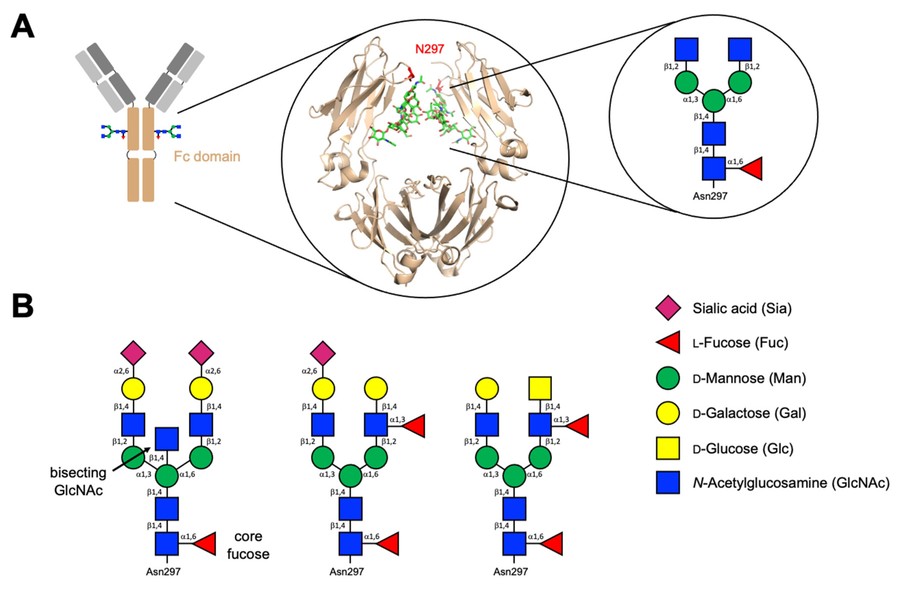 Fig.1 Cartoon representation and 3D structure of the Fc domain of a typical IgG and its Fc N-glycan.1,3
Types of Carbohydrate Antigens
Glycoantigens exhibit diverse macromolecular architectures, including polysaccharides, glycoconjugates (glycoproteins, glycolipids), glycosphingolipids, glycosaminoglycans, and proteoglycans. Based on biosynthetic origin, these saccharide-based epitopes are stratified into xenogenic (pathogen-derived) and allogenic (host-derived) categories. The former originate from microbial biosynthesis, while the latter arise through endogenous mammalian expression. Microbial glycoforms span structural categories including capsular polysaccharides, membrane glycolipids, and secretory glycoproteins. Alloantigenic examples encompass blood group determinants—complex glycans assembled through sequential glycosyltransferase isozyme activity, transferring monosaccharides from activated sugar nucleotides to acceptor scaffolds. Clinically, numerous glycoantigens now serve as oncodiagnostic biomarkers for immunodetection and malignancy stratification across carcinomas.
Production of Anti-Glycan Antibody
In recent decades, various methodologies have been employed for recombinant immunoglobulin generation. Anti-glycan antibody development remains particularly challenging due to carbohydrate structural homology with endogenous epitopes. Leveraging our specialized expertise and cutting-edge technologies, Creative Biolabs has optimized phage display and hybridoma systems to facilitate novel antibody identification for therapeutic agents targeting molecular signatures. Notably, we have achieved successful isolation of glycan-specific immunoglobulins, demonstrating functional binding affinities toward mannose-depleted structures and tumor-associated carbohydrate biomarkers.
Click the bottom to discover our service for Anti-Glycan Antibody Development, Engineering and Detection.



Published Data
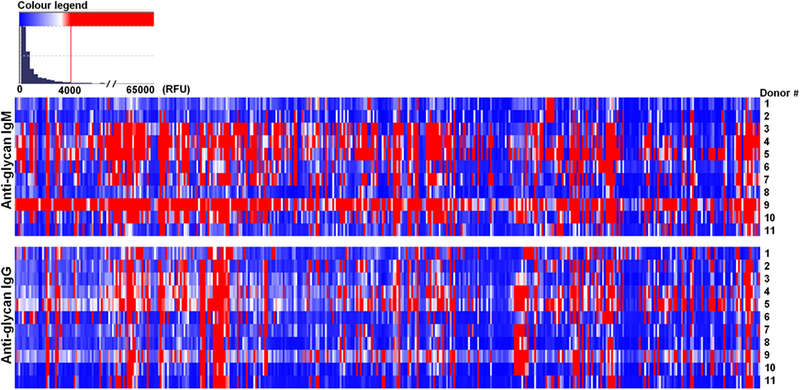 Fig.2 Humans showing different repertoire of natural circulating anti-carbohydrate antibodies.2,3
A printed glycan array (PGA) study characterized endogenous carbohydrate-reactive immunoglobulins across 20 murine models and 11 human participants. The platform integrated 419 custom-synthesized glycostructures spanning ABO blood group epitopes, mammalian N-/O-glycan architectures, tumor-specific glycotopes, and pathogen-derived glycopolymers. Mouse serum samples (1:15 dilution) were incubated on glycochips, with sequential detection via biotinylated anti-murine Ig probes complexed with Cy5-streptavidin conjugates, enabling signal quantification in RFU. Analytical outcomes demonstrated murine serum antibodies interacting with 71 distinct glycans, 12 of which exhibited median fluorescence intensities surpassing 10,000 RFU. Notably, only 7 of these 12 glycans were recognized by antibodies from all mice, and another 5 by at least 80% of the animals, indicating individual variability within the inbred strain. Crucially, the pattern of glycans predominantly recognized by circulating antibodies in BALB/c mice differed significantly from that observed in human natural anti-carbohydrate antibodies. For instance, high levels of anti-LeX were found in 80% of BALB/c mice but were absent in humans. Conversely, certain top human anti-glycan specificities, like GlcNAcβ-terminated structures, were entirely missing or at very low levels in mice. These results underscore distinct natural anti-glycan antibody repertoires between inbred mice and humans.
What We Can Offer?
Creative Biolabs is proud to offer our clients a comprehensive series of anti-carbohydrate antibody development services with the best quality and most competitive pricing. Aided by our state-of-the-art technology and professional scientists, we are able to help global customers produce anti-carbohydrate antibodies tailored to their specific needs.
- Monoclonal / Polyclonal Anti-Glycan Antibody Development
- Anti-Glycan Antibody Engineering
- Glycan Antigen Preparation & Conjugation
- Custom Glycan Array Screening
- Antibody Characterization & Validation
Experience the Creative Biolabs Advantage - Get a Quote Today
Why Choose Us?
Creative Biolabs stands as a leader in anti-glycan antibody services due to our unparalleled expertise and innovative solutions. Our commitment to quality and client success sets us apart:
- Specialized Glycan Expertise: Years of focused experience in glycoimmunology and carbohydrate antigen presentation.
- Cutting-Edge Technology: Proprietary anti-glycan antibody platform leveraging advanced immunization strategies, including specialized animal models for "self" antigen challenges, and powerful phage display technology for high-throughput screening.
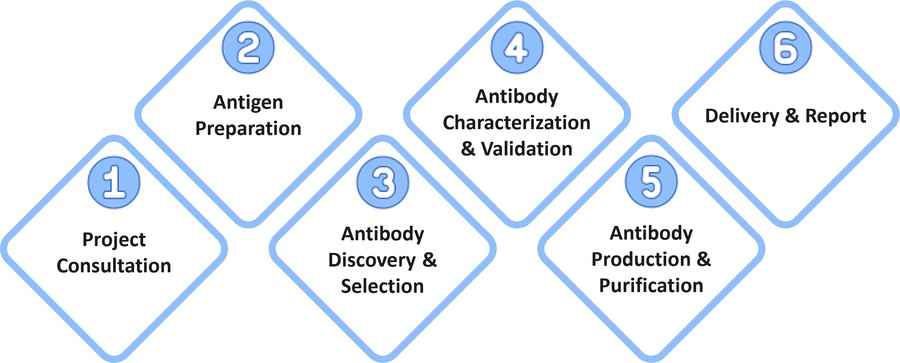
- Comprehensive Service Spectrum: From antigen preparation and immunization to antibody discovery, engineering, and robust characterization.
- High Specificity & Low Cross-Reactivity: Rigorous screening and validation processes ensure antibodies exhibit exceptional specificity, minimizing off-target binding crucial for diagnostic and therapeutic applications
- Tailored Solutions: Customized project design to meet the unique requirements of each client's glycan target and application
- Quality & Reliability: Adherence to strict quality control standards at every stage, ensuring reproducible and reliable results.
Workflow
FAQs
Here are some frequently asked questions from potential clients interested in Kidney Targeting Module Development:
Q: How do glycan-specific immunoglobulins function, and why are they biopharmaceutically significant?
A: These antibodies selectively bind carbohydrate moieties on cellular surfaces and biomolecules. Their therapeutic value lies in identifying pathological glycosignatures prevalent in malignancies, autoimmune pathologies, and infectious diseases, facilitating biomarker-driven diagnostics and molecularly targeted interventions.
Q: What fundamental processes govern glycan-targeting antibody generation?
A: Critical phases involve epitope selection, antigen synthesis/conjugation, xenogeneic immunization, hybridoma derivation for clonal antibodies, high-throughput specificity/avidity screening, followed by industrial-scale production and purification for clinical applications.
Q: What technical barriers hinder carbohydrate-targeting antibody development, and how are they addressed?
A: Key obstacles involve glycan conformational heterogeneity, suboptimal immunogenicity, and cross-reactivity risks. Resolution approaches implement glycomic array screening, chemobioconjugation approaches for epitope stabilization, and multidimensional validation protocols to verify target specificity and biological activity.
Q: What validation standards govern therapeutic suitability of saccharide-targeting antibodies?
A: Certification mandates antigenic determinant characterization, kinetic parameter quantification via SPR/BLI, functional pathway modulation assays, preclinical toxicological profiling, and alignment with Good Laboratory Practice (GLP) validation matrices to ensure clinical applicability and biosimilar equivalence.
Q: Why involve specialized teams in glycan-targeting antibody initiatives?
A: Strategic partnerships enable requirement analysis through co-creation sessions, phase-gated immunogen development, antibody repertoire generation/screening, affinity optimization iterations, and post-production refinement for seamless integration into biomanufacturing workflows.
Related Products
To further support your research and development in glycobiology, Creative Biolabs offers a suite of products:
- Monoclonal Antibodies
- Polyclonal Antibodies
- Secondary & Tag Antibodies
- Isotype & Loading Control Antibodies
- Carbohydrate Antigens
Creative Biolabs offers a series of anti-glycan antibody-related services for worldwide customers. To explore these capabilities, please contact us for more information.
References:
- Li, Shasha, et al. "Glycoengineering of therapeutic antibodies with small molecule inhibitors." Antibodies 10.4 (2021): 44.
- Bello-Gil, Daniel, et al. "Repertoire of BALB/c mice natural anti-carbohydrate antibodies: mice vs. humans difference, and otherness of individual animals." Frontiers in Immunology 8 (2017): 1449.
- Distributed under Open Access license CC BY 4.0, without modification.