


Carbohydrate Antigens
Accelerate Your Glycan-Based Discoveries!
Are you currently facing challenges in developing highly specific and sensitive antibodies for your research or diagnostic applications? Creative Biolabs' Anti-Glycan Antibody Products help you accelerate discovery and obtain high-quality, versatile antibodies through advanced immunization and purification techniques. We empower your projects with reagents optimized for demanding biochemical and biopharmaceutical needs.
Contact our team to get an inquiry now!
Carbohydrate Antigen
Carbohydrate antigens encompass diverse polymeric sugar structures and glycoconjugate architectures exhibiting conformational epitopes. While antigenic carbohydrate research initially focused on microbial polysaccharides, its scope now spans tumor-associated glycans and synthetic epitope design. As glycomics enters its formative phase, Creative Biolabs has established scientific authority through pioneering contributions to glycobiomarker discovery and antigen characterization. Our team of glycosylation specialists employs cutting-edge analytical platforms to decipher glycan structural complexity and antigen-antibody interactions. Furthermore, we deliver integrated solutions spanning preliminary feasibility assessments to advanced bioinformatics interpretation, supported by proprietary glycoengineering workflows and tailored antibody development services.
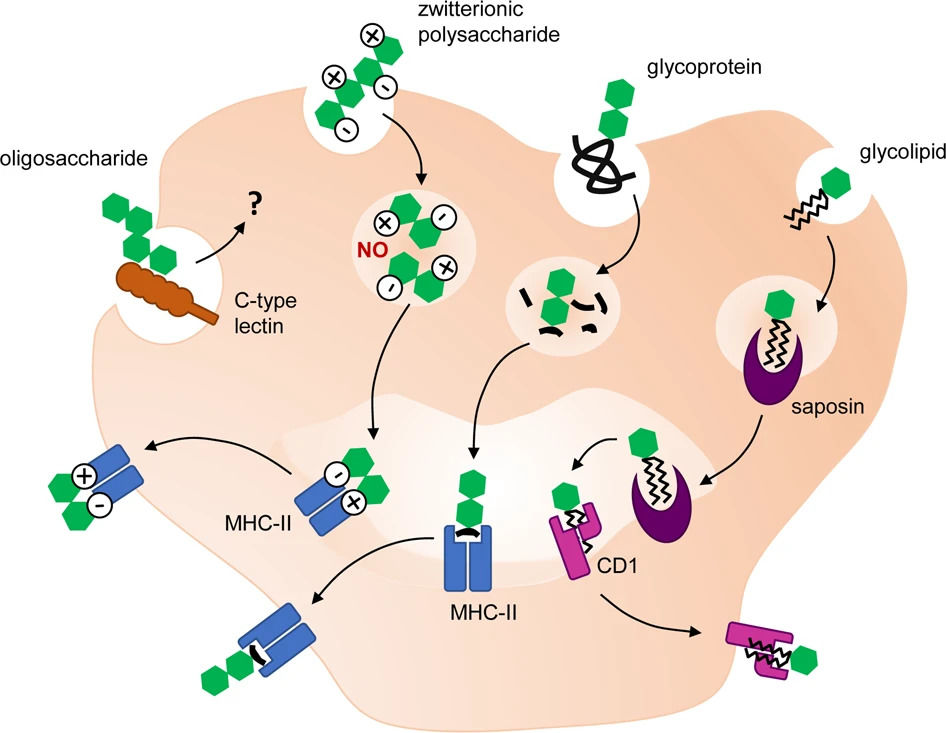 Fig.1 Antigen processing and presentation for different types of carbohydrate structures.1
Classification
Glycoantigens exhibit diverse macromolecular architectures, including polymeric saccharides, protein-linked glycosylated complexes, glycopeptide assemblies, glycosylated lipid derivatives, amino sugar polymers, and sphingolipid-anchored glycans. By biological origin, these sugar-based immunogens are conventionally categorized into microbial-derived antigens and host-synthesized alloantigens. Microbial species biosynthesize the former class, whereas mammalian cellular systems generate the latter.
Certain carbohydrate polymers, notably microbial glycan polymers, function as complete immunogens capable of eliciting antibody production in susceptible organisms. Alternatively, oligosaccharide components within glycolipoprotein complexes may act as immunodominant epitopes, classified as haptenic determinants in immunological contexts. While dictating immune specificity, these moieties lack inherent immunogenicity in their isolated, unconjugated states. This dual functionality necessitates classifying glycomacromolecules into two immunological paradigms: T lymphocyte-dependent (TD) and T lymphocyte-independent (TI) antigenic forms.
Biological Values
Carbohydrates exhibit unparalleled capacity for structural variation, making them critical components of surface molecular landscapes. These biomolecules encode essential biological coding that enables selective recognition through both soluble receptors and cell-surface lectins.
In multicellular eukaryotes, glycoconjugate biosynthesis demonstrates remarkable cellular and tissue specificity, with elaborate glycan architectures serving as developmental stage biomarkers. Microbial systems employ unique polysaccharide configurations as pathogen-specific molecular identifiers, distinctive patterns expressed on cell membranes or secreted extracellular matrices. Decrypting glycan-encoded biological intelligence constitutes a pivotal objective in post-genomic investigation.
Clinically, tumor-associated glycoepitopes (TAGs) correlate with tumor progression kinetics, histological differentiation states, and metastatic potential, offering diagnostic and prognostic utility. Specific TAGs function as metastasis-determining adhesion molecules through host tissue ligand interactions. Anti-TAG monoclonal antibodies now serve dual roles: conventional diagnostic tools and therapeutic agents disrupting tumor-endothelial adhesion cascades to inhibit metastasis.
Anti-Carbohydrate Antibody Services in Creative Biolabs
Antibodies mediate the primary mechanism for active elimination of infectious pathogens from the bloodstream. Carbohydrate antigens have capabilities to induce carbohydrate-specific antibodies and react with them. And this induction could occur without the help of T lymphocytes and also be recognized by cell-surface lectins.
Carbohydrate antigen, as a classical immunological topic, has obtained a renewed interest in the new millennium. Creative Biolabs offers antibody glycoengineering services and antibody identifications targeting carbohydrate antigens for global clients, and our research includes but not limited to:
Click the buttons to discovery more
Published Data
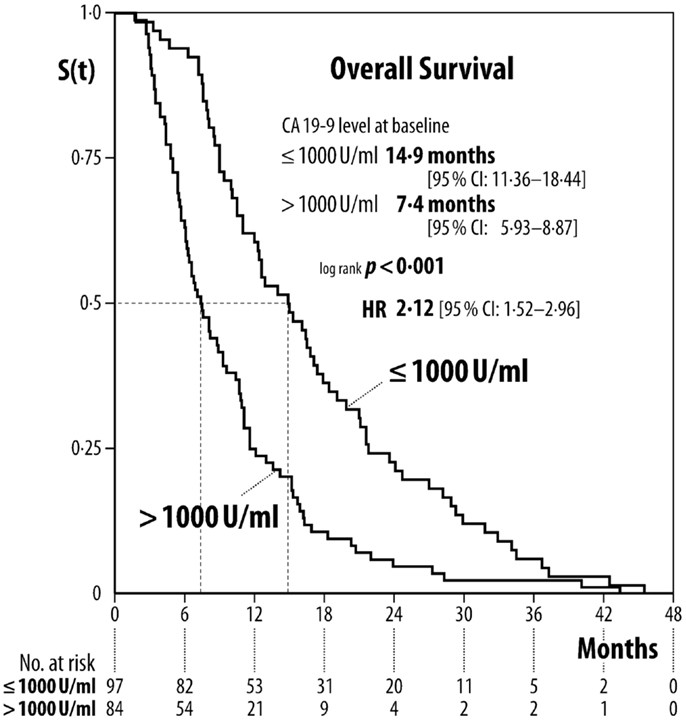 Fig.2 Median overall survival according to CA 19-9 serum level baseline level.2
A study investigating the value of carbohydrate antigen 19-9 (CA 19-9) in predicting treatment response and controlling therapy in patients with metastatic pancreatic cancer provided significant insights. The experiment focused on patients undergoing first-line therapy. The results demonstrated a clear correlation between baseline CA 19-9 levels and patient survival. Specifically, patients with baseline CA 19-9 levels ≤1,000 U/ml exhibited a median overall survival (mOS) of 14.9 months, while those with levels >1,000 U/ml had a considerably lower mOS of 7.4 months. Furthermore, monitoring the change in CA 19-9 levels after 6–8 weeks of treatment proved valuable. Patients whose CA 19-9 levels increased experienced a mOS of 8.1 months, those with stabilized levels had a mOS of 11.6 months, and those with decreased levels showed an mOS of 11.1 months. These findings suggest that regular monitoring of CA 19-9 levels can be a critical tool for assessing treatment response, guiding clinical decisions such as continuing the current regimen for stabilized or decreased levels, or switching to second-line treatment for increased levels.
What We Can Offer?
At Creative Biolabs, we leverage our deep expertise and cutting-edge technology to provide a comprehensive suite of services and products designed to accelerate your research into carbohydrate antigens.
- Custom Carbohydrate Antigen Synthesis
- Anti-Carbohydrate Antibody Development
- Antibody Affinity & Specificity Characterization
- Glycan Array Screening Services
- Functional Assay Development & Validation
- Tumor-Associated Carbohydrate Antigen (TACA) Antibody Development
Experience the Creative Biolabs Advantage - Get a Quote Today
Why Choose Us?
Choosing Creative Biolabs for your carbohydrate antigen needs means partnering with a team that combines deep scientific expertise with state-of-the-art technology, ensuring unparalleled results and accelerating your progress.
- Unrivaled Glycan Expertise
- Cutting-Edge Technology Platform
- Customized Solutions
- Comprehensive Characterization
- Commitment to Quality & Support
FAQs
Q: What types of carbohydrate antigens can Creative Biolabs work with?
A: We have extensive experience with a wide range of carbohydrate antigens, including polysaccharides, glycolipids, glycoproteins, and complex glycoconjugates from various sources (e.g., microbial, tumor-associated, synthetic). If you have a specific or unusual carbohydrate target, please inquire, and our experts will assess its feasibility.
Q: How does Creative Biolabs ensure the specificity of the anti-carbohydrate antibodies?
A: We employ a multi-pronged approach to ensure high specificity, including rigorous antigen design, optimized immunization strategies, and extensive screening against both target and closely related non-target glycans. Our comprehensive characterization includes techniques like glycan array screening and biophysical methods to precisely define antibody specificity and affinity.
Q: What is the typical turnaround time for an anti-carbohydrate antibody development project?
A: The timeframe varies depending on the complexity of the carbohydrate antigen and the type of antibody requested. Generally, projects can range from 10 to 16 weeks from initiation to final antibody delivery and comprehensive reporting. We provide a detailed project timeline upfront during the consultation phase.
Related Products and Services
To further support your research and development in glycobiology, Creative Biolabs offers a suite of products:
- Monoclonal Antibodies
- Polyclonal Antibodies
- Secondary & Tag Antibodies
- Isotype & Loading Control Antibodies
- Carbohydrate Antigens
Creative Biolabs also provides related services, click the buttons to find more details.
Creative Biolabs offers a series of anti-glycan antibody-related services for worldwide customers. To explore these capabilities, please contact us for more information.
References:
- Kappler, Katharina, and Thierry Hennet. "Emergence and significance of carbohydrate-specific antibodies." Genes and immunity vol. 21,4 (2020): 224-239. DOI:10.1038/s41435-020-0105-9. Distributed under Open Access license CC BY 4.0, without modification.
- Pelzer, Uwe et al. "Value of carbohydrate antigen 19-9 in predicting response and therapy control in patients with metastatic pancreatic cancer undergoing first-line therapy." Frontiers in oncology vol. 3 155. 14 Jun. 2013, DOI:10.3389/fonc.2013.00155. Distributed under Open Access license CC BY 3.0, without modification.
- O-Linked Glycan Introduction
- N-Linked Glycan Introduction
- Glycolipid Introduction
- Lewis Antigen Introduction
- Blood Group Antigen Introduction
- Glycosaminoglycan
- Plant Glycan
- Bacterial Polysaccharide Introduction
- Polysaccharide-other
- Polysialic Acid Introduction
- Sulfo-Gal
- LacNAc
- Alpha-Galactosyl Introduction
- Mucin