


Polyclonal Antibody Products
Online InquiryAccelerate Your Glycan-Based Discoveries!
Are you currently facing challenges in developing highly specific and sensitive antibodies for your research or diagnostic applications? Creative Biolabs' Polyclonal Antibody Products help you accelerate discovery and obtain high-quality, versatile antibodies through advanced immunization and purification techniques. We empower your projects with reagents optimized for demanding biochemical and biopharmaceutical needs.
Contact our team to get an inquiry now!
Anti-Glycan Polyclonal Antibody
Monoclonal antibodies (mAbs) are homogeneous immunoglobulins generated from a single B cell clone that recognize specific antigenic epitopes, leading to highly consistent and targeted binding. In contrast, polyclonal antibodies constitute heterogeneous immunoglobulin populations derived from diverse B cell lineages, collectively targeting multiple distinct epitopes on the identical antigen. This fundamental distinction means that while a mAb offers pinpoint specificity, a polyclonal antibody provides a broader recognition profile, capable of binding to various parts of the target. This paradigm extends profoundly to carbohydrate immunology, a complex field where multiple glycan-specific antibodies emerge following exposure to a vast array of exogenous (e.g., microbial polysaccharides) or endogenous (e.g., self-glycans involved in development or disease) polysaccharide antigens. The generation of anti-glycan polyclonal antibodies typically involves a robust process of immunizing host animals with purified glycan immunogens. This is meticulously followed by the careful isolation and subsequent purification of serum immunoglobulins to yield the desired heterogeneous antibody mixture.
 Distributed under Freepik License, from Freepik.
Polyclonal anti-glycan antibodies demonstrate significant functional advantages over mAbs in several contexts. These benefits include simplified and more rapid production protocols, as they do not require the laborious and time consuming hybridoma technology necessary for mAbs. Furthermore, their inherent heterogeneity confers enhanced thermal stability and a greater tolerance to minor antigen variations or degradation, making them robust tools for diverse experimental conditions. Crucially, this multivalent antigen binding capacity also leads to an amplified detection sensitivity, as multiple antibody molecules can bind simultaneously to different epitopes on a single antigen, resulting in a stronger signal in detection assays. These combined attributes enable their wide application in sensitive glycoantigen detection methods, such as Western blotting or immunohistochemistry in tissue sections, as well as in critical hemagglutination inhibition assays used, for instance, in viral diagnostics or blood typing. Beyond research, their utility spans various diagnostic platforms, including ELISA kits and rapid diagnostic tests, where their high sensitivity can be paramount. Moreover, emerging therapeutic applications increasingly exploit their capacity for multi epitope engagement in complex disease modulation, offering potential for broader and more effective immune responses against pathogens or cancerous cells compared to single epitope targeting.
Our Products
Published Data
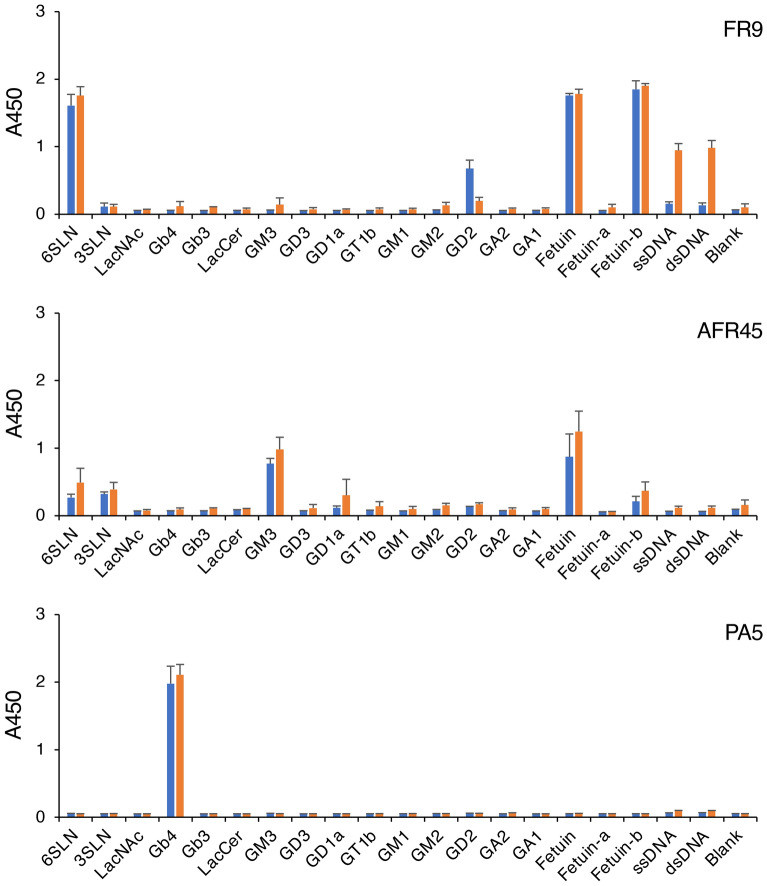 Fig.1 Reactivity of anti-glycan IgM to various carbohydrate antigens.1
Recent experiments have shed light on the significant influence of serum components on antibody reactivity, particularly concerning glycan and DNA antigens. Researchers observed that an anti-α2,6-sialyl LacNAc IgM antibody, initially generated against a glycan, cross-reacted with DNA. Notably, purification of this IgM antibody resulted in increased cross-reactivity to DNA, indicating that certain components removed during the purification process in mammalian serum normally modulate antibody reactivity. Further investigations revealed that low affinity anti-DNA IgM antibodies exist in healthy individuals, and their DNA binding signals also increased after purification. The study also highlighted the shared recognition features of anti-glycan IgM antibodies with glycoconjugates on human umbilical vein endothelial cells (HUVECs), which are implicated in vascular inflammatory responses. These findings underscore the critical role of serum factors in modulating antibody-antigen interactions and emphasize the importance of considering purification effects in antibody development and application.
What We Can Offer?
Creative Biolabs is dedicated to providing comprehensive solutions for your antibody development needs. Our extensive experience and cutting-edge platforms ensure the delivery of high-quality Polyclonal Antibody Products tailored to your research and development goals.
- Custom Polyclonal Antibody Production
- Antigen Synthesis and Design
- Antibody Purification Services
- Antibody Labeling and Conjugation
- Comprehensive Antibody Characterization
- Large-Scale Production
Experience the Creative Biolabs Advantage - Get a Quote Today
Why Choose Us?
Creative Biolabs is a leader in antibody development, offering unparalleled advantages for your Polyclonal Antibody Products needs. Our expertise, combined with state-of-the-art facilities, ensures superior product quality and customer satisfaction.
- Exceptional Specificity and Sensitivity: Our rigorous antigen preparation and purification processes yield antibodies with high specificity and sensitivity, ensuring reliable results even at low antigen concentrations.
- Diverse Host Animal Options: We offer a range of host animals, allowing us to select the best fit for your specific antigen and desired antibody characteristics, minimizing cross-reactivity.
- Comprehensive Quality Control: Every batch of polyclonal antibody undergoes stringent quality control and application-specific validation, guaranteeing consistent performance and reproducibility.
- Expert Scientific Support: Our team of experienced immunologists and biochemists provides expert guidance throughout your project, from antigen design to antibody application, ensuring optimal outcomes.
FAQs
Q: What are the primary advantages of using polyclonal antibodies over monoclonal antibodies for my research?
A: Polyclonal antibodies offer several benefits, including their ability to recognize multiple epitopes on an antigen, which can lead to higher sensitivity and robustness in certain assays, especially when dealing with denatured or complex antigens. They are also generally faster and more cost-effective to produce. Creative Biolabs can guide you in choosing the ideal antibody type for your specific application.
Q: How can Creative Biolabs ensure the specificity of the polyclonal antibodies produced for my unique antigen?
A: Creative Biolabs employs rigorous antigen design, optimized immunization protocols, and multi-stage purification techniques, including antigen-specific affinity purification, to maximize specificity. Our comprehensive quality control includes validation assays tailored to your intended application, ensuring the antibodies meet your precise specificity requirements. Let's discuss your target antigen to ensure optimal specificity.
Q: What kind of quality control measures does Creative Biolabs implement for its Polyclonal Antibody Products?
A: Our quality control process is extensive, encompassing ELISA for titer determination, Western blot for molecular weight and specificity, and application-specific validation (e.g., IHC, flow cytometry). We also assess purity through SDS-PAGE and concentration via spectrophotometry. We provide a detailed report of all QC data with your final product. Feel free to inquire about our full QC protocol.
Related Services
To further support your research and development in glycobiology, Creative Biolabs offers a suite of related services:
Creative Biolabs offers a series of anti-glycan antibody-related services for worldwide customers. To explore these capabilities, please contact us for more information.
Reference:
- Okuda, Tetsuya, and Katsuya Kato. "Serum components influence antibody reactivity to glycan and DNA antigens." Scientific reports vol. 13,1 13644. 22 Aug. 2023, DOI:10.1038/s41598-023-40707-3 Distributed under Open Access license CC BY 4.0, without modification.
Browse Polyclonal Antibody Products based on alphabetical listing:
0-9
A
B
C
D
E
F
G
H
I
K
L
M
N
O
P
Q
R
S
T
U
V
W
X
Y
Z
Other