


ELISA based Detection Service
Accelerate Your Antibody Development!
Are your research efforts hindered by difficulties in resolving glycan-antibody binding dynamics, maintaining assay reproducibility, or optimizing therapeutic antibody workflows? Creative Biolabs' Glycan-Specific Antibody Profiling Service delivers precise quantitative analysis of carbohydrate-targeting immunoglobulins, enhancing discovery timelines and diagnostic precision through ultrasensitive ELISA technology coupled with engineered multivalent ligand presentation systems.
Contact our team to get an inquiry now!
Background
The enzyme-linked immunosorbent assay (ELISA) merges antibody specificity with enzymatic detection sensitivity, serving as an indispensable methodology extensively applied in research laboratories, biomedical investigations, and industrial quality assurance. It functions particularly as a swift, sensitive approach for identifying antibodies/antigens within varied biological fluid specimens. Multiple configurations exist for this objective, including competitive, sandwich, and direct formats.
Within this domain, ELISA facilitates serum analysis, phage display screening, and anti-glycan antibody affinity assessment. Given the lower affinity interactions between anti-glycan antibodies and antigenic determinants, multivalent display of carbohydrate ligands on solid surfaces is essential. Glycans employed for immobilization may be chemically synthesized or naturally derived according to project-specific needs.
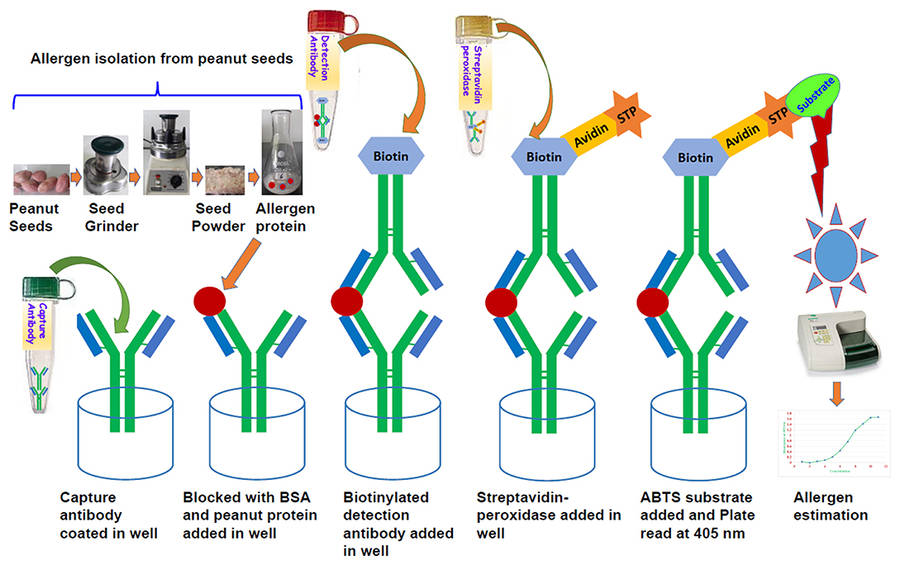 Fig.1 The protocol for allergen estimation in peanut seed through sandwich ELISA.1,3
Anti-Glycan Antibody ELISA Detection
Conventionally, ELISA plate wells employ specific glycan antigens through non-covalent attachment for immunoglobulin detection. Yet direct surface immobilization of certain carbohydrates proves technically challenging. To overcome this, diverse chemical approaches conjugate carbohydrate antigens to protein carriers (bovine/human serum albumin), polymeric matrices (acrylamide derivatives), and dendrimeric structures, amplifying glycan density on ELISA surfaces while boosting assay sensitivity. This methodology relies on glycan antigen structural elucidation. We facilitate customized carbohydrate immobilization scheme development to accelerate your pioneering investigations.
Published Data
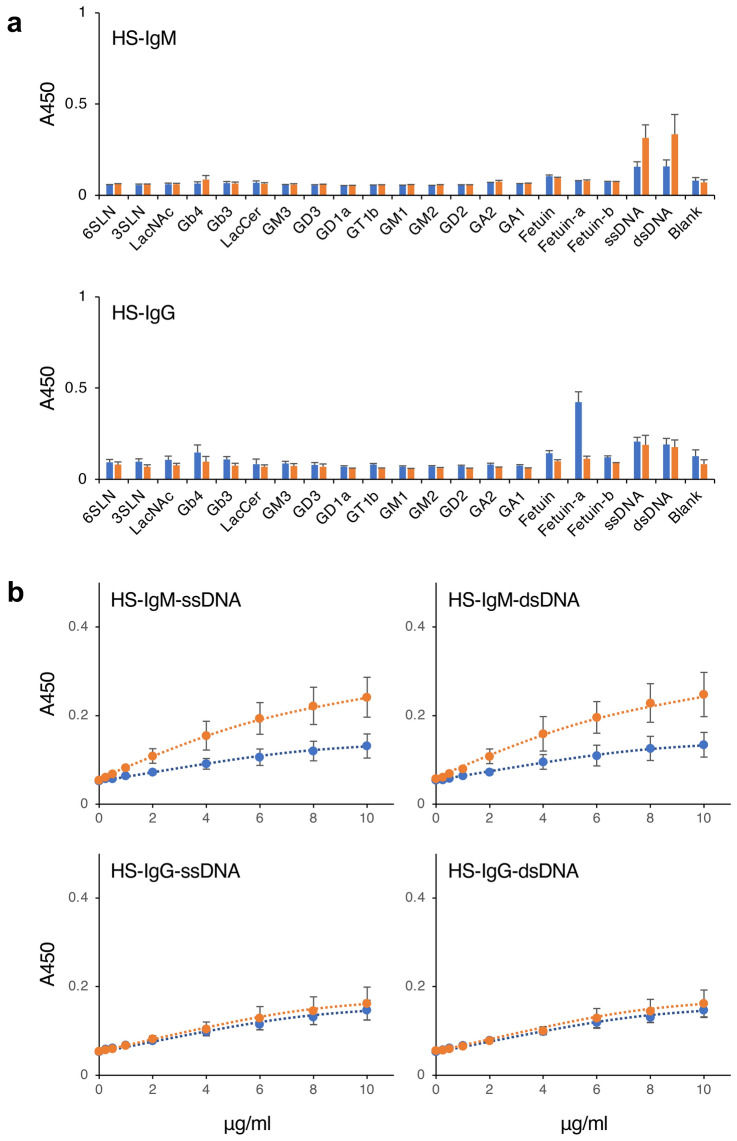 Fig 2. Binding characteristics of serum antibodies to diverse glycan structures.2,3
This investigation performed experimental analyses to determine purification's impact on antibody-DNA interaction dynamics. Scientists examined unpurified anti-α2,6-sialyl LacNAc IgM from hybridoma culture media, initially demonstrating DNA cross-binding activity. Following zirconium-based chromatographic purification, a critical discovery emerged: refined IgM exhibited 3.2-fold enhanced DNA recognition capacity. This data implies serum-derived constituents within the supernatant were eliminated during processing, which previously modulated (presumably suppressed) immunoglobulin-DNA binding potential. Subsequent enzyme-linked immunosorbent assays with purified antibodies against diverse glycan targets revealed altered antigen recognition profiles post-purification, conclusively demonstrating serum factors significantly influence antibody-carbohydrate interaction mechanisms, including nucleic acid binding characteristics.
What We Can Offer?
Creative Biolabs drives glycoscience progress through a portfolio of tailored solutions for glycan-specific immunoglobulin profiling. Utilizing cutting-edge platforms and profound domain proficiency, we secure your experimental objectives.
- Custom Anti-Glycan Antibody ELISA Development: Design and optimize bespoke ELISA assays for novel glycan antigens or specific research requirements.
- Quantitative Anti-Glycan Antibody Profiling: Precise quantification of specific anti-glycan antibody levels in various biological samples (serum, plasma, CSF, cell culture supernatants).
- Antibody Specificity and Cross-Reactivity Assessment: Detailed analysis of an antibody's binding profile across a panel of glycan structures to identify its precise specificity and any potential off-target binding.
- High-Throughput Screening for Glycan-Binding Antibodies: Rapid screening of antibody libraries (e.g., phage display libraries) to identify clones with desired glycan binding characteristics.
- Diagnostic Biomarker Validation: Utilize our ELISA platform for the validation and quantification of anti-glycan antibodies as potential biomarkers for various diseases.
Experience the Creative Biolabs Advantage - Get a Quote Today
Why Choose Us?
Creative Biolabs leads in glyco-analytical services, providing Anti-Glycan Antibody ELISA based Detection with unmatched expertise and technology. Our commitment to accuracy, sensitivity, and client success sets us apart.
- Exceptional Sensitivity and Specificity: Optimized ELISA protocols and advanced antigen conjugation ensure superior detection limits and minimal cross-reactivity, even for low-abundance antibodies.
- Comprehensive Glycan Expertise: Years of experience give our specialists deep knowledge of glycan structures, their biological roles, and implications in health and disease, including immunity and autoimmunity.
- Customization for Complex Projects: We offer fully customizable assay development for diverse glycan antigens, sample types, and research objectives, ensuring a flexible, adaptable service.
- Rigorous Quality Control: Rigorous quality control at every workflow step guarantees reliable, reproducible results. We meticulously manage potential interferences, like serum components, ensuring accurate data.
- Proven Track Record: Our service consistently delivers high-quality data, enabling researchers worldwide to make significant advancements.
FAQs
Frequently asked questions regarding our Glycan-Specific Antibody Detection Services using ELISA technology:
Q: What quality control measures guarantee assay specificity in Creative Biolabs' glycan-targeted ELISA?
A: Our process utilizes stringent glycan conjugation protocols and multivalent antigen display systems to maintain structural fidelity. Each assay incorporates multiple validation measures, including isotype-specific blockers and cross-reactivity mapping against 300+ related glycans. Dedicated specialists perform epitope confirmation through glycan microarray cross-validation, ensuring exclusive recognition of target carbohydrate-antibody binding events.
Q: Which biological specimens are compatible with your glycan-antibody detection platform?
A: The system accommodates diverse specimen types spanning human/animal serum, plasma fractions, neural interstitial fluids (CSF), monoclonal antibody harvests, and in vitro culture media. Customized processing protocols address matrix-specific interference factors.
Q: How does your ELISA sensitivity compare to alternative glycan detection methodologies?
A: Our chemiluminescent ELISA system achieves detection thresholds spanning low pg/mL to ng/mL ranges, varying with antibody-glycan pairs. Whereas glycan microarray platforms enable broad-spectrum screening, our quantitative approach delivers enhanced precision for validating binding kinetics and conducting detailed affinity profiling of targeted glycan-antibody interactions.
Related Products
To further support your research and development in glycobiology, Creative Biolabs offers a suite of products:
- Monoclonal Antibodies
- Polyclonal Antibodies
- Secondary & Tag Antibodies
- Isotype & Loading Control Antibodies
- Carbohydrate Antigens
Creative Biolabs offers a series of anti-glycan antibody-related services for worldwide customers. To explore these capabilities, please contact us for more information.
References:
- Pandey, Arun K., et al. "An improved enzyme-linked immunosorbent assay (ELISA) based protocol using seeds for detection of five major peanut allergens Ara h 1, Ara h 2, Ara h 3, Ara h 6, and Ara h 8." Frontiers in nutrition 6 (2019): 68.
- Okuda, Tetsuya, and Katsuya Kato. "Serum components influence antibody reactivity to glycan and DNA antigens." Scientific Reports 13.1 (2023): 13644.
- Distributed under Open Access license CC BY 4.0, without modification.