Creative Biolabs is a well-recognized expert in VHH discovery and development. With our rich experience in phage display mutant library technology and in silico modeling, Creative Biolabs is now offering a novel service to
optimize the specificity of the VHH of interest, which can solve your trouble from unwanted cross-reactions.
Remove Cross-Reaction or Enhance Target Specificity of VHH Candidates
VHHs usually exhibit strong specificity toward their target proteins but encounter specificity issues when the target proteins share high homology with other proteins, leading to cross-reactions. VHH fragment sequence analysis combined with computer modeling acts as a solution to refine VHH binding specificity and remove unwanted cross-reactions to prevent numerous side effects from off-target interference.
Comprehensive specificity optimization strategies to eliminate cross-reaction
Experienced professional team with a wealth of knowledge
Fully customizable design to meet specific demands
Fast turnaround time
Reliable lab report with timely update
Affordable price with the best quality
In terms of our advanced technical platforms, scientists at Creative Biolabs are confident in offering high-quality VHH specificity optimization solutions to assist with your valuable projects. A series of VHH candidates can be rapidly
optimized with desired specificity to meet your particular application requirements. Should you be interested in this novel specificity optimization service, please feel free to contact us for more
details.
Case Study
This project aims to create humanized VHH antibody sequences. Through computational bioinformatics analysis, researchers modeled the variable regions and obtained a series of single-domain antibody variants. Throughin silico post-translational modification (PTM) and aggregation assessments of a particular VHH, we determined that the antibody faced deamidation risk. The research team conducted T-cell epitope analysis alongside B-cell epitope analysis and MHC II epitope analysis for this VHH and discovered that the predicted epitope demonstrated potential immunogenic properties.
Figure 1. VHH homology model.
By using pbd 5IMM as the model structure, we built the VHH homology.
Table 1. PTM analysis for both parental sdAb and humanized variants.
In silico post-translational modification (PTM) assessments were performed on the parental VHH and humanized VHH, and it was found that there were two high-risk isomerization sites in the CDR2 region and one deamidation site in the FR region of the humanized VHH sequence.
Figure 2. Aggregation analysis of parental sdAb and HuVHHv1.
The aggregation of the parental VHH and humanized VHH was predicted. The results showed that the aggregation tendency of humanized VHH was stronger than that of the parental VHH, which was due to germline humanization.
Figure 3. SDS-PAGE result of TOP 5 humanized VHH candidates and parental sdAb
The TOP 5 humanized VHHs and parental VHHs were expressed and purified. SDS results showed that the 5 variants were of good quality and had no obvious aggregation and precipitation, and could be used for further affinity determination.
Published Data
Optimized VHH Antibodies Identified Using YSD, NGS, and AI/ML
Fig. 1 Prediction and Experimental Validation of Aggregation Tendencies in VHH Domains via HIC Analysis.1
The scientific study describes a cutting-edge methodology that uses yeast surface display (YSD), next-generation sequencing (NGS), and artificial intelligence/machine learning (AI/ML) to quickly identify de novo humanized single domain antibodies
(sdAbs) with optimized VHH specificity and commendable early-stage development profiles. It shows how NGS can analyze large sequence spaces and how AI/ML can be used to design new sequences with better potency or developability. The ability of long
short-term memory (LSTM) networks, a subset of recurrent neural networks, to capture intricate correlations between amino acids that dictate the structure and function of proteins is especially noteworthy. The high-affinity binding and favorable biophysical
characteristics of the discovered VHHs are validated experimentally. Accurate predictions in silico are crucial for efficient sequence selection and enhanced developability profiles, thus supporting the use of AI/ML for specificity optimization.
By predicting which sequences are less likely to aggregate, researchers can prioritize candidates that are more likely to maintain their structural integrity and specificity in biological systems. Besides, understanding and optimizing the biophysical
properties, such as hydrophobicity and aggregation propensity, contribute to the overall developability of an antibody, affecting its manufacturability, stability, and pharmacokinetics.
Associated Services
Reference
Arras, Paul, et al., "AI/ML combined with next-generation sequencing of VHH immune repertoires enables the rapid identification of de novo humanized and sequence-optimized single domain antibodies: a prospective case study." Frontiers in Molecular Biosciences 10 (2023): 1249247. Distributed under Open Access License CC BY 4.0, without modification.
FAQ
1. Why is the specificity of VHH antibodies critical in research and therapeutic applications?
Specificity is vital because it determines the ability of a VHH to bind exclusively to its target antigen without cross-reacting with other molecules. High specificity ensures accurate detection, quantification, and targeted treatment of diseases, thereby
reducing off-target effects and false positives in research.
2. How does the natural diversity of camelid VHH repertoires affect specificity optimization?
The natural diversity of camelid VHH repertoires generates a wide range of distinct binding locations and frameworks. This diversity enables the selection of VHHs with high specificity and affinity for different antigens, which may then be fine-tuned
using techniques such as phage display and directed evolution.
3. What role do complementarity-determining regions (CDRs) play in the specificity of VHHs?
CDRs are hypervariable sections of the VHH that interact directly with the antigen, determining the specificity and affinity of antibody binding. Optimization frequently focuses on the CDRs modifications to improve binding characteristics while retaining
or increasing specificity.
4. Can you explain the importance of structural stability in VHH specificity optimization?
Structural stability is critical because it guarantees that the VHH retains its conformation and binding activity under a variety of circumstances. Enhanced stability helps to improve binding specificity by preserving the precise conformation required
for specific antigen engagement, even under demanding conditions like high temperatures or fluctuating pH levels.
5. What are some challenges in optimizing VHH specificity, and how can they be addressed?
There are several challenges in VHH specificity optimization, including cross-reactivity, poor affinity, and structural constraints. The unwanted binding to non-target molecules may occur as cross-reactivity, but this can be solved by improving the selection
procedure to eliminate non-specific binders. Poor affinity is often increased via affinity maturation procedures. Due to some structural constraints, it is difficult to modify the VHH without disrupting its general structure and normal functions.
However, this obstacle can be handled with the help of advanced bioinformatics and structural biology technologies.

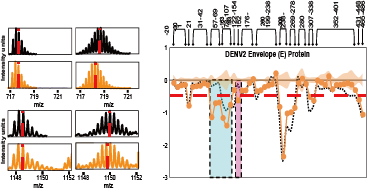





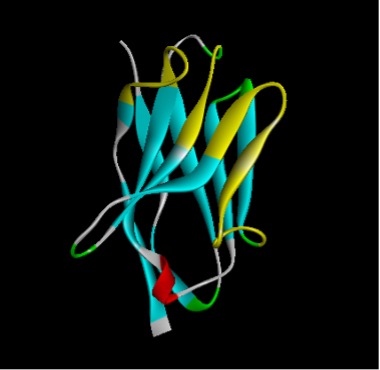 Figure 1. VHH homology model.
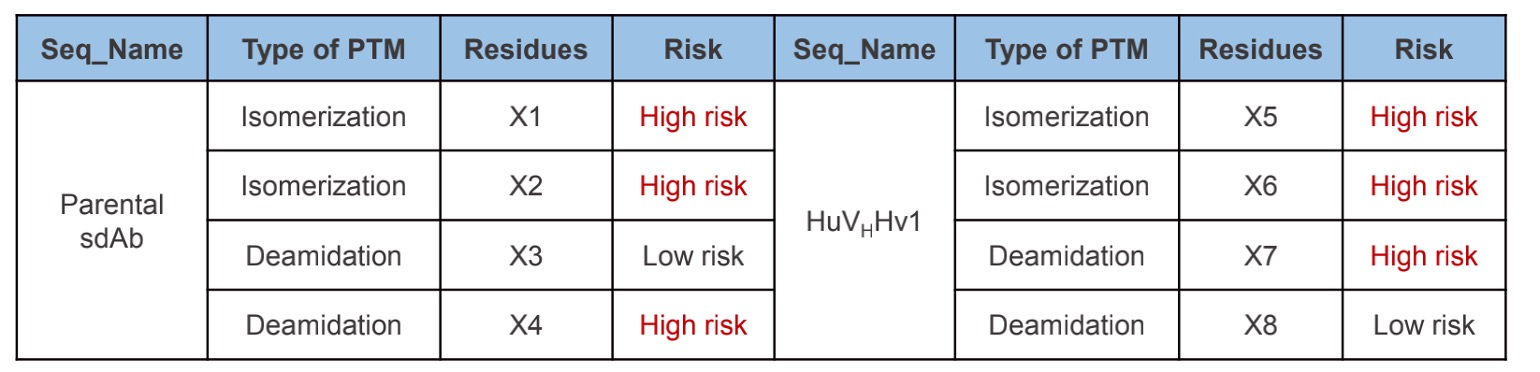
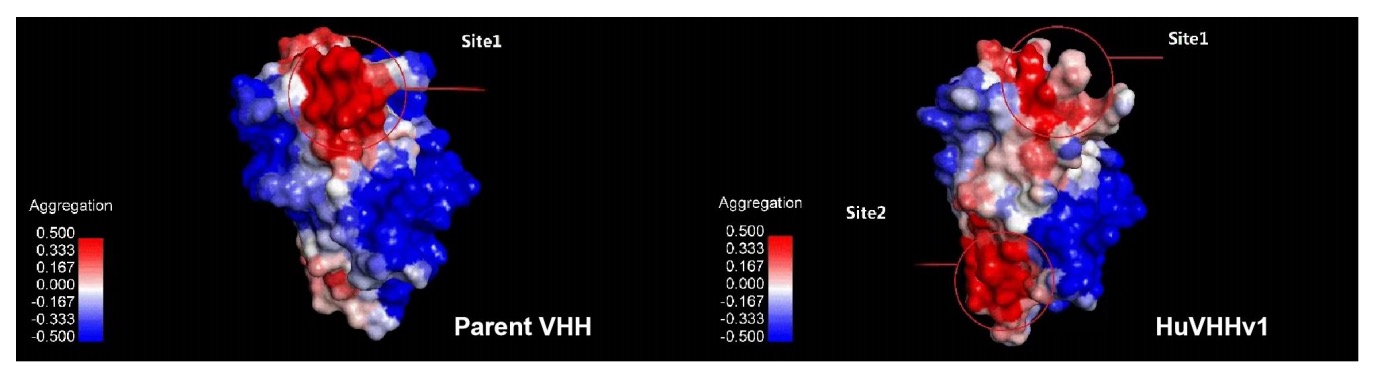 Figure 2. Aggregation analysis of parental sdAb and HuVHHv1.
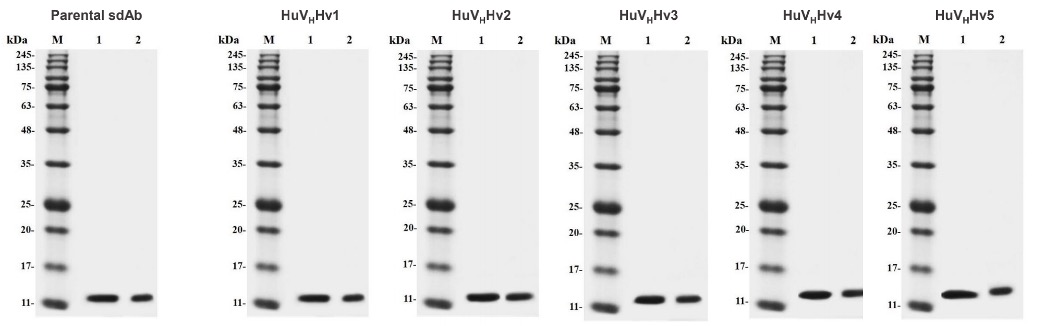 Figure 3. SDS-PAGE result of TOP 5 humanized VHH candidates and parental sdAb
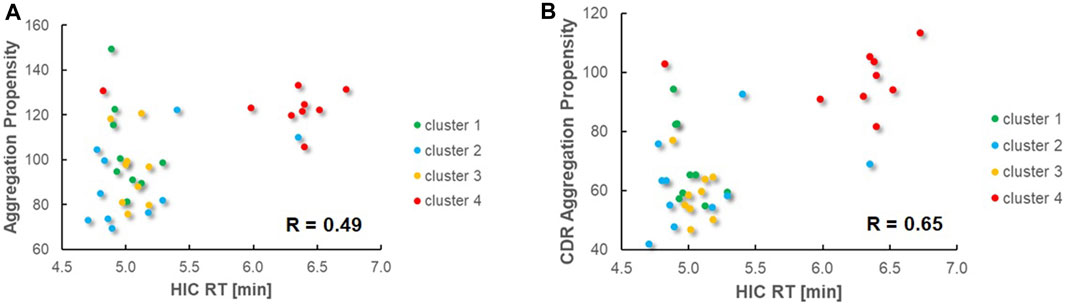 Fig. 1 Prediction and Experimental Validation of Aggregation Tendencies in VHH Domains via HIC Analysis.1