Healthy & Developmental Organoid Model Products
Products
Introduction Lineage Benchmark Portfolio Modeling FAQsContact
Introduction
Modeling the earliest stages of human embryogenesis and maintaining the homeostasis of wild-type organs requires absolute environmental control. Spontaneous lineage drift and undefined signaling can easily derail the intricate process of organogenesis. Creative Biolabs engineers highly defined biochemical toolkits designed to sustain pluripotency, orchestrate synchronized germ layer specification, and support the unhindered self-organization of healthy developmental organoids.
By supplying the exact spatiotemporal morphogen cues your stem cells need, our solutions allow you to accurately trace the true biological trajectory of tissue development in vitro.
Contact with our developmental biology team today to build a strictly defined reagent protocol and request a personalized quotation for your foundational research.
Mastering Spatiotemporal Lineage Commitment
Directing human pluripotent stem cells (hPSCs) to form structurally accurate, healthy tissues requires mimicking the transient signals of the primitive streak and early embryo. Without pristine biochemical support, cultures suffer from asynchronous differentiation or fail to break symmetry. Our developmental reagent suites resolve these foundational hurdles:
Synchronized Germ Layer Induction
-
We provide highly calibrated basal media and supplement kits that manipulate Wnt, Nodal, and BMP pathways to drive rapid, uniform commitment toward pure definitive endoderm, mesoderm, or neuroectoderm fates.
Preserving Epigenetic Stability
-
Expanding wild-type hPSCs for extended periods often leads to karyotypic abnormalities. Our maintenance formulations are optimized to preserve chromosomal integrity and true pluripotency during aggressive biobanking.
Controlling Symmetry Breaking
-
For researchers generating unguided (whole-embryo-like) organoids, our morphogen gradients are fine-tuned to allow natural self-organization and axis formation without forcing premature, artificial cell fates.
The Benchmark for Isogenic Baselines
Pristine Wild-Type Fidelity
When establishing healthy baseline controls for CRISPR-Cas9 disease modeling, you cannot afford media-induced phenotypic shifts. Our strictly defined media ensure your wild-type organoids remain biologically authentic.
Zero Developmental Interference
Fetal bovine serum contains unquantifiable hormones that mask your experimental cues. Our entire developmental portfolio is 100% serum-free and chemically defined, giving you total control over the signaling environment.
Verified Recombinant Bioactivity
Because morphogen potency dictates developmental success, every lot of our recombinant proteins (e.g., Activin A, FGF2, Noggin) undergoes rigorous functional validation in live 3D embryonic assays before release.
Comprehensive Reagents for Ontogeny Workflows
We supply a targeted catalog of solutions to support every stage of embryogenesis and healthy tissue modeling:
-
1. Pluripotent Stem Cell (PSC) Expansion Media A feeder-free, highly stable formulation designed for the robust, long-term expansion of ESCs and iPSCs, strictly maintaining their naive or primed states without spontaneous differentiation.
-
2. Definitive Germ Layer Specification Kits Streamlined, phase-specific cocktails that rapidly direct PSCs into highly pure populations of mesendoderm or ectoderm, providing the perfect starting material for downstream organoid derivation.
-
3. High-Purity Morphogen & Small Molecule Libraries For labs pioneering custom developmental protocols, we offer an extensive library of highly pure signaling agonists and antagonists to precisely modulate the Hedgehog, TGF-β, and Notch pathways.
-
4. Biomimetic Embryonic Scaffolds Early tissue development requires highly malleable microenvironments. We provide structurally dynamic hydrogels that replicate the soft, laminin-rich extracellular matrix of the early human embryo, permitting extensive cellular migration and spatial patterning.
Enabling High-Fidelity Developmental Modeling
Purpose-built to navigate the delicate stages of early organogenesis, our defined reagent platforms provide the uncompromising biological accuracy required for your most sensitive developmental and teratological assays:
-
Developmental Teratology: Screen pharmaceutical compounds, environmental toxins, and viral agents (like rubella) for birth defect risks using highly sensitive, developing wild-type organoids.
-
Isogenic Disease Controls: Cultivate robust, perfectly healthy organoids to serve as reliable wild-type comparators against patient-derived or gene-edited pathological models.
-
Embryogenesis & Morphogenesis Studies: Investigate the fundamental cellular mechanics of gastrulation, tube formation, and organ-level symmetry breaking in a fully controlled 3D environment.
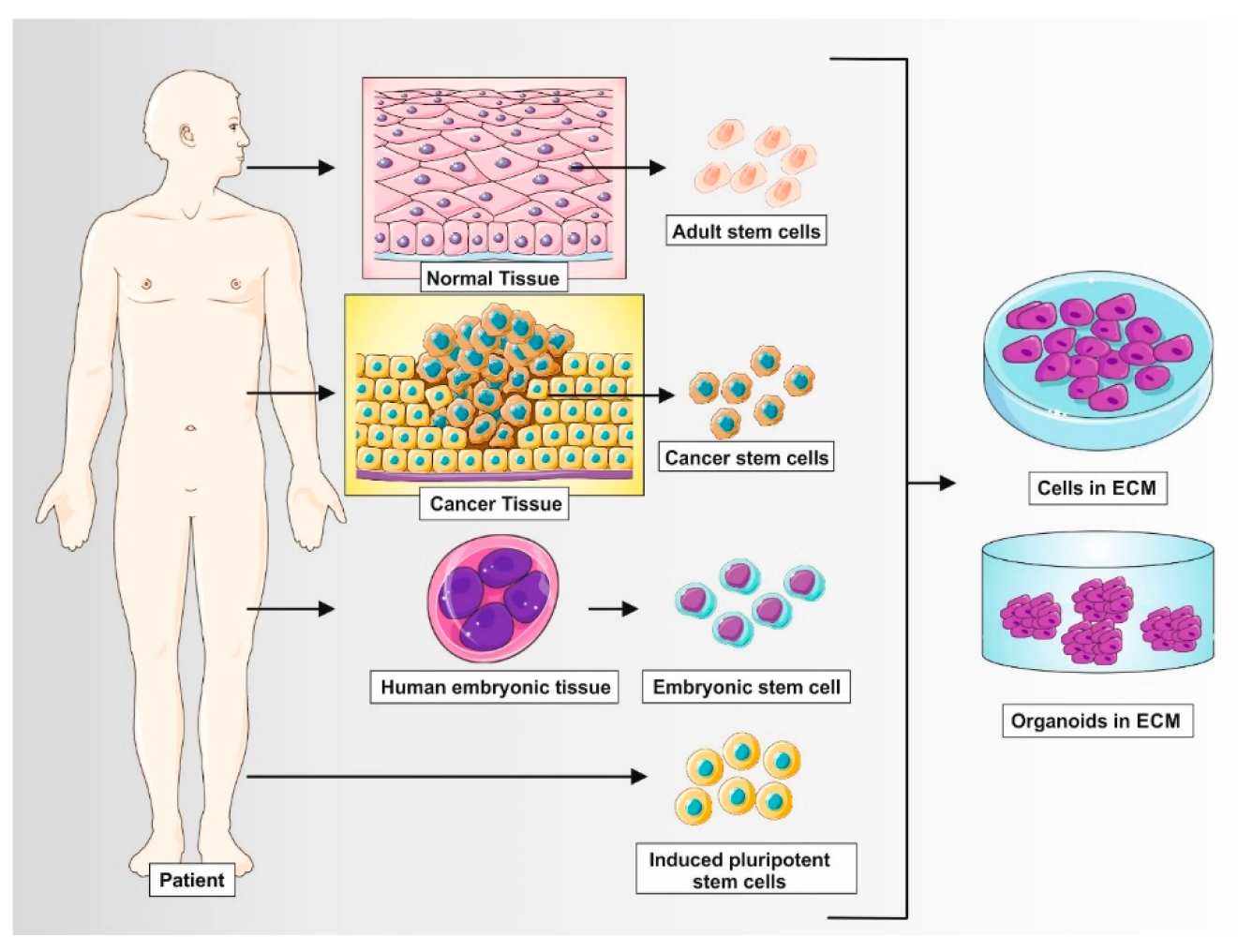 Fig.1 The establishment of human three-dimensional organoids.1
FAQs
-
1. Do your PSC maintenance media require feeder cell layers?
No. Our expansion formulations are completely feeder-free and optimized for use with standard recombinant matrix coatings (such as Vitronectin or Matrigel), ensuring a much cleaner, more reproducible workflow.
-
2. Can I use these reagents for both guided and unguided organoid protocols?
Yes. While our Germ Layer Kits are designed for guided (directed) differentiation, our basal media and standalone morphogens are perfectly suited for researchers performing unguided protocols that rely on spontaneous self-organization.
-
3. Will these media preserve the baseline phenotype of my healthy CRISPR controls?
Yes. Providing a stable, chemically defined environment is the core purpose of our developmental media. They are designed specifically to prevent spontaneous lineage drift, ensuring your wild-type isogenic controls remain phenotypically true.
How to Contact Us
Reach out to our scientific support group at or call +1-631-357-2254 today for specialized pricing and expert protocol guidance.
Contact Us
Reference
-
Sokolowska, Patrycja, Agnieszka Zuchowska, and Zbigniew Brzozka. "Why can organoids improve current organ-on-chip platforms?." Organoids 1.1 (2022): 69-84. Distributed under Open Access license CC BY 4.0, without modification. https://doi.org/10.3390/organoids1010007
For Research Use Only. Not For Clinical Use.
Species Reactivity Human
Application Organoid Culture
Size 100 mL
Species Reactivity Human
Application Organoid Differentiation
Size 1 Kit
Species Reactivity Human
Application Terminal Differentiation & Maturation
Size 100 mL
Species Reactivity Human
Application Bronchial/Lung Organoid Maintenance
Size 100 mL, 500 mL
Species Reactivity Human
Application Colorectal Organoid Maintenance
Size 100 mL, 500 mL
Species Reactivity Human
Application Gastric Epithelial Proliferation
Size 100 mL, 500 mL
Species Reactivity Human
Application Renal Organoid Maintenance
Size 100 mL, 500 mL
Species Reactivity Human
Application Organoid Proliferation & Subculturing
Size 100 mL, 500 mL
Species Reactivity Human
Application Colorectal Lineage Maturation
Size 100 mL, 500 mL
Species Reactivity Human
Application Lineage Specification & Patterning
Size 100 mL
Species Reactivity Human
Application ATII Cell Differentiation
Size 100 mL, 500 mL
Species Reactivity Human
Application Keratinocyte Expansion & Maintenance
Size 100 mL, 500 mL
Species Reactivity Mouse
Application Differentiation
Size 100 mL, 500 mL
Species Reactivity Mouse
Application Establishment, Expansion
Size 100 mL, 500 mL
Species Reactivity Human
Application Differentiation
Size 100 mL, 500 mL
Species Reactivity Human
Application Establishment, Expansion
Size 100 mL, 500 mL
Species Reactivity Human
Application Differentiation
Size 100 mL, 500 mL
Species Reactivity Mouse
Application Establishment, Expansion
Size 100 mL, 500 mL
Species Reactivity Mouse
Application Differentiation
Size 100 mL, 500 mL
Species Reactivity Human
Application Establishment, Expansion
Size 100 mL, 500 mL
Species Reactivity Human
Application Establishment, Expansion
Size 100 mL, 500 mL
Species Reactivity Human
Application Establishment, Expansion
Size 100 mL, 500 mL
Species Reactivity Human
Application Establishment, Expansion
Size 100 mL, 500 mL
Species Reactivity Mouse
Application Establishment, Expansion
Size 100 mL, 500 mL
Species Reactivity Mouse
Application Establishment, Expansion
Size 100 mL, 500 mL
Species Reactivity Mouse
Application Establishment, Expansion
Size 100 mL, 500 mL
Species Reactivity Human
Application Establishment, Expansion
Size 100 mL, 500 mL
Species Reactivity Human
Application Establishment, Expansion
Size 100 mL, 500 mL
Species Reactivity Human
Application Establishment, Expansion
Size 100 mL, 500 mL
Species Reactivity Human
Application Establishment, Expansion
Size 100 mL, 500 mL
Species Reactivity Human
Application Establishment, Expansion
Size 100 mL, 500 mL
Species Reactivity Human
Application Establishment, Expansion
Size 100 mL, 500 mL