
Induces expression of Phase I/II metabolic enzymes (CYP3A4, UGTs) and bile transporters.
Outcome: Albumin secretion and drug clearance profiles comparable to primary hepatocytes.
In the field of 3D biology, growing biomass is only half the battle. A common frustration among researchers is that while organoids may structurally resemble human tissue, they often remain transcriptionally and functionally "stuck" in a fetal or embryonic state. This limits their utility for predicting adult drug responses or modeling late-onset diseases.
Creative Biolabs' Maturation Media Platform solves this "arrested development" problem. We provide a defined, terminal differentiation environment that shifts the biological priority of your culture from rapid division to functional specialization.
Contact our technical team to discuss how to integrate a maturation phase into your experimental timeline.
Standard organoid culture relies heavily on "Expansion Media"—formulations rich in growth factors like Wnt activators and mitogens (e.g., EGF) that drive stem cell self-renewal. While necessary for establishing a line, these factors actively suppress the genetic programs required for physiological maturity.
As long as organoids remain in expansion conditions, they will lack key adult characteristics:
To generate data that truly reflects human biology, a distinct "Maturation Phase" must be introduced prior to endpoint analysis.
Creative Biolabs Maturation Kits are not just nutrient supplements; they are signaling modulators. Our formulations are engineered to execute a precise "switch" in the culture environment:
This two-step mechanism synchronizes the culture, ensuring that the majority of cells within the organoid differentiate simultaneously, reducing the heterogeneity often seen in spontaneous differentiation protocols.
We offer optimized protocols for the most critical organ systems in drug discovery:
Induces expression of Phase I/II metabolic enzymes (CYP3A4, UGTs) and bile transporters.
Outcome: Albumin secretion and drug clearance profiles comparable to primary hepatocytes.
Drives differentiation into absorptive enterocytes, mucus-producing goblet cells, and enteroendocrine cells.
Outcome: Polarized epithelium with measurable TEER, suitable for permeability studies.
Supports neuronal health and promotes synaptogenesis during long-term culture.
Outcome: Synchronized network bursts and calcium handling detectable by MEA.
Differentiates basal cells into ciliated and goblet cells to establish mucociliary function.
Outcome: Relevant model for viral infection (e.g., Influenza) and cystic fibrosis.
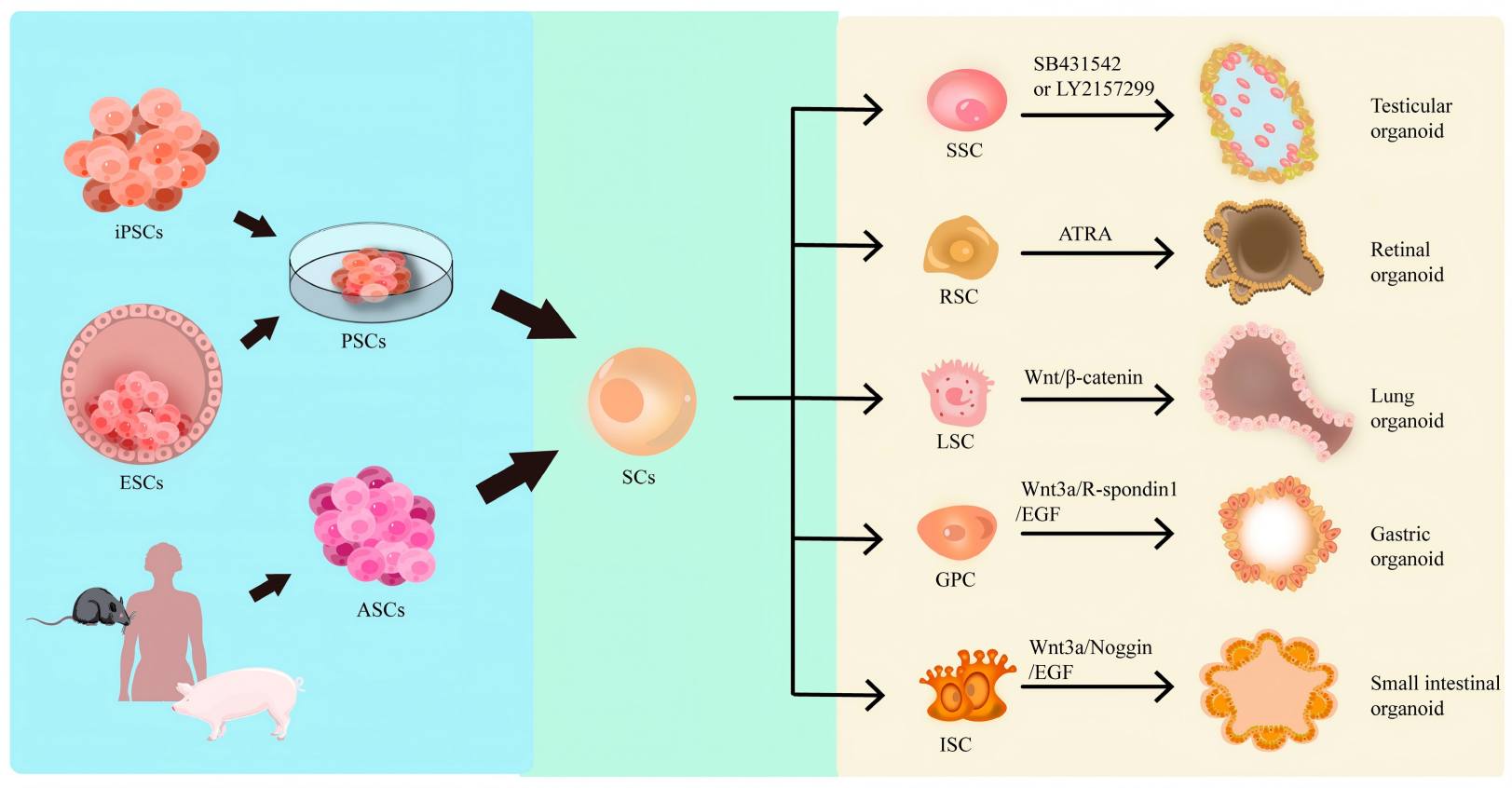 Fig.1 Signaling factors and pathways for organoid development.1
Ensure your models reflect adult physiology. Validate your research with organoids that demonstrate functional competence.
To request a sample or discuss your specific application, please contact our team at or call +1-631-357-2254.
Reference
For Research Use Only. Not For Clinical Use.