Organoid Culture System related Products
Products
Introduction Categories Types Features Advantages Applications FAQsContact
Introduction
Establishing robust organoid cultures requires precise environmental control. Creative Biolabs offers a suite of high-performance culture reagents, from expansion media to extracellular matrices. Our products are formulated to minimize experimental variables, providing researchers with the consistency needed for basic biology studies, disease modeling, and drug discovery.
Contact our technical team to discuss your specific culture requirements.
Product Categories
Select the reagents for your specific experimental phase:
Types of Culture Reagents
Our portfolio covers the essential components required for organoid generation and maintenance:
|
Types
|
Description
|
|
Maintenance & Expansion Media
|
Optimized to support the long-term propagation of adult stem cells (ASCs) or pluripotent stem cells (iPSCs) while maintaining their undifferentiated state and proliferative capacity.
|
|
Differentiation & Maturation Media
|
Formulations containing optimized signaling cues tailored to direct stem cells toward specific tissue fates (e.g., Intestinal, Hepatic, Cerebral) and promote functional maturity.
|
|
Extracellular Matrices (ECM)
|
Reduced growth factor basement membrane extracts that provide the necessary 3D structural support and biochemical cues for cell organization.
|
|
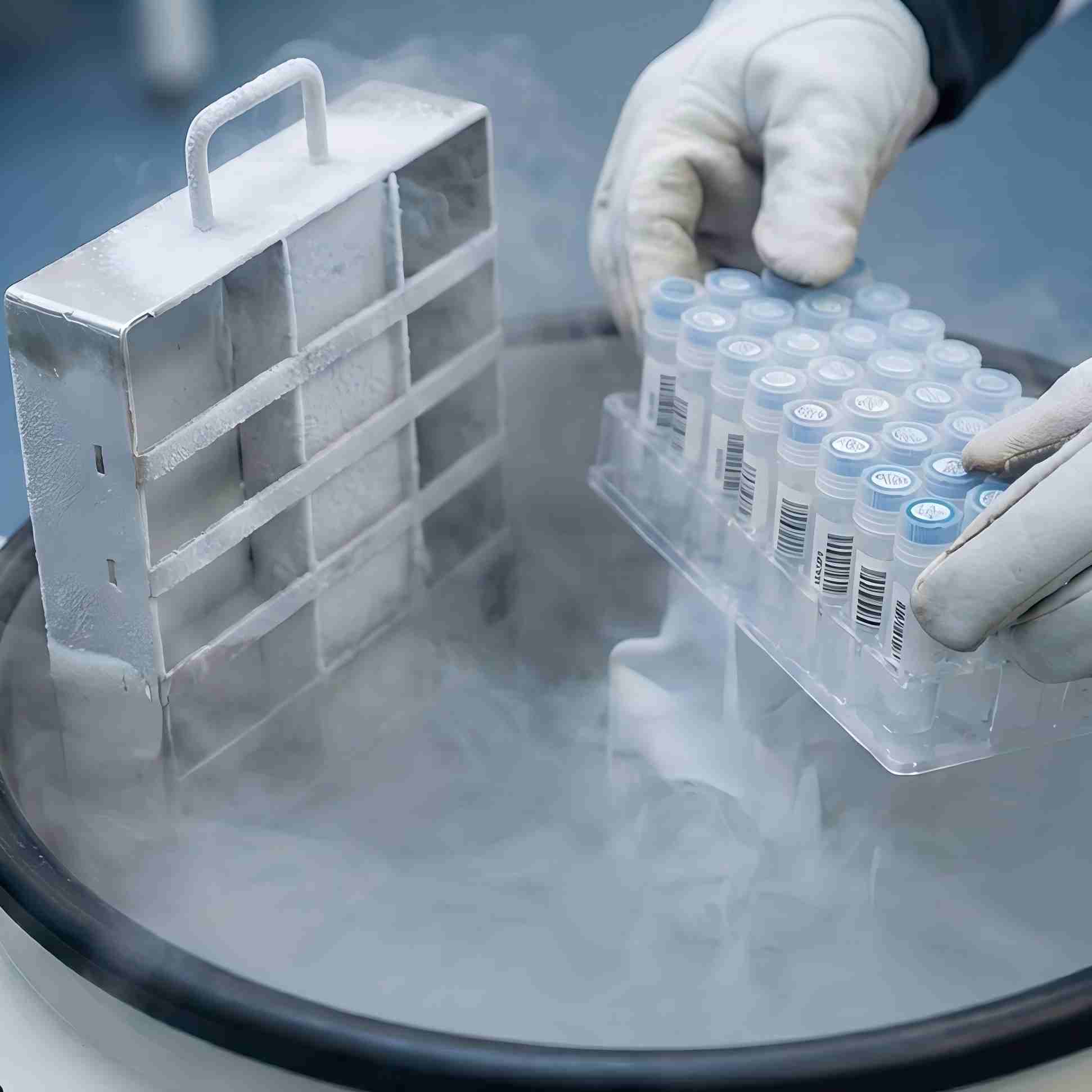
Cryopreservation Solutions
|
Serum-free, defined freezing media designed to minimize ice crystal formation and protect the integrity of 3D structures during long-term storage.
|
|
Dissociation Reagents
|
Enzymatic or non-enzymatic solutions formulated to gently break down organoids into fragments or individual cells for passaging without compromising viability.
|
Key Features
Our portfolio covers the essential components required for organoid generation and maintenance:
-
Maintenance & Expansion Media: Optimized to support the long-term propagation of adult stem cells (ASCs) or pluripotent stem cells (iPSCs) while maintaining their undifferentiated state and proliferative capacity.
-
Differentiation & Maturation Media: Formulations containing optimized signaling cues tailored to direct stem cells toward specific tissue fates (e.g., Intestinal, Hepatic, Cerebral) and promote functional maturity.
-
Extracellular Matrices (ECM): Reduced growth factor basement membrane extracts that provide the necessary 3D structural support and biochemical cues for cell organization.
-
Cryopreservation Solutions: Serum-free, defined freezing media designed to minimize ice crystal formation and protect the integrity of 3D structures during long-term storage.
-
Dissociation Reagents: Enzymatic or non-enzymatic solutions formulated to gently break down organoids into fragments or individual cells for passaging without compromising viability.
Advantages
Using Creative Biolabs' standardized culture systems offers several practical benefits for your lab:
Reproducibility
By removing the variability inherent in "home-brew" media, researchers can generate consistent data across different experiments and time points.
Scalability
Ready-to-use kits streamline the workflow, reducing preparation time and pipetting errors, which is critical when handling large sample numbers or high-throughput screens.
Simplified Protocol
Our "All-in-One" kit formats reduce the complexity of media preparation, allowing for easier training of new lab members and standardization of SOPs.
Performance Stability
Designed to maintain bioactivity over time, ensuring your organoids receive consistent signaling cues throughout long-term culture.
Applications
These reagents are essential tools for a wide range of 3D biology applications:
-
Biobanking: Establishing and expanding Patient-Derived 3D Model libraries from biopsy samples for long-term storage.
-
Drug Screening: Generating uniform organoid batches for high-throughput toxicity and efficacy testing of small molecules or biologics.
-
Disease Modeling: Culturing organoids that replicate specific disease phenotypes, such as cystic fibrosis, cancer, or infectious viral entry.
-
Developmental Biology: Studying lineage commitment and tissue morphogenesis in a controlled, in vitro environment.
FAQs
-
1: Are the media kits compatible with both iPSC and ASC-derived organoids?
A: We offer specific kits for each source. Please check the product specifications. Generally, "Maintenance Kits" are optimized for Adult Stem Cells (ASCs), while our neural systems are designed for iPSC differentiation.
-
2: How should the Basement Membrane Matrix be stored and handled?
A: The matrix should be stored at -20°C or -80°C. For use, thaw it overnight on ice at 4°C. It is temperature-sensitive and will gel rapidly above 10°C, so keep it on ice at all times during handling.
-
3: Do the reagents contain antibiotics?
A: Most of our basal media are antibiotic-free to allow researchers to choose their preferred antibiotic/antimycotic systems. We recommend adding them fresh if needed for your specific culture conditions.
-
4: What is the shelf life of the media after opening?
A: Once supplemented and opened, we generally recommend using the media within 2 weeks if stored at 4°C, as certain components may degrade over time. Unopened kits have a longer shelf life as indicated on the packaging.
How to Contact Us
For detailed product specifications or pricing inquiries, please reach out to our support team.
Email: , Phone: +1-631-357-2254.
Contact Us
For Research Use Only. Not For Clinical Use.
Species Reactivity Human
Application Organoid Establishment & Maintenance
Size 100 mL, 500 mL
Species Reactivity Human
Application Organoid Establishment & Maintenance
Size 100 mL, 500 mL
Species Reactivity Human
Application Organoid Establishment & Maintenance
Size 100 mL, 500 mL
Species Reactivity Human
Application Organoid Establishment & Maintenance
Size 100 mL, 500 mL
Species Reactivity Universal
Application Viability Assay
Size 1000 T, 5000 T
Species Reactivity Universal
Application Viability Assay
Size 100 T, 1000 T