Creative Biolabs applies its advanced technologies and expert knowledge to drive the development of various targeted drug delivery systems.
Hepatocellular Carcinoma Targeting Module Development Service
Overview Hepatocellular Carcinoma Targeting Delivery Systems What Can We Do for You? Workflow FAQs
Creative Biolabs develops high-performance drug delivery systems for the treatment of HCC. Our delivery systems combine liposome and lipid nanoparticle structures with targeting modules that contain peptides, antibodies, and aptamers for precise therapeutic agent delivery to the liver.
Contact our team to get an inquiry now!
Overview
Hepatocellular carcinoma represents the predominant form of liver cancer for which doctors diagnose about 75% of cases. Patients with chronic liver diseases such as hepatitis B and hepatitis C or cirrhosis commonly develop hepatocellular carcinoma (HCC). HCC treatment involves surgical removal of the tumor and liver transplantation in addition to systemic therapies which consist of chemotherapy, targeted therapy, and immunotherapy. Drug/module delivery systems with targeting modules (TDDS) have propelled the progress in HCC treatment. Module delivery systems that utilize liposomes, lipid nanoparticles (LNPs), exosomes and virus-like particles (VLPs) enable therapeutic agents to achieve enhanced stability and bioavailability. Drug delivery precision to liver cancer cells increases when using targeting modules which contain cell-penetrating peptides and homing peptides among peptides together with antibodies, aptamers, and functionalized lipids. Linking these targeting strategies with drug conjugates such as antibody-drug conjugates (ADCs) and aptamer-drug conjugates (ApDCs) produces effective and selective treatments that reduce systemic toxicity and improve therapeutic outcomes.
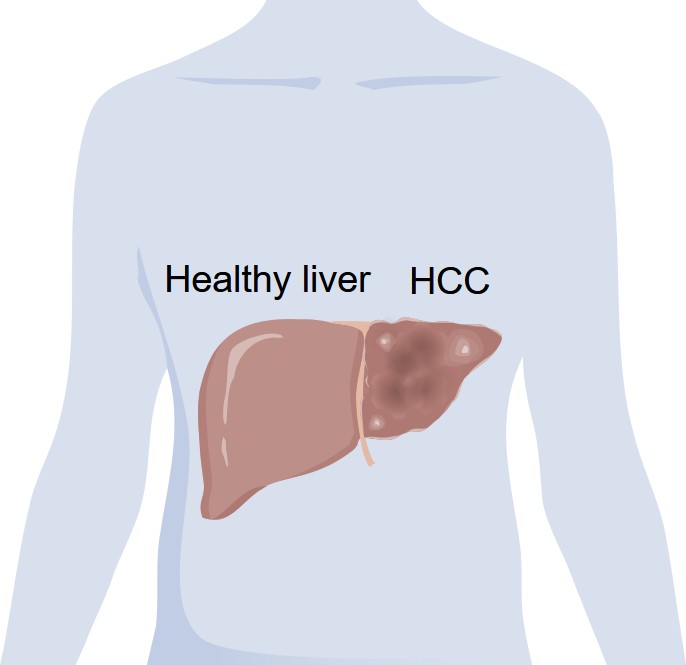 Fig.1 HCC.
Hepatocellular Carcinoma Targeting Delivery Systems
The liver cancer known as HCC stands as a leading cause of cancer mortality globally because of its strong ability to spread, treatment resistance and the liver's intricate anatomical makeup. TDDS provide an innovative solution for improving HCC treatment through selective drug administration to cancer cells and minimizing side effects in other body areas. Advanced systems tackle systemic drug delivery challenges and manage liver-related complications such as toxicity and bioavailability constraints. Below is a list of commonly used TDDS delivery systems, highlighting their applications and features.
Table 1. The Primary Types of TDDS Utilized in The Treatment of HCC
| TDDS Type | Description | Targeting Mechanism | Applications |
|---|---|---|---|
| Nanoparticles | Nanoscale carriers that encapsulate hydrophobic and hydrophilic drugs, improving solubility and stability. | Active targeting via surface modification with ligands specific to HCC markers (e.g., AFP). | Chemotherapy, gene therapy, siRNA delivery, immunotherapy. |
| Liposomes | Biocompatible lipid-based vesicles that can carry both water-soluble and lipid-soluble drugs. | Targeting via ligands or antibodies specific to HCC cell receptors (e.g., asialoglycoprotein receptor). | Drug delivery, gene therapy, immune modulation. |
| Antibody-Drug Conjugates (ADCs) | Monoclonal antibodies conjugated to cytotoxic drugs, providing selective tumor targeting. | Targeting through antibodies specific to HCC antigens (e.g., AFP, EGFR). | Targeted chemotherapy, localized drug delivery. |
| Gene Delivery Systems | Nanoparticles or viral vectors used for direct gene transfer to cancer cells. | Receptor-mediated or endocytosis-based targeting for delivering therapeutic genes or RNA molecules (e.g., siRNA). | Gene silencing, RNA interference, gene editing, immunotherapy. |
| Polymer Nanocapsules | Nano-sized capsules made from biodegradable polymers, capable of encapsulating therapeutic agents. | Targeting through surface-modified ligands for specific tumor receptors. | Controlled release, drug delivery, reducing side effects in HCC treatment. |
| Nanogels | Hydrophilic polymer networks that swell in water to encapsulate drugs and release them in a controlled manner. | Targeting via specific ligands or by exploiting the enhanced permeability and retention (EPR) effect. | Cancer therapy, gene delivery, immunotherapy. |
Targeting ligands are molecules designed to specifically bind to receptors on target cells, enabling the precise delivery of therapeutic agents. By using these ligands, drugs can be directed to disease sites, improving efficacy, and reducing off-target effects. The selection of appropriate targeting ligands is crucial for optimizing treatment outcomes for various diseases. Below is a list of commonly used targeting ligands, detailing their applications and characteristics.
Table 2. Targeting Ligands Used in Preclinical Studies for HCC
| Targeting Ligand | Target | Mechanism of Action | Research Focus |
|---|---|---|---|
| EGFR (Epidermal Growth Factor Receptor) | EGFR receptor | Monoclonal antibodies or small molecules targeting EGFR | Inhibits EGFR signaling, reducing HCC cell proliferation and survival. |
| CTLA-4 (Cytotoxic T-Lymphocyte-Associated Protein 4) | CTLA-4 receptor | Immune checkpoint inhibitors, monoclonal antibodies | Enhances T-cell mediated immune response against HCC cells. |
| PD-1/PD-L1 (Programmed Death Protein 1 / Ligand 1) | PD-1/PD-L1 pathway | Blocking PD-1/PD-L1 interaction to enhance immune response | Modulates the immune microenvironment to improve immune surveillance. |
| VEGFR (Vascular Endothelial Growth Factor Receptor) | VEGFR receptor | Antibodies or small molecules inhibiting VEGF/VEGFR signaling | Disrupts angiogenesis in the tumor to limit blood supply and tumor growth. |
| GPC3 (Glypican-3) | GPC3 (Glypican-3) | Monoclonal antibodies or CAR-T targeting GPC3 | Targets glypican-3 expression in HCC cells for selective therapy. |
| HSP70 (Heat Shock Protein 70) | HSP70 | Antibodies or peptides targeting HSP70 | Inhibits tumor cell survival by targeting stress-related pathways. |
| Folate Receptor-α (FRα) | Folate receptor-α | Antibodies or aptamers targeting FRα | Delivers drugs selectively to HCC cells expressing FRα. |
| AFP (Alpha-fetoprotein) | AFP (Alpha-fetoprotein) | Antibodies, aptamers, or targeted nanoparticles targeting AFP | Targets AFP-expressing cells in HCC for tumor-specific therapy. |
Experience the Creative Biolabs Advantage - Get a Quote Today
What Can We Do for You?
Advanced Technological Capabilities and Expertise
Professional Services for HCC Treatment
Our specialized targeted drug delivery services for HCC cater to clients globally, providing effective and personalized treatment solutions.
Customized Delivery Solutions for Multiple Diseases
Beyond HCC, we offer tailored delivery solutions for a wide range of diseases, designed to meet specific client needs and therapeutic goals.
Enhancing Treatment Effectiveness and Reducing Side Effects
Our focus is on increasing treatment effectiveness while minimizing adverse effects, ensuring the best possible outcomes.
Contact Us for More Information
For more details or to discuss how we can assist with your project, feel free to reach out to us. Our team is ready to provide expert support for your needs.
Workflow

FAQ
Q: What carriers are used?
A: We use LNPs, polymer nanoparticles, dendrimers, and liposomes, chosen based on the treatment goals.
Q: How are targeting ligands selected?
A: Ligands are selected based on the receptors or antigens overexpressed on HCC cells, ensuring targeted therapy.
Q: What are the advantages of targeted drug delivery?
A: It enhances drug efficacy, minimizes systemic toxicity, and improves treatment outcomes by targeting only HCC cells.
Q: Do you offer characterization services?
A: Yes, we provide detailed analysis of size, surface properties, encapsulation efficiency, and stability.
Q: What testing methods are used?
A: In vitro and in vivo testing for cytotoxicity, drug efficacy, biodistribution, and drug localization.
Our services are For Research Use Only. We do not provide services to individuals.
Online Inquiry