
Creative Biolabs leverages advanced technologies and extensive expertise to support the development of targeted drug delivery systems.
Glioma Targeting Module Development Service
Overview Glioma Targeting Delivery Systems What Can We Do for You? Workflow FAQs
Creative Biolabs provides advanced targeted drug delivery systems specifically designed to treat glioma. We deliver therapies to glioma cells through specialized liposomes and lipid nanoparticles integrated with targeting peptides, antibodies, and aptamers. Our services are specifically designed to boost your project's therapeutic effectiveness and reduce potential side effects. Please reach out to us if you want to learn more about our services.
Contact our team to get an inquiry now!
Overview
Glioma represents a brain tumor that develops from glial cells which function to safeguard and maintain healthy neurons. Glioma represents both a common and highly aggressive primary brain tumor type while glioblastoma stands as the most aggressive variant. Gliomas usually show resistance to standard medical interventions which include surgical removal, radiation treatments and chemotherapy sessions. Therefore, novel therapeutic strategies are needed. Targeting Modules and Drug/Module Delivery Systems (TDDS) together create improved treatment outcomes for glioma. Drug delivery to the brain is enhanced through use of module delivery systems including liposomes, lipid nanoparticles (LNPs), and exosomes which overcome the blood-brain barrier. Targeting modules such as peptides (e.g., cell-penetrating peptides and homing peptides), antibodies, aptamers, and functionalized lipids help achieve precise glioma cell targeting while minimizing off-target effects. Drug conjugates such as antibody-drug conjugates (ADCs) and peptide-drug conjugates (PDCs) achieve targeted delivery of toxic agents to glioma cells which enhances treatment effectiveness.
 Fig.1 Glioma.
Glioma Targeting Delivery Systems
High-grade gliomas like glioblastoma present significant treatment challenges because of their aggressive behavior coupled with the complex task of effectively administering therapies to the brain. Targeted drug delivery systems represent a hopeful strategy which enhances the precision and effectiveness of glioma treatments while protecting healthy brain cells from harm. Various TDDS delivery systems are available, each tailored to meet specific treatment needs and disease characteristics. Below is a list of common TDDS delivery systems, highlighting their unique features and applications.
Table 1. The Primary Types of TDDS Utilized in The Treatment of Glioma
| TDDS Type | Description | Targeting Mechanism | Applications |
|---|---|---|---|
| Nanoparticles | Nanoscale carriers that encapsulate drugs, improving drug solubility and stability. | Passive targeting (EPR effect) and active targeting (ligands, antibodies). | Chemotherapy, gene therapy, RNA delivery, targeted immunotherapy. |
| Liposomes | Lipid-based vesicles designed to carry hydrophilic and hydrophobic drugs. | Surface modifications with ligands or antibodies for glioma cell targeting. | Drug delivery, gene therapy, tumor imaging. |
| Antibody-Drug Conjugates (ADCs) | Antibodies linked to cytotoxic drugs that selectively bind to specific tumor antigens on glioma cells. | Antibody-mediated targeting of glioma-specific antigens (e.g., EGFRvIII). | Targeted chemotherapy, tumor-specific drug delivery. |
| Gene Delivery Systems | Nanoparticles or viral vectors that deliver genetic material (e.g., siRNA, mRNA) to glioma cells. | Gene targeting based on specific glioma markers or receptor-mediated uptake. | RNA interference, gene silencing, gene editing, immunotherapy. |
| Cell-Penetrating Peptides (CPPs) | Short peptides that facilitate direct entry of drugs or nucleic acids into glioma cells. | Direct cellular penetration, enabling targeted delivery of therapeutic agents. | Gene therapy, drug delivery, tumor-targeted treatments. |
Targeting ligands are essential components in the development of targeted drug delivery systems. These ligands selectively bind to specific receptors on the surface of target cells, enabling precise delivery of therapeutic agents. By utilizing targeting ligands, the treatment's effectiveness is enhanced, while minimizing off-target effects. Below is a list of commonly used targeting ligands, showcasing their applications in various therapeutic contexts.
Table 2. Targeting Ligands Used in Preclinical Studies for Glioma
| Targeting Ligand | Target Receptor/Cell Type | Description | Applications |
|---|---|---|---|
| EGFR (Epidermal Growth Factor Receptor) | Glioma cells, particularly glioblastoma | EGFR is overexpressed in glioma cells, especially glioblastoma, and is a key target for therapy. | Targeted drug delivery, gene therapy, and immunotherapy for glioma. |
| Transferrin | Transferrin receptor (TfR) on glioma cells | Transferrin receptor is upregulated in glioma cells and facilitates drug entry. | Nanoparticle-based delivery, gene therapy, targeted chemotherapy. |
| Folate Receptor | Glioma cells | Folate receptor is overexpressed in glioma cells, particularly in glioblastomas. | Targeted drug delivery, gene therapy, and nanomedicine. |
| Integrins (αvβ3, αvβ5) | Glioma cells and tumor vasculature | Integrins are involved in cell adhesion and angiogenesis in glioma and are key targets for delivery systems. | Tumor targeting, anti-angiogenic therapies, and gene therapy. |
| Low-Density Lipoprotein Receptor (LDLR) | Glioma cells, endothelium | LDLR is overexpressed in glioma cells and contributes to the uptake of lipid-based therapies. | Targeted lipid-based drug delivery, nanoparticles, and gene therapies. |
| Nogo Receptor (NgR) | Glioma cells and tumor vasculature | Nogo receptor is involved in neuronal regeneration and is expressed in gliomas. | Targeted drug delivery, gene therapy, and nerve regeneration. |
Experience the Creative Biolabs Advantage - Get a Quote Today
What Can We Do for You?
Advanced Technologies and Expertise
Professional Services for Glioma Treatment
Our specialized services for glioma treatment are tailored to help our global clients achieve precise and effective treatment outcomes.
Customized Delivery Systems for Various Diseases
We design personalized drug delivery systems for a wide range of diseases, ensuring that your specific requirements are met.
Ongoing Support for Your Projects
Feel free to contact us for detailed information or to explore how we can assist with your project. Our dedicated team is always ready to support the progress of your research and therapeutic work.
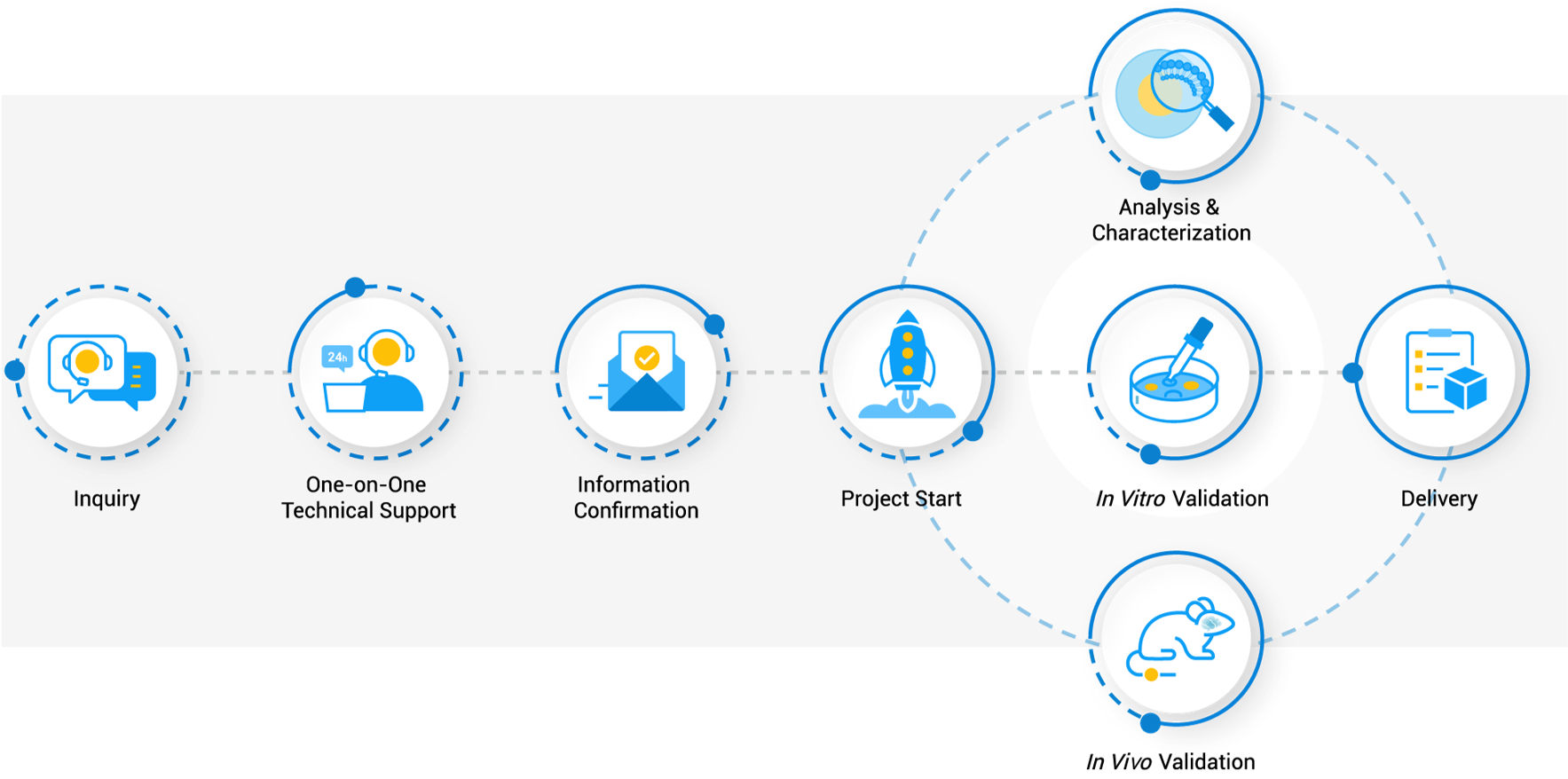
Workflow
FAQ
Q: What is this service?
A: We develop targeted delivery systems for glioma treatment using nano-based vehicles and ligands like antibodies and peptides to enhance treatment precision and reduce side effects.
Q: What delivery systems are available?
A: We offer liposomes, polymeric nanoparticles, micelles, inorganic nanocarriers, and microparticles designed for glioma targeting and blood-brain barrier penetration.
Q: How does ligand conjugation work?
A: Ligand conjugation attaches specific ligands to delivery vehicles, allowing them to bind to glioma cell receptors for precise drug delivery to the tumor.
Q: Can I customize my glioma targeting module?
A: Yes, we offer customized targeting modules based on specific glioma subtypes and treatment needs.
Q: What testing services are included?
A: We provide in vitro and in vivo testing, including drug efficacy, toxicity, blood-brain barrier penetration, and drug release profiles.
Our services are For Research Use Only. We do not provide services to individuals.
Online Inquiry