
Targeted drug delivery represents a revolutionary approach in disease diagnostics and treatment, offering precise and effective solutions.
Kidney Fibrosis Targeting Module Development Service
Overview Kidney Fibrosis Targeting Delivery Systems What Can We Do for You? Workflow FAQs
Creative Biolabs provides specialized advanced targeted drug delivery services for treating kidney fibrosis. Our platform integrates advanced delivery systems based on liposomes and lipid nanoparticles together with precise targeting methods utilizing peptides, antibodies, and aptamers. The method delivers drugs directly to the kidney which enhances therapeutic efficiency while minimizing unintended side effects. Contact us whenever you have questions about our project assistance capabilities.
Contact our team to get an inquiry now!
Overview
Kidney fibrosis represents a progressive disease state that develops due to the abnormal buildup of extracellular matrix components which causes scarring in kidney tissue. Chronic kidney diseases (CKD) including diabetic nephropathy along with hypertension and glomerulonephritis typically lead to this condition. The accumulation of fibrosis causes kidney function impairment which results in renal failure over time. Immediate treatment actions are essential to stop permanent damage from occurring. The search for enhanced medical treatments has propelled scientific research into new fibrosis treatment techniques. Scientific teams are researching targeted drug delivery systems (TDDS) to advance precision medicine and treatment efficacy. Targeting molecules such as peptides, antibodies, and aptamers combined with liposomes and lipid nanoparticles (LNPs) enable kidney-specific treatments that minimize side effects while boosting therapeutic outcomes. The therapeutic effect improves when drugs combine with targeting agents through various drug conjugates such as ADCs, RDCs, ApDCs, and PDCs.
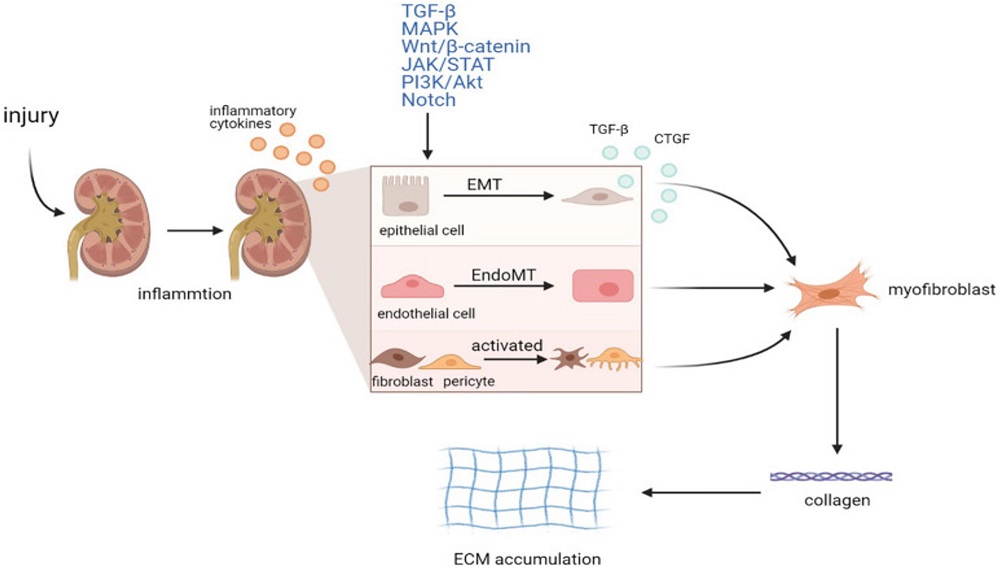 Fig. 1 Mechanism of renal fibrosis.
Kidney Fibrosis Targeting Delivery Systems (TDDS)
Treatment for kidney fibrosis focuses on slowing progression and controlling associated health problems since no definitive cure exists. TDDS offer promising progress toward more effective treatment results. TDDS ensure antifibrotic drugs reach injury sites accurately thus reducing side effects and raising treatment effectiveness. Below is a list of commonly used TDDS delivery systems, showcasing their unique applications in diverse therapeutic areas.
Table 1. The Primary Types of TDDS Utilized in The Treatment of Kidney Fibrosis
| TDDS Type | Description | Targeting Mechanism | Applications |
|---|---|---|---|
| Liposomes | Lipid-based vesicles that can carry both hydrophilic and hydrophobic drugs. | Surface modification with antibodies or ligands for specific targeting of renal cells. | Targeted delivery of antifibrotic drugs, gene therapy, and anti-inflammatory agents. |
| Lipid Nanoparticles (LNPs) | Nanoscale lipid carriers designed to encapsulate and deliver drugs to specific tissues. | Surface modifications for targeting renal cells or fibroblasts. | Antifibrotic therapy, gene delivery, and anti-inflammatory treatment. |
| Polymeric Micelles | Amphiphilic copolymers that form micelles to solubilize poorly water-soluble drugs. | Targeting via conjugation with ligands to specific kidney receptors. | Drug delivery, gene therapy, and targeted therapy for fibrosis. |
| Exosomes | Naturally occurring vesicles derived from cells that can carry drugs, RNA, or proteins. | Targeting of renal cells and fibroblasts via specific surface markers. | Gene therapy, anti-fibrosis drug delivery, and regenerative medicine. |
| Virus-Like Particles (VLPs) | Nanoparticles that mimic viruses but are non-infectious. | Targeting renal cells and fibroblasts with ligands or surface proteins. | Targeted drug delivery, gene therapy for fibrosis, and anti-inflammatory treatments. |
| Albumin-based Nanoparticles | Nanoparticles derived from albumin, which can carry drugs with high stability and low immunogenicity. | Targeting of kidney tissues using albumin's natural affinity for the renal system. | Targeted delivery of anti-fibrotic drugs and therapy for renal inflammation. |
| Fc Fusion Proteins | Fusion proteins that combine the Fc region of antibodies with other proteins to enhance targeting. | Binding to specific kidney receptors on fibroblasts and endothelial cells. | Targeted drug delivery, antifibrotic treatment, and immune modulation. |
Targeting ligands are critical components in targeted drug delivery systems, as they ensure the specific binding of therapeutic agents to designated receptors on target cells. These ligands enhance the precision of drug delivery, allowing for improved therapeutic outcomes and reduced side effects. The choice of targeting ligand is essential in optimizing the efficacy of the drug delivery system. Below is a list of commonly used targeting ligands, detailing their applications and effectiveness in various therapeutic contexts.
Table 2. Targeting Ligands Used in Preclinical Studies for Kidney Fibrosis
| Targeting Ligand | Target Receptor/Cell Type | Description | Applications |
|---|---|---|---|
| Integrins (αvβ3, αvβ5) | Renal fibroblasts, myofibroblasts, endothelial cells | Integrins are involved in cell adhesion and fibrosis development, making them key targets in kidney fibrosis. | Targeted delivery of antifibrotic drugs, gene therapy, and anti-inflammatory treatments. |
| Angiotensin II Type 1 Receptor (AT1R) | Renal cells, fibroblasts, and vascular smooth muscle cells | AT1R is involved in fibrosis and inflammation, particularly in response to angiotensin II. | Targeted drug delivery, anti-fibrosis treatments, and gene silencing. |
| Aldosterone Receptor (MR) | Renal tubular cells, fibroblasts | Aldosterone contributes to fibrosis through its action on sodium and water retention, affecting kidney cells. | Targeted anti-fibrotic therapy and gene delivery to reduce fibrosis. |
| TGF-β (Transforming Growth Factor-beta) | Fibroblasts and myofibroblasts | TGF-β plays a central role in the initiation and progression of fibrosis by promoting collagen synthesis. | Targeted delivery of TGF-β inhibitors, anti-fibrosis therapy. |
| CD44 | Renal fibroblasts, cancer stem cells | CD44 is a cell surface glycoprotein involved in inflammation and fibrosis, particularly in kidney tissue. | Targeted drug delivery, gene therapy for reducing fibrosis, and stem cell modulation. |
| Fibroblast Activation Protein (FAP) | Activated fibroblasts, myofibroblasts | FAP is highly expressed on activated fibroblasts in fibrosis, especially in chronic kidney injury. | Targeted drug delivery to activated fibroblasts, anti-fibrotic treatments. |
| Integrin αvβ6 | Fibroblasts and myofibroblasts | Integrin αvβ6 is involved in tissue remodeling and fibrosis, making it a potential target for selective treatment. | Targeted delivery of antifibrotic drugs, gene therapy, and fibrosis inhibition. |
Experience the Creative Biolabs Advantage - Get a Quote Today
What Can We Do for You?
Groundbreaking Advancements in Disease Treatment
Target-Specific Ligands and Pharmaceutical Nano-Carriers
The development of target-specific ligands and advanced pharmaceutical nano-carriers is essential for improving treatment outcomes in modern medicine.
Expertise in High-Affinity Targeting Methods
Creative Biolabs leverages our expertise in high-affinity and high-specificity targeting to create effective treatments for a wide range of diseases.
Contact Us for More Information
Reach out to us for more details about our services and how we can support your targeted delivery projects.
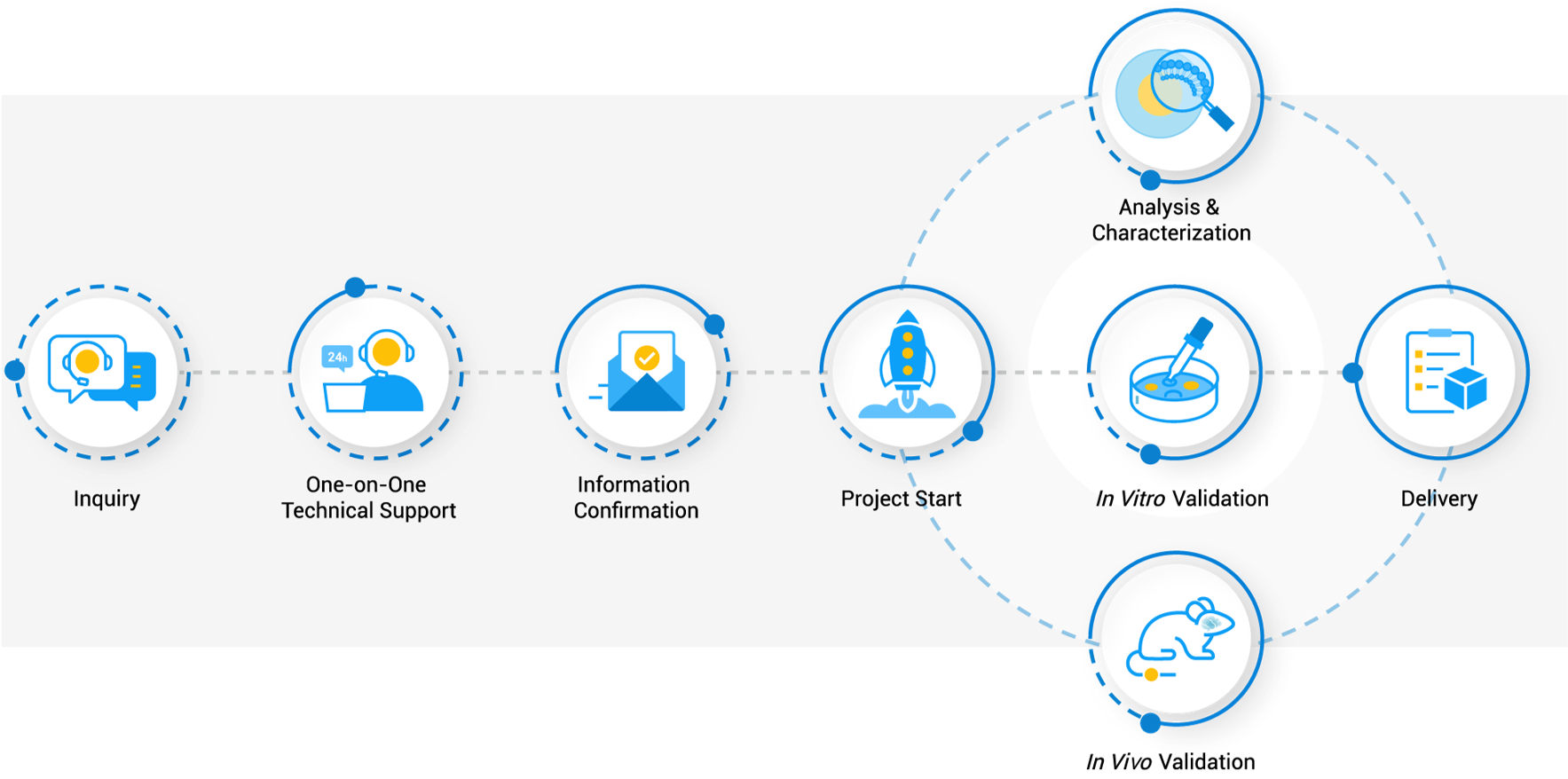
Workflow
FAQ
Q: What is Kidney Fibrosis Targeting Module Development?
A: Kidney fibrosis targeting module development involves the creation of highly specific targeting modules that recognize and bind to markers or receptors associated with kidney fibrosis. These modules are designed to deliver therapeutic agents directly to fibrotic kidney tissue, enhancing treatment effectiveness while minimizing side effects.
Q: What types of targeting modules do you offer for kidney fibrosis?
A: We offer a range of targeting modules, including antibodies, peptides, aptamers, and small molecules. These modules are engineered to selectively target biomarkers such as collagen, TGF-β receptors, and activated fibroblasts (e.g., myofibroblasts), which are involved in kidney fibrosis.
Q: Can the targeting modules be combined with drug delivery systems?
A: Yes, we specialize in integrating targeting modules with various drug delivery systems, including liposomes, lipid-polymer hybrid nanoparticles, exosomes, and nanoparticles. This combination enhances the targeted delivery of anti-fibrotic drugs, RNA therapies (e.g., siRNA), or gene-editing tools directly to the kidneys, improving therapeutic outcomes and minimizing off-target effects.
Q: How do you test the efficacy of the targeting modules for kidney fibrosis?
A: We conduct comprehensive preclinical testing using both in vitro and in vivo approaches. These studies assess the targeting specificity, drug delivery efficiency, and therapeutic effects. We also perform pharmacokinetic and toxicity studies to evaluate safety and ensure the modules do not cause harmful side effects.
Reference
- Zhang, Yuqing et al. "Signaling Pathways Involved in Diabetic Renal Fibrosis." Frontiers in cell and developmental biology vol. 9 696542. 12 Jul. 2021, DOI:10.3389/fcell.2021.696542. Distributed under Open Access license CC BY 4.0, without modification.
Our services are For Research Use Only. We do not provide services to individuals.
Online Inquiry