
Services
Online Inquiry
For research use only. Not intended for any clinical use.
This site is protected by reCAPTCHA and the Google Privacy Policy and Terms of Service apply.
Non-Human Primate (NHP) Safety & Toxicology Evaluation Services
Are you currently facing complex challenges in biopharmaceutical development, such as ensuring species-specificity for your novel molecule, navigating intricate regulatory pathways, or managing the ethical and financial considerations of nonclinical safety studies? Our Non-Human Primate Safety & Toxicology Evaluation Service helps you to mitigate risk and streamline the regulatory process by leveraging a scientifically sound and ethically driven approach. We provide the predictive data you need to advance your therapeutic candidate with confidence.
The Strategic Advantage of NHP Toxicology Studies
Non-human primates (NHPs) are a cornerstone of modern biopharmaceutical safety assessment. Due to the high degree of genetic, physiological, and immunological similarity to humans, NHPs are often the only pharmacologically relevant species for evaluating novel large-molecule therapeutics, such as monoclonal antibodies, advanced therapies, and vaccines. Their relevance ensures that safety data is highly translatable, providing a robust foundation for predicting human risk and determining a safe starting dose for clinical trials.
What Our Service Is
Our comprehensive NHP safety and toxicology service is designed to support the entire biopharmaceutical development pipeline, from early-stage candidate selection to final regulatory submission. We provide end-to-end solutions that are meticulously designed to meet global regulatory requirements and ethical standards.
-
In Vivo Toxicology Studies
- Single-Dose & Repeat-Dose Toxicity: We conduct studies to determine the maximum tolerated dose and evaluate potential adverse effects over time.
- Safety Pharmacology (CV, Resp, CNS): These integrated studies assess a drug's effects on critical organ systems, often combining them with other toxicity studies to adhere to the principles of reduction.
- Genotoxicity & Carcinogenicity Prediction: Our services include predictive analyses and study designs to assess potential DNA-damaging effects and long-term carcinogenic risk.
- Advanced Therapy Safety: We have specialized expertise in evaluating gene and cell therapies, where a comprehensive understanding of vector biodistribution and potential off-target effects is paramount.
-
In Vitro Cell-Based Safety Assays
- Primary NHP Cell Cytotoxicity: This allows for early-stage screening of a candidate's potential toxicity using the most relevant cell models.
- Receptor Occupancy & Off-Target Profiling: We can determine the extent of target binding and identify any unintended off-target interactions that could lead to toxicity.
- Immunotoxicity & Cytokine Release Assays (CRAs): We assess the potential for immunogenicity and cytokine storm, a critical safety concern for many novel biologics.
- Complement Activation Assays: Our team evaluates the potential for a molecule to activate the complement system, which can lead to inflammatory responses.
Why Choose Us?
Partnering with Creative Biolabs means gaining a strategic advantage in a complex and competitive field. We translate your pain points into actionable solutions: To overcome high cost and ethical concerns of NHP studies, we apply a rigorous, science-driven approach to minimize animal use, integrating safety endpoints into single studies and leveraging data from small pilot studies to make informed "No Go" decisions early in the process. Our approach aligns with the principles of Reduction, Refinement, and Replacement (3Rs), delivering critical data without unnecessary animal sacrifice.
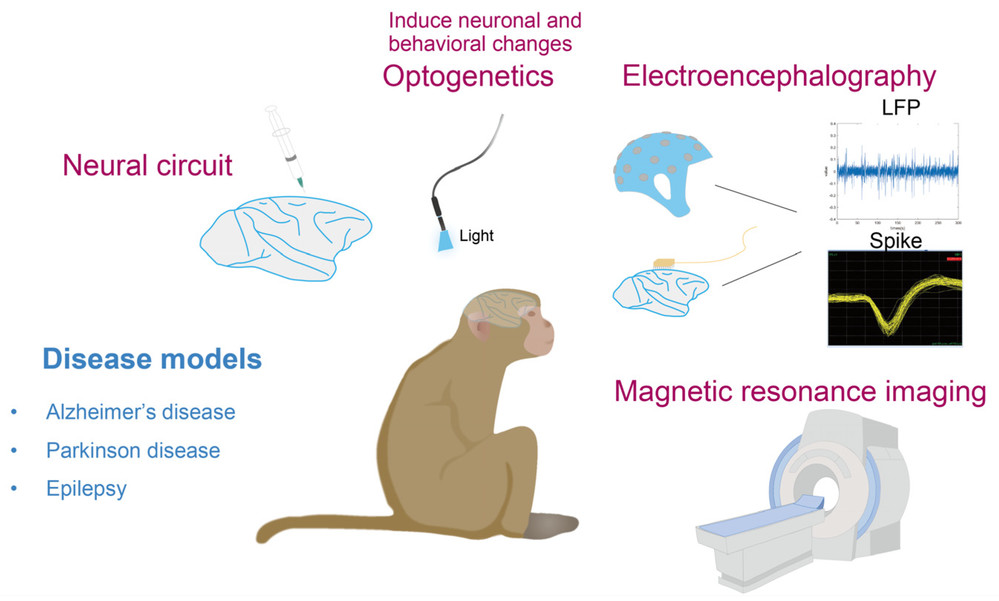 Fig.1 Overview of disease models, brain functionality, and imaging techniques in NHPs.1
Key Benefits of Our Service
We pride ourselves on providing a service that is not only scientifically sound but also strategically beneficial to your project. Our commitment to excellence is reflected in our core capabilities:
- Exceptional NHP Resources: We have access to a reliable, global supply of high-quality cynomolgus and rhesus macaques, as well as specialized expertise in the use of common marmosets for large-molecule assessments.
- Customized Study Designs: We do not offer a one-size-fits-all solution. Every study is a bespoke design, tailored to the unique biology of your molecule and your specific development goals.
- Accelerated Turnaround Time: By integrating safety and pharmacology endpoints and optimizing study schedules, we can significantly reduce the time from study initiation to final report delivery, helping you meet critical development milestones.
How Creative Biolabs' NHP Service Can Assist Your Project?
Our process is designed to be a seamless, collaborative partnership, providing you with clear deliverables and actionable data at every stage. We handle the complexity of the study so you can focus on your therapeutic goals.
01
Required Starting Materials
02
Collaborative Study Design & Protocol Generation
03
Animal Dosing & In-Life Phase
04
Sample Collection & Analysis
05
Necropsy & Histopathology
06
Final Report Generation
Key Deliverables
Upon completion of your project, you will receive a complete and ready-to-file data package:
- Final Study Report: A comprehensive, single document detailing the study's objectives, methods, results, and conclusions.
- Raw Data Files: All raw data for clinical observations, clinical pathology, toxicokinetics, and immunogenicity.
- Digital Histopathology Images: Scanned images of all stained tissues with expert annotations.
- Necropsy and Organ Weight Data: A detailed table of all terminal necropsy findings and organ weights.
- Pathology Report: A separate report from a certified pathologist detailing histopathological findings.
Capabilities & Partnerships
Service-Specific Data
- Annual Sample Size: Over 50,000 samples analyzed per year.
- Turnaround Time (TAT): Typical turnaround of 2 weeks for bioanalytical results.
- Study Pass Rate: 99%+ success rate in meeting study endpoints.
Our Valued Partners













Frequently Asked Questions
Q: Why is an NHP study necessary for my biopharmaceutical, but not for small-molecule drugs?
A: Biopharmaceuticals, such as monoclonal antibodies and gene therapies, are often highly species-specific. This means they will only interact with their intended target in a primate model. A small-molecule drug, in contrast, may bind to a similar receptor in a rodent, making it a relevant model. For many biologics, the NHP model is the only way to accurately assess safety before human clinical trials.
Q: How do you address the high cost and ethical concerns associated with NHP studies?
A: Our core philosophy is centered on the principles of the 3Rs. We employ data-driven strategies, such as integrated study designs and early de-risking, to obtain the maximum amount of information from the minimum number of animals. This not only aligns with global ethical standards but also reduces your overall development costs by making key decisions earlier.
Q: Can your service handle novel therapeutic modalities, such as gene and cell therapies?
A: Absolutely. Our team has specialized expertise in the unique challenges posed by advanced therapies. We understand the importance of biodistribution, shedding, and the potential for off-target effects. Our tailored study designs are equipped to address these specific concerns and provide you with the predictive data you need to move forward safely.
Q: What is the typical timeframe for a toxicology study?
A: The duration of an NHP toxicology study is highly dependent on the proposed clinical trial duration and the study's complexity. We work closely with you to establish a realistic timeline that aligns with your development goals. A key advantage of our approach is that we streamline the workflow to provide a final report in a timely manner, allowing you to stay on schedule.
Q: How do you ensure the data is reliable and of the highest quality?
A: Our studies are traceable and verifiable. From animal husbandry to final reporting, our processes are rigorously audited to maintain the highest standards of quality and regulatory compliance. We are committed to transparency, and our reports are meticulously detailed to provide you with full confidence in your data.
Contact Us
Creative Biolabs is your trusted partner for navigating the complexities of nonclinical safety assessment. We provide a comprehensive, scientifically robust, and ethically sound service that is designed to accelerate your drug discovery process and provide a clear path to regulatory success. For detailed information on our Non-Human Primate Safety & Toxicology Services or to request a quote, please contact our expert team today.
Reference
- Qiao, Nan, et al. "Update on nonhuman primate models of brain disease and related research tools." Biomedicines 11.9 (2023): 2516. Distributed under Open Access license CC BY 4.0, without modification. DOI: https://doi.org/10.3390/biomedicines11092516