
Applications
Online Inquiry
For research use only. Not intended for any clinical use.
This site is protected by reCAPTCHA and the Google Privacy Policy and Terms of Service apply.
Non-Human Primate (NHP) Applications in Oncology & Immunotherapy
Are you currently facing challenges with translating preclinical data to the clinic, assessing the efficacy of complex immunotherapies, or navigating strict regulatory requirements? Our NHP solutions help you accelerate oncology and immunotherapy drug discovery, and obtain clinically relevant data through advanced NHP disease models and comprehensive bioanalysis platforms.
Precision Preclinical: Advancing Oncology & Immunotherapy with NHP Models.
NHP models provide essential translational data for the safety, efficacy, and biodistribution of next-generation oncology and immunotherapy drug candidates.
Overview of NHP Applications
What Are Our Research Areas?
The field of oncology and immunotherapy is rapidly evolving, with novel therapies like Immune Checkpoint Inhibitors (ICIs), CAR-T, and bispecific antibodies demonstrating significant clinical promise. However, translating these complex modalities from discovery to patient care requires a robust preclinical strategy. Our services are designed to address this critical need by providing a deeper understanding of therapeutic mechanisms within a highly translatable system. We focus on key research areas, including:
- Tumor Microenvironment & ICI Evaluation: Understanding how ICIs modulate the tumor microenvironment is essential for predicting clinical response. NHP models, with their complex and highly similar immune systems, allow for the evaluation of ICI efficacy, safety, and biomarker changes in a more physiologically relevant setting than rodent models. This provides crucial insights into how a therapy will engage with immune cells within the tumor.
- CAR-T/Bispecifics Efficacy & Safety: The unique mechanisms of cell therapies and multi-specific antibodies, such as the potential for cytokine release syndrome (CRS) or off-target toxicity, require a model that closely mimics human physiology. NHPs are invaluable for assessing the in vivo pharmacology and safety of these therapies, allowing for the early identification of adverse events and the determination of appropriate dosing strategies.
Why Choose Us?
NHPs are a cornerstone of translational research in oncology and immunotherapy due to their unique and irreplaceable advantages:
- Genetic and Immunological Similarities: NHPs share a high degree of genetic, physiological, and immunological homology with humans. This includes the structure and function of the adaptive and innate immune systems, allowing for a more accurate prediction of human responses to immunotherapies.
- Clinical Translational Relevance: Unlike rodent models, NHPs naturally develop a spectrum of cancers with similar incidence, pathology, and age-related patterns to those in humans. This makes them a more predictive model for evaluating drug efficacy.
- Data Required for Regulatory Submissions: Data from NHP studies, particularly for advanced therapies, are often required by regulatory agencies for Investigational New Drug (IND) submissions. They are a critical part of a comprehensive safety and efficacy package.
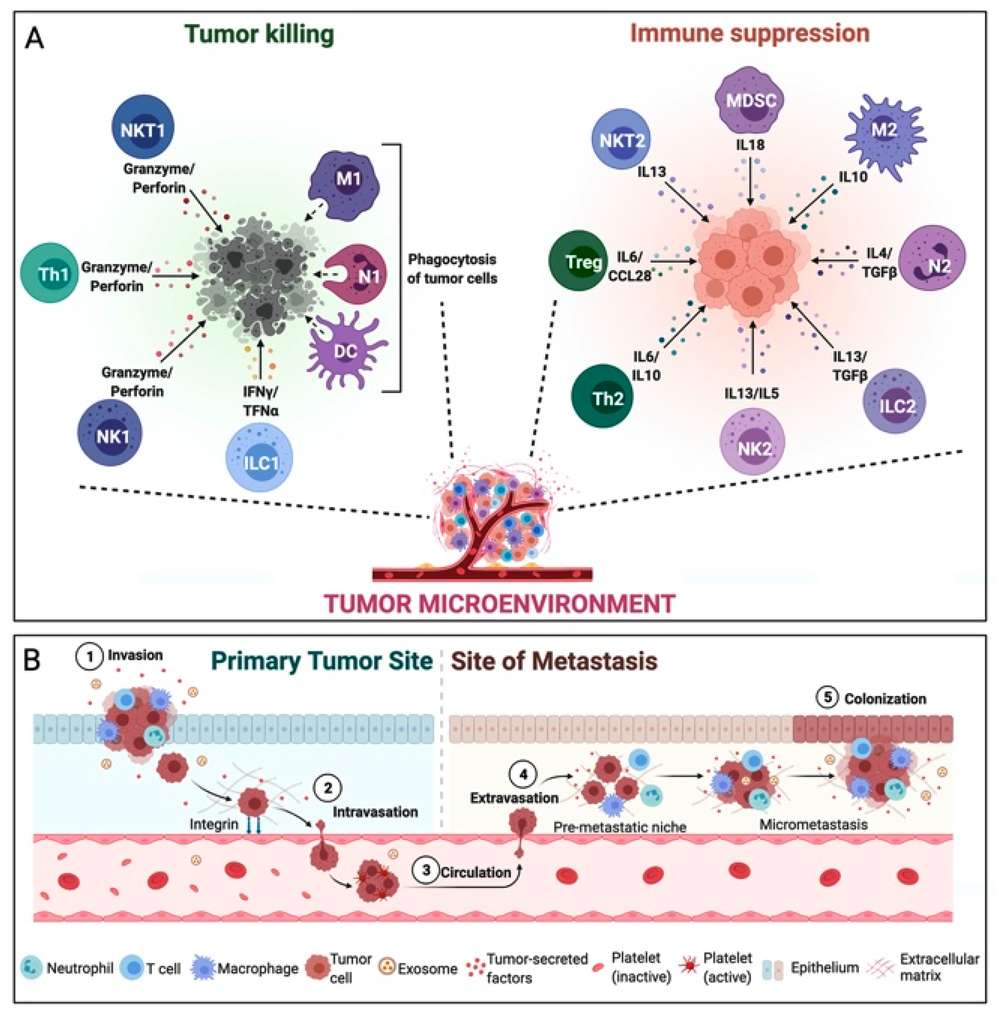 Fig.1 Simplified diagram illustrating the tumor microenvironment.1
Key Applications
NHPs serve as a powerful platform for evaluating a wide range of immunotherapies. Specific applications include:
- Evaluating Cytokine Release Syndrome (CRS) for Cell Therapies: By monitoring cytokine levels and clinical signs in NHP models, researchers can effectively model and mitigate the risks of CRS associated with CAR-T and other cell therapies before they enter clinical trials.
- Assessing Tumor Microenvironment Modulation: NHP models allow for detailed studies of how immunotherapies alter the cellular and molecular components of the tumor microenvironment, including T-cell infiltration, macrophage polarization, and cytokine profiles. This provides valuable proof-of-mechanism data.
- In-depth Evaluation of Bispecifics and ADCs: The complex binding and trafficking of bispecific antibodies and antibody-drug conjugates (ADCs) require a model with similar target expression and physiological barriers to humans. NHPs are an ideal platform for assessing the efficacy, pharmacokinetics, and off-target toxicity of these innovative therapies.
How Do Creative Biolabs Support Your Projects?
Creative Biolabs offers a comprehensive suite of services designed to support your oncology and immunotherapy programs. We provide access to high-quality samples and robust platforms to facilitate your research.
| Service Capability | Corresponding Application Area |
| Disease Model Development | Corresponding Application Area: Efficacy studies of novel cancer therapeutics, including spontaneous and experimentally induced tumor models. |
| Cell Therapy Models (CAR-T, iPSC-derived) | Corresponding Application Area: Evaluation of in vivo efficacy and safety of cell therapies, including cytokine profiling and tumor regression. |
| Antibody & Biologic Efficacy (Bispecifics, ADCs) | Corresponding Application Area: PK/PD and efficacy studies for complex large molecules with multi-target mechanisms. |
| ADA/Immunogenicity Testing | Corresponding Application Area: Assessment of anti-drug antibodies and neutralizing antibody responses to biologic therapies. |
Translational Impact
Utilizing Creative Biolabs' NHP models provides a significant translational advantage for your drug development program. The data generated from these studies offers more reliable early proof-of-concept and allows for the early detection of immune-related adverse events and toxicity. This can dramatically reduce the risk of IND (Investigational New Drug) application failures and late-stage clinical trial setbacks. NHP safety and biodistribution data, for example, is often required by regulatory agencies for advanced therapy IND submissions, directly streamlining your path to the clinic.
Frequently Asked Questions
Q: What are the primary advantages of using NHPs over rodent models for my immunotherapy study?
A: NHPs possess a far greater genetic, physiological, and immunological similarity to humans. This translates to more accurate predictions of drug safety, efficacy, and immunogenicity. While rodent models are valuable, NHP data provides a more robust and clinically relevant preclinical package for regulatory submissions.
Q: How can I ensure the data from my NHP study is reliable and high-quality?
A: Data quality is paramount. Our team at Creative Biolabs uses standardized protocols, state-of-the-art analytical platforms, and experienced staff to ensure the accuracy and reproducibility of all data. We conduct rigorous quality control and provide integrated bioinformatics reports for comprehensive analysis.
Q: Can your NHP models be used for bispecifics and antibody-drug conjugates (ADCs)?
A: Yes. NHPs are an excellent model for these complex molecules due to their similarity in target expression and immune system pathways. We can perform comprehensive PK/PD, safety, and efficacy studies to evaluate the unique mechanisms of bispecifics and ADCs.
Q: What is your process for managing complex samples like PBMCs and tissue biopsies?
A: Our Bio-specimen Bank and Custom Collection Services are designed to handle complex biological samples with meticulous care. We ensure proper cold-chain transportation, full-service sample management (labeling, aliquoting), and a secure biobanking process to maintain sample integrity from collection to analysis.
Contact Us
Creative Biolabs provides a world-class platform of NHP models and supporting services for the development of cutting-edge oncology and immunotherapy solutions. Our expertise is your advantage. Set to harness our NHP platform for your upcoming research? Connect with our team for additional insights and project discussions.
Reference
- Liberini, Virginia, et al. "The future of cancer diagnosis, treatment and surveillance: a systemic review on immunotherapy and immuno-pet radiotracers." Molecules 26.8 (2021): 2201. Distributed under Open Access license CC BY 4.0, without modification. DOI: https://doi.org/10.3390/molecules26082201