Product List
Filter Product



Endotoxins are structural components of the outer membrane of gram-negative bacteria that act as potent pyrogens. In the production of Antibody-Drug Conjugates (ADCs), endotoxin contamination is a significant risk because these therapies combine the targeting specificity of monoclonal antibodies with highly potent cytotoxic payloads. The multi-step chemical conjugation process and subsequent purification workflows provide numerous opportunities for bacterial byproduct introduction.
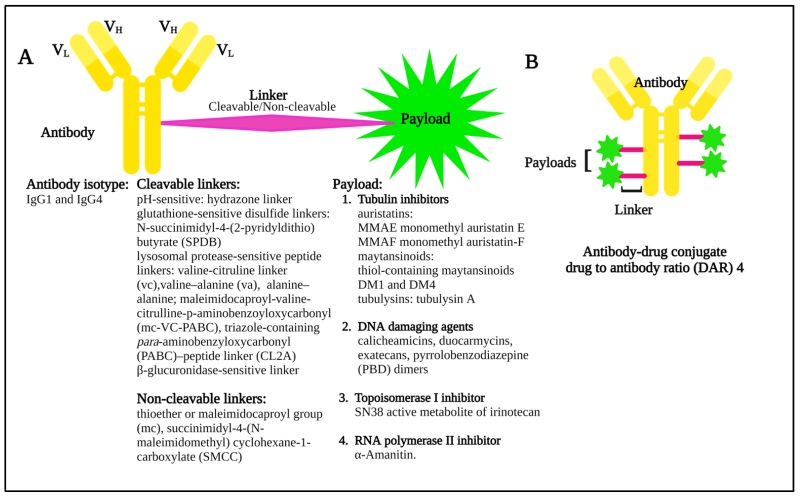 Fig.1 The components of an antibody–drug conjugate (ADC).1
Maintaining low endotoxin levels is essential because ADCs are often administered at high doses, and even trace amounts can lead to severe immunogenic reactions, fever, or systemic shock in patients. Standard biologics may tolerate higher thresholds, but the complex, often hydrophobic nature of ADCs requires more rigorous monitoring to ensure that the "magic bullet" does not carry a hidden inflammatory burden.
The conjugation process of ADCs introduces unique contaminants. Standard limulus amebocyte lysate (LAL) assays often struggle with the interference inherent in ADC formulations, specifically the surfactants, buffers, and hydrophobic payloads like monomethyl auristatin E (MMAE) or DM1.
Creative Biolabs' ADC-specific endotoxin detection kit is engineered to bypass these hurdles, providing the sensitivity required for high-stakes therapeutic development. They are designed to address the specific "Matrix Effects" of conjugated proteins through proprietary dissociation buffers and high-sensitivity kinetic chromogenic technology.
Our proprietary dissociation buffer breaks down the hydrophobic micro-environments where endotoxins hide, ensuring that even masked contaminants are fully liberated for detection.
With a limit of detection (LOD) of 0.005 EU/mL, our kit exceeds the requirements for phase I clinical trials, providing peace of mind during the most critical regulatory transitions.
Whether you are working with auristatins, maytansinoids, or PBD dimers, our reagents are screened to ensure zero cross-reactivity with common ADC linkers and payloads.
Creative Biolabs offers a suite of ADC specialized Endotoxin Detection Kits that overcome the technical hurdles of matrix interference and payload masking. Our solutions ensure that your targeted therapies meet the highest safety standards from discovery to the clinic. Contact us for your ADC projects.
Standard kits often experience interference from the ADC's payload or stabilizers, leading to false negatives. Our kits use proprietary buffers to "unmask" endotoxins that might be trapped by hydrophobic drug molecules.
Yes. Chemistry is designed to be payload-neutral, ensuring accurate detection regardless of the linker-drug mechanism.
Our kits are designed to align with USP <85> and EP 2.6.14 guidelines for bacterial endotoxin testing, providing data suitable for regulatory filings.
Reference

 Contact Us