 Contact Us



Endotoxins are primary components of the outer membrane of gram-negative bacteria like E. coli. During recombinant protein expression, these molecules are released in massive quantities, particularly when proteins are isolated from the soluble cytoplasmic fraction. The presence of even nanogram quantities can compromise experimental results by inducing systemic inflammation or septic shock in mammalian hosts.
Triton X-114 phase separation is a common method to remove endotoxins. It is a specialized detergent-based technique designed to exploit the physical properties of non-ionic surfactants to isolate these contaminants. Unlike standard chromatography, which may suffer from non-specific binding, this method provides a gentle yet highly efficient alternative for achieving the rigorous purity standards required for modern biopharmaceuticals.
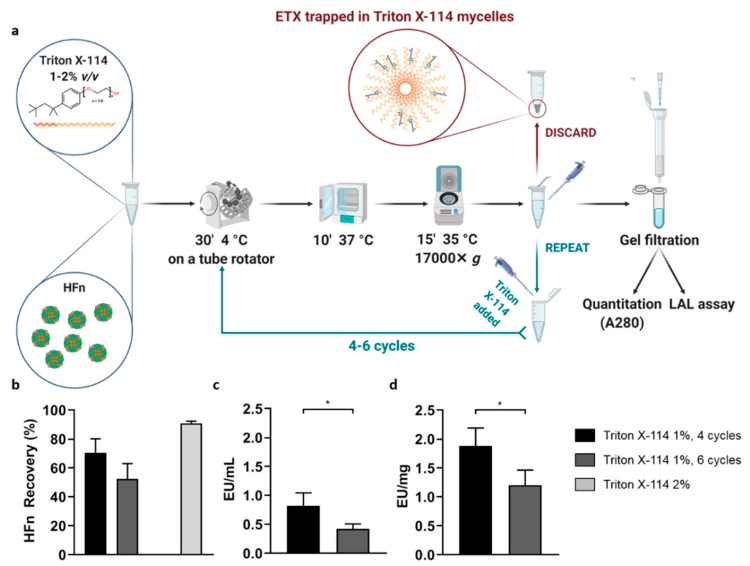 Fig.1 Endotoxin removal from human Ferritin with Triton X-114.1
The effectiveness of Triton X-114 in removing endotoxins from protein solutions is rooted in its unique thermodynamic behavior and its ability to act as a physical partition between hydrophilic and hydrophobic molecules. This process is highly efficient because it utilizes the physical characteristics of the detergent to sequester contaminants without requiring complex chemical reactions.
Triton X-114 phase separation is a superior technological balance between high-potency decontamination and the preservation of protein integrity. This process is governed by predictable thermodynamic principles that offer several distinct advantages for biopharmaceutical applications.
A single cycle can achieve a 1000-fold reduction in endotoxin levels, with triple-extraction protocols reaching high removal rate (>99%).
This method typically yields recovery rates exceeding 90-95% per cycle, significantly outperforming affinity-based resins.
The process occurs at physiological temperatures and utilizes gentle surfactants, which preserves the quaternary structure and biological activity of complex molecules.
The procedure is highly versatile, effectively processing volumes ranging from 1 mL to 500 mL without loss of performance.
At Creative Biolabs, we provide a specialized endotoxin removal service that utilizes refined Triton X-114 to achieve ultra-pure protein yields. While standard laboratory protocols often leave behind residual detergent (~0.018%) that can be toxic to sensitive cell lines or interfere with results, our proprietary process ensures your protein is both endotoxin-free and assay-ready for critical clinical and research applications.
We consistently achieve over 99% endotoxin reduction through our validated triple-extraction protocols.
Our methods prioritize the preservation of your valuable material, targeting recovery rates greater than 90%.
We routinely lower endotoxin levels to <0.1 EU/mg, meeting the most rigorous safety standards for in vivo and cell-based studies.

Workflow of Our Endotoxin Removal Service by Triton X-114 Phase Separation.
Creative Biolabs provides an industry-leading endotoxin removal service utilizing Triton X-114 phase separation. We combine 20 years of technical expertise with advanced detergent-polishing protocols to deliver proteins with high endotoxin reduction and high recovery. Contact us for more information and to discuss your project.
We implement a secondary polishing step using adsorption beads or size-exclusion chromatography to reduce residual Triton X-114 to levels below 0.005%, which is safe for sensitive cell lines like macrophages.
We routinely achieve levels below 1 EU/mg, and for specific high-sensitivity requirements, we can reach < 0.1 EU/mg through extended extraction cycles.
Yes. This is a core advantage of Triton X-114. The micellar structure is more effective at competing for the hydrophobic lipid A than affinity resins, making it the preferred choice for sticky proteins.
Our protocols are optimized for >90% recovery. We provide a full recovery analysis in your final report.
Reference
 Contact Us