 Contact Us



Endotoxins are integral components of the outer membrane of gram-negative bacteria that are shed during cell growth and death. In the biopharmaceutical industry, these molecules are invisible saboteurs because they are exceptionally heat-stable and resistant to standard pH extremes that would typically denature proteins. Affinity chromatography represents the gold standard for removing these contaminants. Affinity chromatography targets the specific molecular structure of the endotoxin itself. This ensures the removal of both aggregated and monomeric LPS, providing a level of purity essential for parenteral administration and sensitive in vitro research.
Our endotoxin removal service by affinity chromatography helps you obtain high-purity, clinical-grade biologicals through advanced ligand-specific matrices and optimized size-exclusion protocols. Creative Biolabs ensures your antibodies and recombinant proteins meet the most stringent regulatory standards for safety and efficacy.
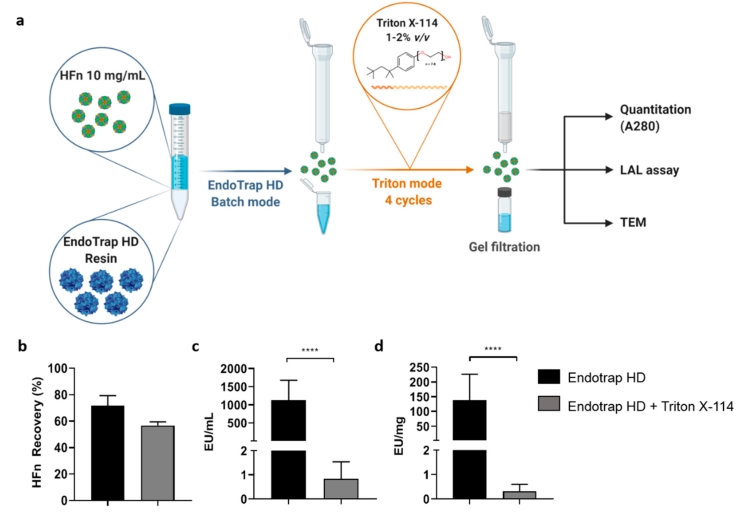 Fig.1 Endotoxin removal by combining affinity chromatography and Triton X-114.1
The efficacy of affinity chromatography lies in the high-precision interaction between a specialized ligand and the endotoxin molecule. By using a lock-and-key approach, the endotoxin remains firmly bound to the stationary phase (the resin), while the target protein flows through the column unharmed. This mechanism is effective even in complex buffers containing surfactants or serum, where traditional filtration methods often falter.
Affinity-based endotoxin removal targets the specific molecular structure of the contaminant rather than relying on general physical properties like size or net charge. Affinity chromatography offers distinct advantages over ion-exchange or size-exclusion methods, which make this technology essential for biopharmaceutical purification.
By adjusting the pore size (Mlim) of the matrix, proteins are excluded from the inner pores, while endotoxins bind to the external surface ligands.
The matrices can handle heavy contamination, with capacities exceeding 1.5 x 10⁹ EU/mL of resin.
Due to specific interaction to endotoxin, the method routinely achieves greater than 95% protein recovery, preserving the yield of high-value antibodies.
This technology remains effective across a wide range of ionic strengths and neutral pH, making it compatible with most physiological buffers.
Advanced immobilization techniques prevent ligand leaching, ensuring that the final product is free from both endotoxins and purification chemicals.
Creative Biolabs provides a comprehensive, expert-led service designed to take your raw biological samples and transform them into ultra-pure, clinical-ready products. Our 20 years of experience allow us to customize the purification strategy based on the specific charge and hydrophobicity of your target protein. We specialize in handling sensitive monoclonal antibodies, recombinant vaccines, and radiopharmaceuticals, ensuring that endotoxin levels are reduced to <0.1 EU/mL.

Workflow of Our Endotoxin Removal Service by Affinity Chromatography.
Creative Biolabs is your dedicated partner in achieving the highest standards of biological purity. Our Endotoxin Removal by Affinity Chromatography service combines 20 years of expertise with cutting-edge ligand technology to ensure your biopharmaceuticals are safe, effective, and ready for the clinic. Contact us to discuss the specific requirements of your purification project.
Yes. One of the strengths of affinity chromatography is its effectiveness in the presence of up to 10% serum and across wide ionic strengths, where other methods often fail.
We use mild physiological conditions and non-toxic buffers to ensure your protein maintains its native structure and biological activity.
We routinely reach levels below <0.1 EU/mL, which is the limit of detection for the most sensitive LAL assays.
No. We use stable, covalent immobilization techniques that ensure the ligand remains firmly attached to the resin matrix.
Our team provides a free initial consultation to review your protein's pI and hydrophobicity to determine the most effective purification strategy. Contact us to discuss your project.
Reference
 Contact Us