
 Contact Us



The Gel-Clot Limulus Amebocyte Lysate (LAL) assay is internationally recognized as the foundational method for detecting bacterial endotoxins. Endotoxins, primarily lipopolysaccharides (LPS) from gram-negative bacteria, are potent pyrogens that can cause severe febrile reactions or septic shock. While kinetic and chromogenic methods have become popular for high-throughput screening, the Gel-Clot assay remains the gold standard for its robustness and resistance to sample interference. At Creative Biolabs, we utilize this compendial method to provide a clear, binary "pass/fail" or semi-quantitative result that satisfies the most stringent requirements of the USP <85>, EP 2.6.14, and JP 4.01.
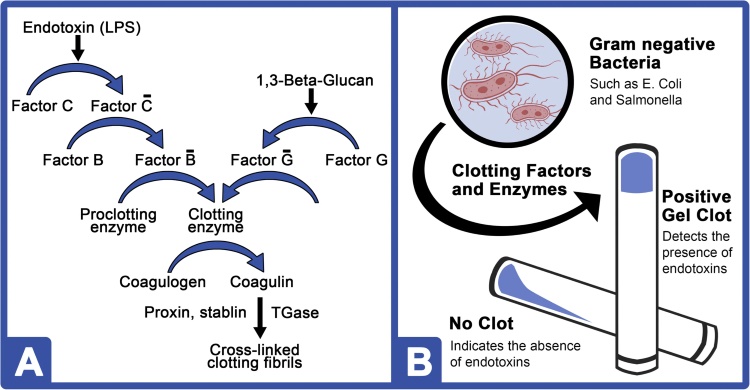 Fig.1 LPS-mediated LAL gel clot assay.1
The biological heart of the assay is a sophisticated proenzyme coagulation cascade derived from the amebocytes of the horseshoe crab. This system has evolved specifically to recognize and respond to the lipid A moiety of endotoxins. The process follows a regulated enzymatic chain reaction.
Interpretation Criteria
The Gel-Clot method offers unique technical advantages that make it indispensable in a modern quality control laboratory:
The Gel-Clot assay is not affected by the color, opacity, or turbidity of the test sample, making it ideal for vaccines and colored APIs.
In the event of a dispute or an ambiguous result from an automated system, regulatory bodies specify the Gel-Clot result as the final verdict.
By utilizing lysate with beta-glucan blockers, we ensure that the reaction is triggered specifically by endotoxins, eliminating false positives from fungal contaminants or cellulosic materials.
Creative Biolabs provides high-sensitivity testing solutions tailored to your specific product monograph. Our laboratory environment is strictly controlled to prevent environmental contamination, ensuring that your results reflect only the purity of your product.
Rapid pass/fail screening against your calculated endotoxin limit.
Determining the approximate endotoxin concentration through serial two-fold dilutions.
Comprehensive studies to confirm that your specific formulation does not inhibit or enhance the LAL reaction.

Workflow of the Gel-Clot Endotoxin Testing Service at Creative Biolabs
Creative Biolabs provides a gel-clot endotoxin Testing Service that combines the reliability of a compendial method with expertise of 20 years in biopharmaceutical safety. From initial I/E validation to final batch release, our workflow ensures that your products meet the highest standards of purity and compliance. Contact us and we will be standing by to assist with your specific project requirements.
No. One of the primary advantages of the Gel-Clot method is its immunity to optical interference. Because the result is physical gelation rather than a color change, your product's color will not affect the accuracy.
We utilize high-purity lysates capable of detecting endotoxins down to 0.015 EU/mL.
Absolutely. Our senior specialists assist in all calculations based on your specific therapeutic dose to ensure your testing remains within regulatory limits.
We use specialized LAL formulations that include beta-glucan inhibitors, ensuring the reaction is specific only to bacterial endotoxins.
Reference
 Contact Us