
 Contact Us



Antibody-Drug Conjugates (ADCs) are targeted immunoconjugates that integrate the potency of cytotoxic drug payloads with the selectivity of monoclonal antibodies. The structure consists of three main components: a monoclonal antibody engineered to bind to specific cancer cell antigens, a potent chemotherapeutic payload, and a linker molecule that attaches the drug to the antibody. Once the ADC binds to a target cell surface, it is internalized through endocytosis, where the linker is designed to release the cytotoxic payload via enzymatic cleavage or chemical degradation. By selectively targeting diseased cells, ADCs minimize damage to healthy tissues and reduce systemic toxicity, allowing for higher therapeutic doses.
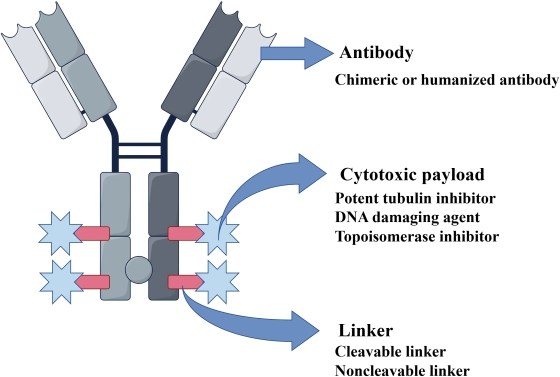 Fig.1 The Structure of an antibody–drug conjugate (ADC).1
ADCs must undergo rigorous screening using methods recognized by major pharmacopeias (USP, EP, JP):
Creative Biolabs adheres strictly to USP <85> and USP <161> for medical devices, ensuring that every ADC batch meets the highest safety thresholds before clinical use. Our protocols align with the requirements for the validation of alternative methods, providing the necessary documentation for your submissions.
ADCs present unique analytical hurdles that frequently interfere with standard LAL assays:
Complex formulation matrices (e.g., polysorbate 20 or 80) can create a masking layer around endotoxin molecules.
The hydrophobic nature of cytotoxic payloads can inhibit the enzymatic cascade, leading to dangerous false-negative results.
Traditional LAL reagents can be triggered by (1→3)-β-D-glucans, causing false-positive reactions that lead to unnecessary batch rejections.
Endotoxins often form stable interactions with target therapeutic compounds, making them difficult to detect without specialized pre-treatment.
To ensure the safety and efficacy of ADCs, Creative Biolabs employs a multi-tiered analytical strategy designed to overcome the unique structural and chemical hurdles of these complex biopharmaceuticals. We prioritize modern, specific, and sensitive assays to mitigate the risks of interference and masking common in ADC matrices.
We utilize rFC, a synthetic protein cloned from Factor C DNA. This assay is specific to endotoxin, eliminating non-specific glycan-binding and avoiding Factor G-induced false positives.
For samples prone to LER, we use optimized dilution series and dispersive agents to disrupt the bonds between the ADC matrix and potential contaminants.
This human in vitro alternative mimics the pyrogenic reaction in the human body by measuring cytokine release (IL-1β and IL-6) from human monocytic cells.
Utilizing high-precision fluorescence-based methods, we can detect endotoxin levels as low as 0.001 EU/mL in complex solutions.
Creative Biolabs is your dedicated partner for the safety and success of your antibody-drug conjugate programs. From advanced rFC detection to comprehensive MAT pyrogen screening, we provide the analytical rigor required for modern biopharmaceuticals. Contact us for detailed validation strategies.
We utilize proprietary de-masking protocols that involve specific surfactants and pH adjustments to release "masked" endotoxins from the ADC-buffer complex, ensuring accurate recovery as per regulatory expectations.
The Monocyte Activation Test is highly recommended for complex modalities where the payload itself may elicit an immune response, providing a broader pyrogen safety profile beyond just LPS.
We conduct comprehensive interference validation studies for every project to establish appropriate sample preparation and dilution factors that neutralize payload-related inhibition.
Reference
 Contact Us