Product List
Filter Product



Bacterial endotoxins are structural components of gram-negative bacteria that represent a major safety risk in biopharmaceutical production. For antibody biologics, the detection process is uniquely complex due to "endotoxin masking," where the complex structure of the antibody physically associates with the endotoxin molecule. This association often leads to low endotoxin recovery, rendering standard assays ineffective as the endotoxin remains "piggybacked" on the protein and shielded from detection.
High concentrations of antibodies increase the potential for endotoxin binding, particularly in cationic proteins where positive charges stick strongly to the negatively charged lipid A moiety of the endotoxin. Robust detection is a fundamental requirement for ensuring that the biological effects observed in research are due to the antibody itself and not trace microbial artifacts. Our Antibody Endotoxin Detection Kit helps you accelerate drug discovery and ensure regulatory compliance by providing ultra-sensitive, matrix-specific quantification of lipopolysaccharides. Through advanced enzymatic cascades and specialized demasking protocols, Creative Biolabs empowers your lab to detect bound endotoxins that traditional assays often miss.
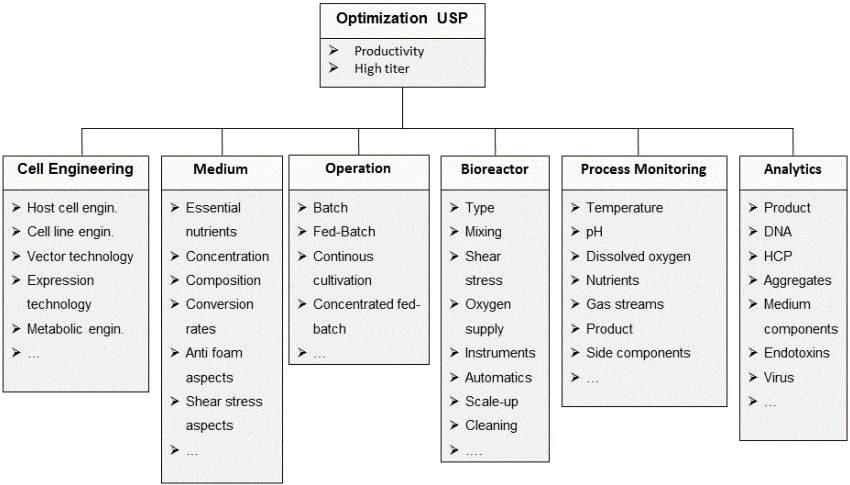 Fig.1 The upstream processing of antibody production.1
The application of our detection kits spans the entire lifecycle of antibody development, from initial transient expression in HEK293 or CHO cells to final drug substance formulation. Because these drugs are produced in living expression systems and act via immune modulation, ensuring they are free of bacterial contaminants is a fundamental safety and regulatory requirement.
Our kits are essential for:
Maintaining an endotoxin-free environment is essential during early research to ensure that observed biological effects are caused by the antibody itself and not trace contaminants.
Ensuring that fever or inflammatory responses in animal models are not artifacts of LPS contamination.
Monitoring endotoxin levels at various stages of production is a key strategy for maintaining "end-to-end" microbial control.
Meeting the requirements of regulatory bodies and standards set by the USP for sterile injectables by providing a validated method for monoclonal antibodies.
Creative Biolabs offers a comprehensive suite of Antibody-specific Endotoxin Detection Kits specifically engineered to solve the unique challenges of biological drug development, such as protein masking and low endotoxin recovery. Our product line is designed to provide high-sensitivity quantification across the entire bioprocessing workflow, from initial R&D to final clinical-grade release.
The kit utilizes a modified LAL enzymatic cascade designed for speed and high volume, making it ideal for monitoring upstream process development. It features a broad linear range (typically 0.005 to 1.0 EU/mL), allowing researchers to quantify endotoxin levels in concentrated antibody pools without excessive dilution.
By using a genetically engineered version of the horseshoe crab's primary sensor, this kit is inherently insensitive to beta-glucans, providing a cleaner signal for antibody matrices.
Specifically designed for complex formulations, these kits address the "hidden" endotoxin problem common in monoclonal antibodies. They contain optimized buffers to disrupt the physical bonds between "sticky" cationic antibodies and negatively charged LPS.
Creative Biolabs provides industry-leading Antibody-specific Endotoxin Detection Kits designed to overcome the complexities of protein masking and low endotoxin recovery. Our solutions ensure that your antibody biologics meet the most stringent safety and purity standards, protecting both your research data and your patients. Contact us and our team is ready to help you optimize your detection workflow.
This is likely due to the LER effect. Antibodies, especially cationic ones, can bind endotoxin so tightly that the assay cannot "see" it. Our kits include demasking protocols specifically designed to release these bound molecules for accurate measurement.
Yes. Many standard tests are inhibited by surfactants. Our Antibody Endotoxin Detection Kit is formulated to maintain enzymatic activity even in common formulation buffers containing PS80 and citrate.
Our recombinant factor C (rFC) kits are inherently specific to endotoxin and do not react with beta-glucans. For our LAL-based kits, we offer glucan-blocking buffers to eliminate these common "false-positive" signals.
Reference

 Contact Us