 Contact Us



The Kinetic Chromogenic Limulus Amebocyte Lysate (LAL) assay represents the most sophisticated quantitative method for the detection of bacterial endotoxins. While traditional methods provide qualitative "pass/fail" results, this assay offers a high-resolution window into the exact concentration of pyrogenic contaminants. At Creative Biolabs, we utilize this method to support the development of parenteral drugs, biological products, and medical devices where even trace amounts of endotoxin can pose significant safety risks. This technology is widely recognized by global pharmacopeias, including USP <85> and EP 2.6.14, as a superior analytical tool for critical quality control.
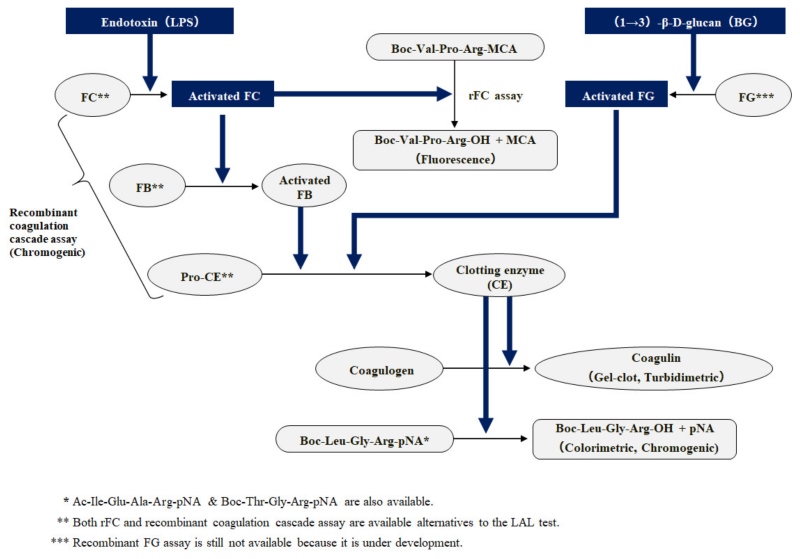 Fig.1 Coagulation cascade in a kinetic chromogenic LAL Assay.1
The assay utilizes a sophisticated enzymatic cascade derived from the circulating amebocytes of the horseshoe crab. When bacterial endotoxins are introduced, they trigger a series of proenzyme activations.
The kinetic chromogenic method is distinguished by its analytical performance and versatility:
This assay can span over three orders of magnitude, typically detecting concentrations from 0.001 to 50 EU/mL.
With detection limits reaching as low as 0.001 EU/mL, it is the method of choice for high-purity biologics.
It is uniquely suited for opaque samples, proteins, and nanoparticle formulations.
The automated assay provides full traceability, meeting the stringent requirements of 21 CFR Part 11 for data integrity.
Creative Biolabs provides a comprehensive suite of endotoxin testing solutions designed to mitigate risk at every stage of product development. We specialize in handling special sample matrices, including concentrated proteins, antibiotics, and medical device extracts. We ensure that every result is backed by rigorous validation, including Inhibition and Enhancement (I/E) testing to confirm the absence of product-related interference.

Workflow of Kinetic Chromogenic LAL Endotoxin Testing Service at Creative Biolabs
Creative Biolabs provides industry-leading Kinetic Chromogenic LAL Endotoxin Testing Services, which helps you obtain high-accuracy quantitative data and ensure the pyrogen-free status of your products through advanced real-time photometric monitoring and automated microplate analysis. We ensure your biopharmaceutical products are safe, compliant, and ready for market. Contact us to discuss your specific sample requirements.
For colored samples, we perform a "mock reaction" or utilize background correction to subtract the absorbance of the sample itself, ensuring that only the pNA release from the LAL reaction is measured.
The Kinetic Chromogenic method is fully quantitative and much more sensitive (0.001 EU/mL vs 0.03 EU/mL), allowing you to see trends in contamination rather than just a pass/fail result.
Our team specializes in "interference-busting" techniques, such as using specialized buffers, additional dilutions within the MVD, or specific blockers to neutralize inhibitory components.
Reference
 Contact Us