
 Contact Us



Cell and Gene Therapy (CGT) products represent the frontier of personalized medicine, utilizing autologous or allogeneic cells and genetic material to treat underlying causes of disease. Unlike traditional small molecules, these drugs are often administered to critically ill patients via systemic or intrathecal routes, where the risk profile of pyrogenic contamination is significantly amplified. Therefore, endotoxin testing is a vital safeguard against septic shock, treatment failure, and the loss of irreplaceable patient-specific batches. Our endotoxin testing for cell and gene therapy products helps you streamline clinical trial processes and obtain high-quality, pyrogen-free therapeutic batches through advanced recombinant Factor C (rFC) technology and phage-based ligand recovery systems. Creative Biolabs accelerates your path to market by transforming testing complexity into biological certainty.
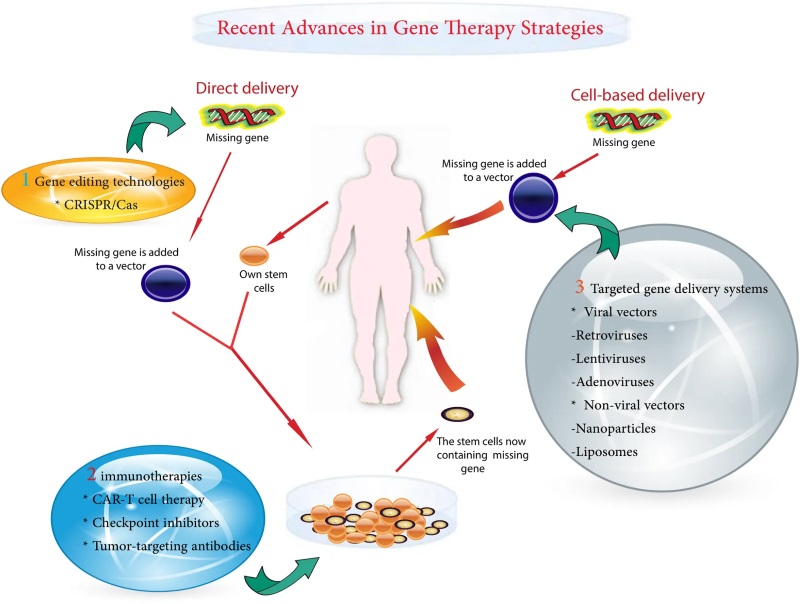 Fig.1 The gene therapy strategies and Products.1
Regulatory bodies are increasingly stringent regarding CGT safety. Key requirements include:
Testing cell and gene therapy products presents unique analytical hurdles that traditional LAL assays often fail to resolve:
CGT products often contain high concentrations of proteins, lipids, and cellular debris. These components can interfere with the enzymatic cascade of the Limulus Amebocyte Lysate (LAL) assay, leading to false negatives or inhibited recovery.
Autologous therapies often have a window of only a few hours between production and infusion, necessitating rapid microbial methods (RMM) that provide faster results than the standard 60-minute kinetic test.
With batch sizes often being extremely small, minimizing the volume required for quality control is essential to maximize the dose available for the patient.
Common formulation components like polysorbates and citrate buffers can "mask" endotoxins, making them undetectable even when present and biologically active.
Creative Biolabs employs a multi-tiered strategy to overcome the complexities of the CGT matrix. Our primary solution involves recombinant factor C (rFC) technology, a synthetic alternative to horseshoe crab lysate that eliminates false positives caused by beta-D-glucans found in cell culture materials. For highly complex samples, we utilize phage-based ligand Technology. This method employs high-affinity bacteriophage proteins to selectively capture endotoxins, allowing interfering substances to be washed away before the detection phase. This approach has demonstrated up to a 1000-fold increase in sensitivity in difficult-to-test buffers. To combat low endotoxin recovery, Creative Biolabs implements endotoxin hold-time studies. We spike the product with a known amount of endotoxin and monitor its recovery over several days at multiple temperatures.
Creative Biolabs provides comprehensive endotoxin testing for cell and gene therapy products, utilizing cutting-edge rFC technology and phage-based recovery systems to overcome matrix interference and LER. Our services ensure that your ATMPs meet the highest global regulatory standards while protecting the integrity of your drugs. Contact us to assist with your specific testing requirements and regulatory strategy.
We utilize advanced de-masking protocols and hold-time validation studies to ensure that the interaction between surfactants and endotoxins is managed, providing a transparent view of the true endotoxin content.
Yes, both the USP and EP have provided pathways for the use of rFC as an alternative to LAL, provided the method is appropriately validated for the specific product.
We have validated protocols specifically designed to neutralize the interference often caused by high-titer viral concentrations.
Reference
 Contact Us