Product List
Filter Product



Endotoxins are among the most potent pyrogenic impurities in biopharmaceutical manufacturing. In the context of vaccines, even infinitesimal quantities can trigger systemic inflammatory responses or septic shock in recipients. Historically, the industry has relied on the limulus amebocyte lysate (LAL) assay, which offers high sensitivity down to 0.1 ng/mL.
However, modern vaccine architectures including mRNA-LNP systems, recombinant proteins, and adjuvanted toxoids present unique analytical challenges. Vaccine components like aluminum-based adjuvants can adsorb endotoxins, while surfactants like polysorbates can lead to low endotoxin recovery, a "masking" phenomenon where endotoxins remain biologically active but chemically undetectable by standard LAL reagents. Creative Biolabs addresses these complexities by providing specialized detection systems designed to navigate these intricate matrices.
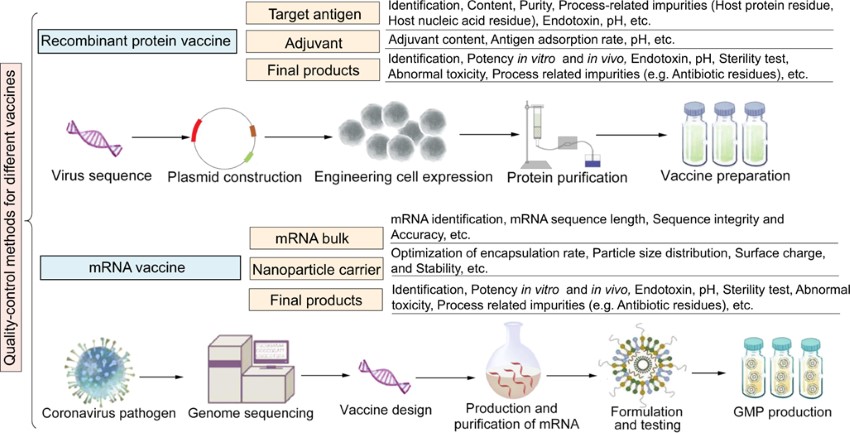 Fig.1 Key points of quality control for vaccine development.1
The application of our detection kits spans the entire vaccine lifecycle, from early-stage discovery to final batch release. In preclinical research, establishing accurate thresholds is vital. Recent studies show that while mice are more endotoxin-resistant than humans, accurate quantification is essential to satisfy the 3Rs principles and prevent study delays.
Monitoring high-endotoxin intermediates, such as outer membrane vesicles (OMVs) or GMMAs.
Ensuring that detoxifying effects from aluminum salts do not mask underlying contamination.
Validating mRNA and viral vector vaccines to meet stringent global safety standards.
Testing water for injection used in manufacturing equipment and as a primary vaccine ingredient.
Creative Biolabs' kits are engineered to overcome the "false negative" pitfalls identified in historical vaccine studies. By focusing on recombinant protein technology and specialized buffer systems, we offer a level of precision that traditional assays cannot match.
Utilizing a synthetic version of the horseshoe crab enzyme to eliminate beta-glucan cross-reactivity and ensure a sustainable, animal-free supply chain.
Includes proprietary phosphate-based buffers proven to recover up to 100% of masked endotoxin signals in adjuvanted formulations.
Detects endotoxins down to 0.005 EU/mL, significantly exceeding the baseline required for human parenteral products.
Formulated to resist inhibition from common vaccine preservatives and surfactants that typically cause LER.
Our vaccine-specific endotoxin detection kit helps you streamline clinical approval and ensure absolute patient safety through advanced recombinant technology and matrix-optimized demasking protocols. Creative Biolabs offers a comprehensive suite of products tailored to the diverse needs of the global vaccine industry.
Creative Biolabs provides a complete ecosystem for endotoxin management in the vaccine industry. From rFC-based detection kits to specialized demasking services for complex adjuvanted formulations, we provide the scientific rigor required for modern biopharmaceutical success. Our Vaccine-specific Endotoxin Detection Kit products are designed to bridge the gap between historical purity challenges and the high-efficiency requirements of next-generation drug discovery. Contact us for detailed product specifications.
Our kits include specialized LER-resistant reagents and demasking buffers that disrupt the interaction between endotoxins and lipids/surfactants, ensuring every EU is accounted for during testing.
Yes. Since aluminum adjuvants can adsorb endotoxins, our "Recovery" series uses specific phosphate treatments to release these pyrogens for accurate quantification.
Yes. We utilize Recombinant Factor C (rFC) technology, which is officially recognized by the European Pharmacopoeia and the USP for sustainable, consistent testing.
Our kits reach a sensitivity of 0.005 EU/mL, which is far more precise than the traditional 1 ng/mL limit of the rabbit pyrogen test.
Most kinetic assays provide results within 60 minutes, though complex demasking protocols for specific adjuvants may require additional pre-treatment steps to ensure signal recovery.
Reference

 Contact Us