
Applications
Online Inquiry
For research use only. Not intended for any clinical use.
This site is protected by reCAPTCHA and the Google Privacy Policy and Terms of Service apply.
Non-Human Primate (NHP) Application in Models for PD, AD, ALS
Are you currently facing limited success with rodent models, high clinical trial failure rates, and challenges replicating human neurobiology in neurodegenerative research? Creative Biolabs' NHP Applications in Models for Parkinson's, Alzheimer's, and ALS help you de-risk your pipeline and obtain predictive translational data through advanced disease modeling and clinically compatible assessment platforms. We provide the essential link between basic science and successful IND applications for these complex proteinopathies.
NHP Models Bridge The Translational Divide for Parkinson's, Alzheimer's, And ALS Therapies.
NHP models provide essential translational data on vector tropism, biodistribution, and clinical biomarker validation for successful IND submissions in diseases like PD, AD, and ALS.
Overview of NHP Applications
What Are Our Research Areas?
Neurodegenerative diseases (NDs) like Alzheimer's disease (AD), Parkinson's disease (PD), and Amyotrophic Lateral Sclerosis (ALS) are characterized by the selective and progressive loss of specific neuronal populations (proteinopathies) and a long, complex preclinical phase. The development of disease-modifying therapies, including small molecules, neurotrophic factors, gene therapies, and cell replacement strategies, is severely hindered by the lack of animal models that fully recapitulate human-like pathology, brain structure, and cognitive function. Our NHP models focus on establishing high-fidelity aetiologic and pathogenic models to validate therapeutic candidates in a system that closely mirrors the human patient, providing the most robust data package for regulatory submission.
Why Choose Us?
Creative Biolabs utilizes NHPs for ND research because they offer biological fidelity unattainable in lower species.
- Genetic & Neuroanatomical Similarities: Express human-relevant 3R and 4R Tau isoforms (critical for AD). They feature a highly developed prefrontal cortex for complex cognitive testing, a divided striatum essential for PD/HD research, and comparable dopaminergic systems and glia-to-neuron ratios.
- Clinical Translational Relevance: Supports clinical-grade assessment: PET and MRI enable non-invasive, longitudinal tracking and ligand validation. NHPs exhibit human-like aging and sporadic pathology.
- Data Types Required for Regulatory Submissions: NHP data, reflecting complex neurobiology and pharmacokinetics, directly inform human trials, significantly reducing IND failure risk. Crucially, regulatory bodies often require NHP data on vector biodistribution, shedding, and long-term neurotoxicity for advanced therapy (gene/cell therapy) IND applications.
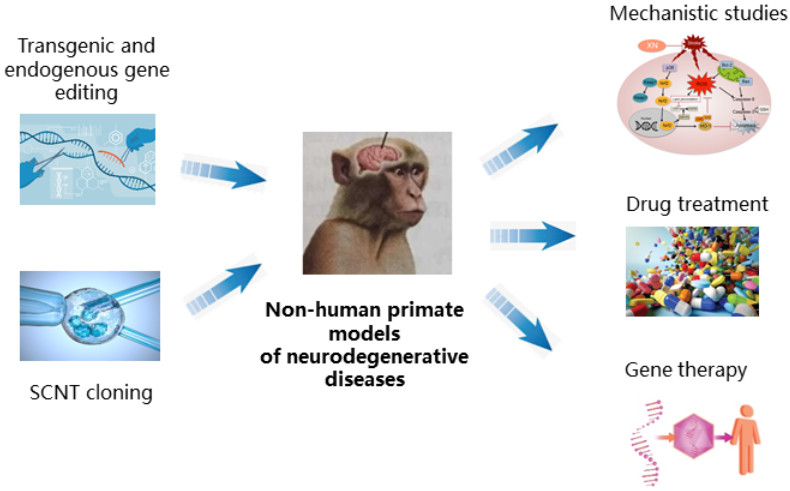 Fig.1 Schematic diagram of NHP models in ND related applications.1
Key Applications
NHP models enable high-stakes preclinical investigations that specifically address the shortcomings of rodent data in ND research.
1. Parkinson's Disease (PD) Modeling
Translational Modeling & Therapeutic Evaluation: NHPs can be used to replicate cardinal PD symptoms, they also enable precise measurement of dopaminergic neuron survival and function, essential for assessing the integration and long-term efficacy of novel cell therapies (e.g., iPSC-derived precursors) and neurotrophic factors.
2. Alzheimer's Disease (AD) Modeling
Proteinopathy Spread & Cognitive Assessment: NHPs allow for the faithful study of pathology spreading and objective measurement of subtle cognitive impairments using complex, computerized neuropsychological assays, providing high-fidelity, clinically relevant efficacy data.
3. Amyotrophic Lateral Sclerosis (ALS) & General Neurodegeneration
AAV Safety & Biomarker Validation: NHPs are essential for evaluating the CNS-wide biodistribution and vector copy number of AAV-based gene therapies. Longitudinal sampling of Cerebrospinal Fluid (CSF) allows for the validation of human-relevant biomarkers that predict disease progression and therapeutic response, ensuring optimal safety and dosage setting before human trials.
How Do Creative Biolabs Support Your Projects?
Creative Biolabs provides comprehensive support through our integrated NHP services, ensuring seamless execution from model development to final data report generation.
| Service Capability | Corresponding Application Area |
| Neurological Disorders (Disease Model Development) | Establishing high-fidelity genetic and pathogenic NHP models for AD, PD, HD, and ALS research. |
| Gene Therapy Models (Advanced Therapy Efficacy Studies) | Assessing the therapeutic effectiveness and long-term stability of AAV- or lentivirus-delivered payloads in NHP CNS disease models. |
| Advanced Therapy Safety (In Vivo Toxicology Studies) | Conducting required safety and toxicology studies for gene and cell therapies, focusing on immunogenicity and off-target neurotoxicity in the primate brain. |
| Vector Copy Number (PK/TK Sample Analysis) | Quantitative analysis of viral vector genomes across various CNS tissues and body fluids (shedding) using highly sensitive qPCR/ddPCR methods to meet regulatory criteria. |
Translational Impact
The primary value of leveraging Creative Biolabs' NHP models is the confidence they bring to your clinical translation phase. By integrating NHP data, you gain a clear, predictive vision of your drug's performance. Our NHP studies provide more reliable early proof of concept regarding efficacy in complex primate neural circuits, and allow for the early detection of primate-specific immune responses/toxicity that rodent models often miss. Most importantly, these comprehensive, high-quality data sets significantly reduce the risk of IND failure, accelerating your time to market and saving substantial capital. NHP biodistribution data, alongside detailed neurotoxicity profiles, are fundamental components mandated by global regulatory agencies for advanced therapy IND submissions targeting the CNS.
Frequently Asked Questions
Q: How does the use of NHP models specifically improve the sensitivity of neurotoxicity data compared to rodent models for gene therapy?
A: NHPs possess a brain structure and a BBB highly comparable to humans, meaning they provide a true representation of vector distribution and off-target effects. Their complex neurovascular unit allows for the detection of subtle neuroinflammation or primate-specific immune responses that are typically missed in rodents, giving you higher confidence in your IND safety data. Ready to explore a custom safety assessment protocol?
Q: Can you perform longitudinal CSF and blood collection to track biomarkers in a single cohort?
A: Absolutely. Longitudinal sampling is a core advantage of NHP studies. We offer regular, safe CSF and blood draws from the same, fully characterized animals for the duration of the study (often 12–24 months). This allows for definitive tracking of biomarkers, therapeutic effect, and progression over time, which is essential for determining dose-response and therapeutic window. We're ready to design your long-term biomarker study.
Q: How does Creative Biolabs ensure the data quality of complex cognitive assessments in NHP models of AD?
A: Our facilities utilize standardized, automated NHP behavioral assessment systems to minimize human-subject variability. We establish rigorous baseline performance metrics for all cohorts and apply validated protocols (e.g., Delayed-Matching-to-Sample) to quantify cognitive deficits, generating highly reliable and reproducible data that directly correlates with clinical cognitive endpoints.
Q: Given the costs, when in the drug development pipeline is the optimal time to introduce NHP modeling?
A: NHP modeling is best employed after initial target validation in simpler systems, right before candidate selection for IND submission. Using NHPs for critical steps—like confirming lead compound safety, validating gene vector tropism, or obtaining definitive proof-of-concept—de-risks your entire clinical program, making the investment highly cost-effective by preventing massive failures in Phase I/II trials. Let's schedule a consultation to identify the high-impact NHP study critical to your success.
Contact Us
Creative Biolabs provides comprehensive preclinical support, combining the biological accuracy of NHP models with advanced gene-editing and clinically compatible assessment platforms, delivering the predictive data necessary to bridge the translational gap in Parkinson's, Alzheimer's, and ALS research. Contact us, our experts are available to discuss your specific research needs and customize a protocol that maximizes the translational value of your drug candidates.
Reference
- Li, Bang, et al. "Modeling neurodegenerative diseases using non-human primates: advances and challenges." Ageing and Neurodegenerative Diseases 2.3 (2022): N-A. Distributed under Open Access license CC BY 4.0, without modification. DOI: http://dx.doi.org/10.20517/and.2022.14