
Applications
Online Inquiry
For research use only. Not intended for any clinical use.
This site is protected by reCAPTCHA and the Google Privacy Policy and Terms of Service apply.
Non-Human Primate (NHP) Application in Tumor Microenvironment & ICI Evaluation
Are you currently facing complex translational challenges, unpredictable clinical outcomes, and limitations of mouse models in immuno-oncology (IO) development? Our NHP Translational Platform helps you accelerate drug development, accurately predict clinical response, and de-risk your investment through immunocompetent Tumor-Bearing NHP models and advanced multi-omic profiling.
Overcoming The Translational Gap in Cancer Immunotherapy with Our NHP Models!
NHP models provide essential, human-relevant data on immune-oncology mechanisms, crucial for predicting clinical success and safety, particularly for agents targeting the complex Tumor Microenvironment.
Overview of NHP Applications
What Are Our Research Areas?
The development of modern cancer immunotherapies, including ICIs and complex cell therapies, demands high-fidelity preclinical models. Success is determined not just by targeting tumor cells, but by navigating the highly immunosuppressive and intricate Tumor Microenvironment (TME). Preclinical research must accurately model the entire human immune system, including its interaction with the TME and tumor stroma, to reliably predict drug efficacy, mechanism of action, and the risk of immune-related adverse events. Creative Biolabs specializes in deploying immunocompetent NHPs, often bearing spontaneous tumors, to provide this critical, human-like context.
Why Choose Us?
NHPs, particularly rhesus macaques, offer the closest possible biological bridge to human patients, making them essential for translational immuno-oncology.
- Genetic/Immunological Similarities: NHPs share high homology with the human immune system, including T-cell subsets, NK cell regulation, and cytokine signaling pathways. This fidelity is vital for assessing therapeutics that manipulate these complex pathways.
- Clinically Relevant TME & Cancer Progression: Tumor-bearing NHPs develop spontaneous cancers with progression patterns and tumor-stroma biology similar to humans. This environment is crucial for validating TME-targeting agents.
- Modeling Complex Toxicity: NHPs accurately model human-specific immune responses, including the onset and severity of Cytokine Release Syndrome (CRS) and other immune-related Adverse Events, which are often poorly predicted by rodent models.
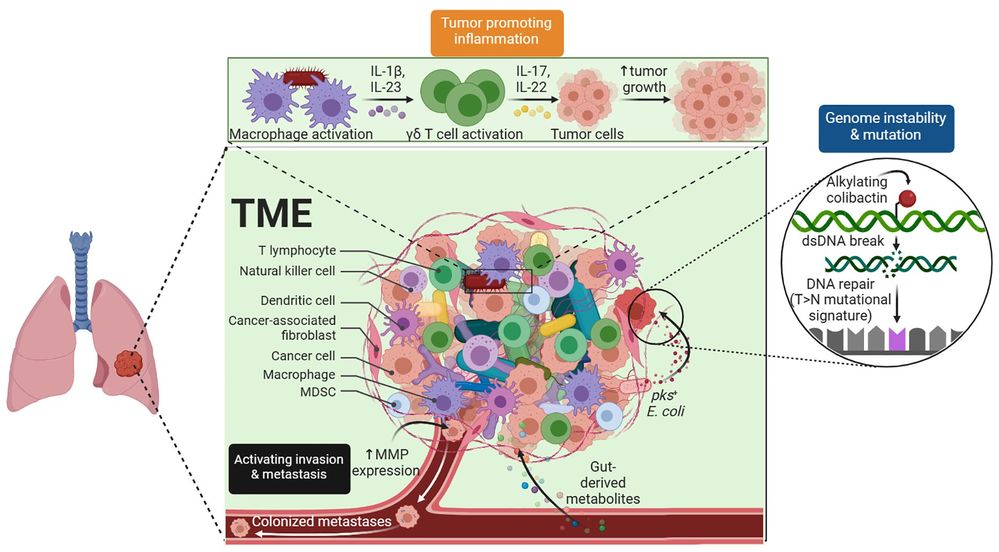 Fig.1 Schematic diagram of TME.1
Key Applications
NHP models enable critical, clinically predictive studies that cannot be performed accurately in lower species.
- Evaluation of Novel ICI, Bispecific, and Fusion Protein Efficacy: NHPs are used to evaluate the in vivo efficacy and mechanism of action for next-generation checkpoint inhibitors, bifunctional antibodies, and immunocytokines. This includes assessing target engagement and downstream functional changes on both peripheral and tumor-infiltrating lymphocytes.
- Intra-tumoral PD and TME Penetration: NHP TME models allow for the precise measurement of drug penetration into the tumor and adjacent stroma. We can analyze changes in the immunosuppressive cell populations and assess cytokine milieu changes directly within the tumor microenvironment.
- Prediction of Immunogenicity and Human-Specific Toxicity: NHPs are the most predictive species for assessing the risk of developing Anti-Drug Antibodies (ADA) and the potential for severe immunotoxicity, such as CRS. This is critical for de-risking therapies before First-in-Human trials.
- Translational Biomarker Discovery and Validation: NHP studies enable the identification and validation of translational biomarkers (e.g., changes in specific T/NK cell subsets, circulating inflammatory mediators) that can serve as pharmacodynamic markers or predictors of clinical response and toxicity in human trials.
How Do Creative Biolabs Support Your Projects?
Creative Biolabs provides integrated service capabilities, linking the necessary NHP models with advanced analytical endpoints to support your program from preclinical testing through IND submission.
| Service Capability | Corresponding Application Area |
| Oncology Disease Model Development | Establishing spontaneous or induced cancer models for IO efficacy testing. |
| Cell Therapy Models (CAR-T, iPSC-derived) | Efficacy evaluation of gene-edited cell therapies (CAR-T/NK) in a human-like TME. |
| Antibody & Biologic Efficacy (Bispecifics, ADCs) | Testing novel checkpoint inhibitors and bispecific antibodies in a predictive model. |
| Cytokine/Chemokine Multiplex Assays | Profiling systemic and TME-specific cytokine profiles to detect irAEs and PD changes. |
Translational Impact
Leveraging Creative Biolabs' NHP Translational Platform provides an undeniable competitive edge. The data generated provides the highest degree of confidence in your therapeutic candidate, leading to faster, safer clinical progression. NHP biodistribution, TME penetration, and immunogenicity data are often required for advanced therapy IND submissions. Utilizing our predictive models for immune-oncology agents and TME targeting reduces the risk of IND failure compared to reliance solely on non-validated rodent data. Our studies ensure more reliable early proof of concept and early detection of critical immune responses and toxicity.
Frequently Asked Questions
Q: Why are NHP models superior to humanized mouse models for TME evaluation of ICIs and cell therapies?
A: Humanized mouse models lack the fully developed, functional human immune system and the complex, spontaneous tumor pathology seen in NHPs. NHPs offer genetically and immunologically homologous TME interactions, cytokine responses, and aging processes—all critical factors that determine the success of IO agents in humans, making the data far more predictive.
Q: What specific immune cell populations can Creative Biolabs analyze within the NHP TME?
A: We provide high-resolution analysis of the TME using multi-color flow cytometry, enabling precise quantification of myeloid-derived suppressor cells, regulatory T cells, NK cells, and macrophages directly from fresh tumor biopsies, offering unparalleled specificity in PD assessment.
Q: Can you model Cytokine Release Syndrome (CRS) for CAR-T or Bispecific antibodies in NHPs?
A: Absolutely. Our NHP safety pharmacology includes real-time monitoring of clinical signs and multiplex cytokine/chemokine profiling (Luminex/Simoa) to accurately model and measure the systemic inflammatory events, giving you early insight into the potential severity and management strategies for CRS.
Q: How do you address the ethical considerations and regulatory requirements for using Tumor-Bearing NHP models?
A: Creative Biolabs maintains the highest standards of ethical animal care and regulatory compliance. We utilize spontaneous models whenever possible, minimizing artificial induction, and our protocols are optimized for minimal animal usage while maximizing data quality for regulatory submission, ensuring ethical rigor throughout the study.
Contact Us
Creative Biolabs is committed to providing industry-leading NHP models and advanced analytical services to de-risk and accelerate your most innovative immuno-oncology candidates, focusing specifically on TME modulation and ICI evaluation. To begin a confidential discussion about your specific research needs and receive a tailored project proposal, please reach out to our team today.
Reference
- Yang, Yujia, et al. "Organoids: new frontiers in tumor immune microenvironment research." Frontiers in Immunology 15 (2024): 1422031. Distributed under Open Access license CC BY 4.0, without modification. DOI: https://doi.org/10.3389/fimmu.2024.1422031