
Overview of iPSC-Derived Cardiomyocyte Differentiation
iPSC-derived cardiomyocytes, commonly referred to as iPSC-CMs, are cardiac muscle-like cells generated from induced pluripotent stem cells through directed differentiation. These cells express key cardiac markers, develop spontaneous or stimulated contractile activity, show electrophysiological properties, and can be used to model multiple aspects of human cardiac biology.
Directed cardiomyocyte differentiation generally relies on controlled modulation of developmental signaling pathways. In many established workflows, pluripotent stem cells are first guided toward mesodermal lineage commitment, then specified toward cardiac mesoderm and immature cardiomyocytes through carefully timed signaling cues. Wnt/β-catenin pathway modulation is widely used in this process, with early activation supporting mesoderm induction and subsequent inhibition promoting cardiac lineage specification.
The resulting cells can be applied across a wide range of research areas, including:
- Inherited cardiac disease modeling
- Drug-induced cardiotoxicity testing
- Electrophysiological assay development
- Contractility and calcium transient analysis
- Compound efficacy screening
- Cardiac safety pharmacology
- Patient-specific medicine studies
- Genome-edited disease model generation
- Regenerative medicine research
- Cardiac tissue engineering
Human iPSC-CMs have become valuable tools in drug development because they provide a human-compatible model for studying cardiomyocyte function, disease phenotypes, and drug responses. Creative Biolabs leverages this platform to deliver high-quality cardiomyocytes with project-specific differentiation strategies and validated analytical endpoints.
Creative Biolabs' iPSC-CM Differentiation Platform
Creative Biolabs has established a flexible and quality-focused iPSC-CM differentiation platform that supports projects from early research exploration to advanced preclinical development. Our workflows are designed to balance differentiation efficiency, reproducibility, cell quality, and downstream usability.
Our services can begin from client-provided iPSC lines, Creative Biolabs-generated iPSC lines, disease-specific iPSC lines, or gene-edited iPSC lines. Before differentiation, we evaluate the starting cell population to confirm culture quality and identify potential risks that may affect differentiation performance. This pre-assessment step allows us to recommend the most suitable differentiation strategy and quality control plan.
Our platform includes:
- iPSC line recovery and expansion
- Pluripotency and morphology evaluation
- Cardiac differentiation protocol selection
- Mesoderm induction and cardiac lineage specification
- Culture optimization for line-to-line variability
- Beating cardiomyocyte monitoring
- Cardiomyocyte enrichment or purification
- Subtype-oriented differentiation support
- Maturation enhancement options
- Marker expression analysis
- Functional characterization
- Cryopreservation and delivery
- Customized data reporting
We understand that different iPSC lines may respond differently to the same differentiation conditions. Therefore, our team can optimize key parameters such as seeding density, culture format, small molecule timing, medium composition, passage number, matrix system, and maturation period to improve yield and reproducibility.
Cardiomyocyte Subtype Differentiation Options
Cardiac tissue contains multiple cardiomyocyte subtypes, each with distinct electrophysiological and functional properties. Creative Biolabs can support subtype-oriented differentiation strategies for projects requiring specific cardiac phenotypes.
| Subtype | Descriptions |
|---|---|
| Ventricular-Like Cardiomyocytes | Ventricular-like iPSC-CMs are widely used in cardiotoxicity studies, contractility assays, cardiomyopathy modeling, and drug screening. They are especially valuable for studying ventricular arrhythmia, hypertrophic cardiomyopathy, dilated cardiomyopathy, and contractile dysfunction. |
| Atrial-Like Cardiomyocytes | Atrial-like cardiomyocytes are useful for studying atrial arrhythmias, atrial fibrillation mechanisms, ion channel function, and atrial-specific drug responses. These cells may be incorporated into electrophysiology and disease modeling platforms. |
| Nodal-Like Cardiomyocytes | Nodal-like cardiomyocytes can support research related to pacemaker biology, conduction disorders, automaticity, and rhythm regulation. They are useful in projects focused on sinoatrial node-like activity or biological pacemaker development. |
| Mixed Cardiomyocyte Populations | For certain applications, a mixed population of cardiomyocytes may better reflect broader cardiac differentiation outcomes or early developmental states. Creative Biolabs can provide mixed iPSC-CM populations when subtype specificity is not required. |
| Custom Cardiac Cell Systems | Creative In addition to cardiomyocytes, Creative Biolabs can support integrated cardiac models involving endothelial cells, fibroblasts, smooth muscle cells, or 3D engineered cardiac tissues. These models may be useful for studying cell-cell interactions, tissue-level responses, and more complex |
Technical Workflow for iPSC-CM Differentiation
Creative Biolabs provides a streamlined yet customizable workflow for iPSC-derived cardiomyocyte differentiation. Each project is managed by experienced stem cell scientists who coordinate experimental design, milestone updates, quality control, and final delivery.
-
Project Consultation and Feasibility Review
Every project begins with a technical consultation. Our scientists discuss your research objectives, iPSC line background, required cardiomyocyte quantity, desired purity, functional assay needs, delivery format, and downstream applications.
If the client provides iPSC lines, we may recommend preliminary testing to assess viability, morphology, sterility, pluripotency marker expression, and expansion behavior. -
iPSC Recovery, Expansion, and Pre-Differentiation QC
Creative Biolabs performs controlled recovery and expansion under optimized culture conditions to ensure the cells are healthy, undifferentiated, and suitable for cardiac induction. Only iPSC cultures that meet project-specific criteria move forward into differentiation. If an iPSC line shows stress, spontaneous differentiation, poor growth, or abnormal morphology, our team can provide troubleshooting recommendations. -
Directed Cardiac Lineage Induction
Creative Biolabs applies directed differentiation strategies that guide iPSCs through key developmental stages toward cardiomyocyte fate. These stages typically include pluripotent stem cell preparation, mesoderm induction, cardiac mesoderm specification, early cardiac progenitor development, and cardiomyocyte maturation. Our differentiation approach can be adjusted according to the characteristics of the iPSC line and the intended application. -
Cardiomyocyte Expansion, Enrichment, and Purification
Depending on the differentiation protocol and iPSC line, the resulting culture may contain cardiomyocytes along with non-cardiac cells. For applications requiring higher purity, Creative Biolabs offers enrichment or purification strategies to improve cardiomyocyte content. -
Maturation Enhancement
iPSC-CMs often resemble fetal or immature cardiomyocytes in certain structural, metabolic, and electrophysiological features. For projects requiring more mature phenotypes, Creative Biolabs can incorporate maturation enhancement strategies. -
Characterization and Quality Control
Creative Biolabs provides comprehensive quality control packages to confirm cardiomyocyte identity, purity, viability, and functional suitability. Standard and advanced QC options can be combined according to the needs of each project. -
Delivery and Documentation
Final deliverables can be configured based on client needs. Creative Biolabs can deliver cryopreserved iPSC-CMs, live cultures, assay-ready plates, purified cardiomyocyte populations, or customized cell formats.
Customization Options
Creative Biolabs understands that each iPSC-CM project has unique technical requirements. Our service model is highly customizable, allowing researchers to define specifications for starting material, differentiation scale, cell subtype, quality control depth, functional assays, and delivery format.
| Customization Options | Descriptions |
|---|---|
| Starting Cell Options |
We can work with:
|
| Differentiation Scale |
Our differentiation services can be adapted for:
|
| Delivery Formats |
Available delivery formats include:
|
Published Data
Human iPSC-derived cardiomyocytes (hiPSC-CMs) have proven invaluable for cardiac disease modeling and regeneration. The researchers reported a robust stirred suspension cardiac differentiation protocol, and we perform extensive morphological and functional characterization of the resulting bioreactor-differentiated iPSC-CMs (bCMs). Across multiple different iPSC lines, the protocol produces 1.2E6/mL bCMs with ~94% purity. bCMs have high viability after cryo-recovery (>90%) and predominantly ventricular identity. Compared to standard monolayer-differentiated CMs, bCMs are more reproducible across batches and have more mature functional properties.
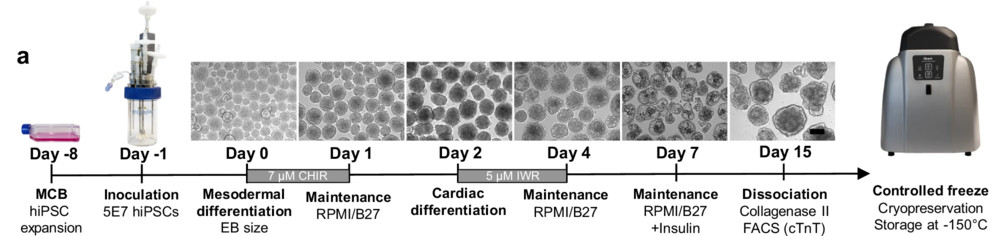 Fig. 1 Optimized stirred bioreactor cardiac differentiation protocol.1,3
This study aimed to identify practical culture conditions that promote iCMs maturation, thereby generating more physiologically relevant in vitro cardiac models. The researchers evaluated the effects of short- and long-term culture in media supplemented with various stimulatory compounds under 2D conditions, focusing on intracellular content and localization of slow skeletal troponin I (ssTnI) and cardiac troponin I (cTnI) isoforms. Our findings demonstrate that the multicomponent metabolic maturation medium (MM-1) effectively enhances the transition toward a more mature iCM phenotype, as evidenced by increased cTnI expression and formation of cross-striated myofibrils. iCMs cultured in MM-1 more closely resemble adult cardiomyocytes and are compatible with high-resolution single-cell techniques such as electron microscopy and patch-clamp electrophysiology.
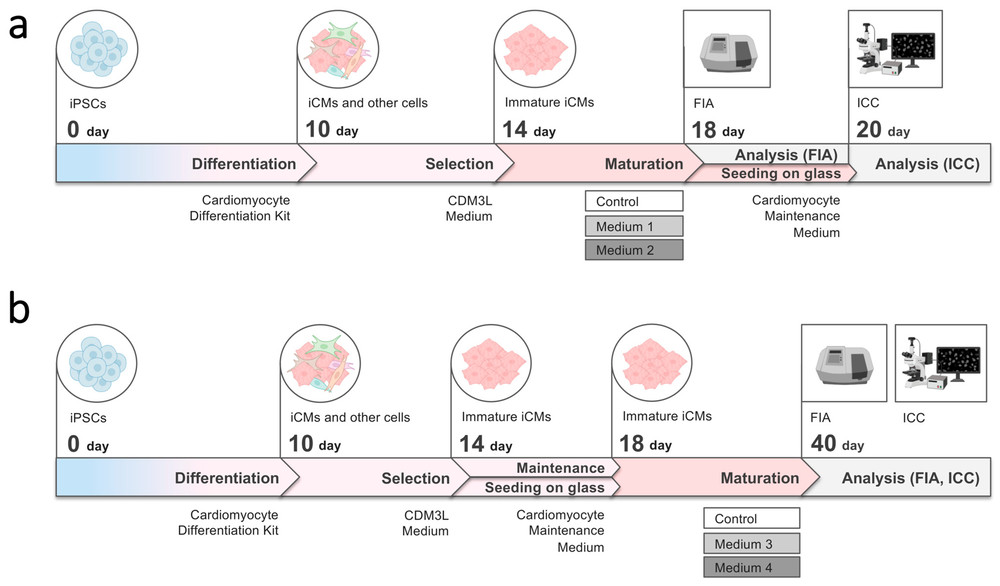 Fig. 2 Schematic representation of human iCMs derivation and maturation protocols.2,3
What Our Clients Say
"We needed cardiomyocytes suitable for compound response testing, not just marker-positive cells. The team provided assay-ready cultures and helped us define the right characterization endpoints for our screening platform."
— Senior Scientist, Pharmaceutical Discovery Group
"Our project involved a challenging disease-specific iPSC line with poor growth behavior. Creative Biolabs optimized the expansion and differentiation conditions, kept us informed throughout the process, and delivered cells that showed clear cardiac marker expression and spontaneous beating."
— Principal Investigator, Academic Medical Center
"We were comparing control and mutation-corrected iPSC lines and needed cardiomyocytes generated under closely matched conditions. Creative Biolabs designed a parallel differentiation workflow and provided the documentation we needed for downstream phenotype analysis."
— Group Leader, Genetic Disease Research Institute
"The team was willing to adjust the project plan around our specific readouts, including marker staining, viability assessment, and electrophysiology-related requirements. Their flexibility made the collaboration much easier."
— Senior Research Scientist, Translational Cardiology Group
FAQs
Q: What source cells can be used if iPSC generation is needed first?
A: Depending on project design and sample availability, iPSCs may be generated from various somatic cell types, such as fibroblasts, peripheral blood mononuclear cells, or other compatible donor-derived cells. The suitability of a starting sample depends on cell quality, donor background, expansion capacity, and project requirements. Creative Biolabs can discuss sample type, collection conditions, shipping considerations, and reprogramming strategy during project consultation.
Q: How long does iPSC-CM differentiation usually take?
A: The timeline depends on the iPSC line, differentiation strategy, scale, purification requirements, maturation period, subtype preference, and QC package. Basic differentiation may produce beating cardiomyocyte-like cells within several weeks, while projects involving extended maturation, advanced functional characterization, multi-line comparison, or large-scale production may require a longer timeline. Creative Biolabs will provide a project-specific schedule after evaluating the starting material and deliverable requirements.
Q: Can you provide purified cardiomyocytes?
A: Yes. Creative Biolabs offers enrichment and purification options depending on the desired cardiomyocyte content and downstream application. Purification may be especially useful for electrophysiological assays, drug screening, molecular profiling, or experiments requiring reduced non-cardiac cell background. The appropriate enrichment method will be selected based on the iPSC line, differentiation outcome, target purity, cell yield, and functional requirements.
Q: Are iPSC-derived cardiomyocytes fully equivalent to adult human cardiomyocytes?
A: iPSC-derived cardiomyocytes are valuable human cardiac models, but they are not identical to adult primary cardiomyocytes. They may show relatively immature structural, electrophysiological, metabolic, or transcriptional characteristics depending on culture conditions and maturation stage. For this reason, Creative Biolabs can help clients select appropriate differentiation, maturation, and characterization strategies based on the biological question being addressed.
Q: Can Creative Biolabs generate isogenic control and disease cardiomyocyte pairs?
A: Yes. Creative Biolabs can support projects involving isogenic iPSC pairs, such as mutation-corrected patient lines or engineered disease-mutant lines. Differentiating isogenic pairs in parallel can reduce genetic background variability and improve interpretation of disease-associated phenotypes. We can also combine cardiomyocyte differentiation with genome editing services depending on project requirements.
Q: Can you provide iPSC-derived cardiomyocytes in assay-ready plates?
A: Yes. Creative Biolabs can prepare assay-ready cardiomyocytes in formats such as 96-well, 384-well, or customized culture plates, depending on downstream requirements. Assay-ready formats are useful for screening campaigns, toxicity assays, imaging workflows, and functional analysis. Plate coating, seeding density, maturation period, and shipping conditions can be customized.
Q: Which cardiac markers are commonly analyzed?
A: Commonly analyzed cardiomyocyte markers include cardiac troponin T, α-actinin, NKX2.5, MYH6, MYH7, TNNT2, MYL2, MYL7, and connexin 43. Marker selection depends on differentiation stage, subtype goal, and project-specific QC requirements. For subtype-related projects, additional atrial, ventricular, or nodal markers may be included.
Take the Next Step with Creative Biolabs







1. Contact Us
via the Inquiry Form or Email
2. Define Your Needs
Cell Type, Function, Quantity, Modifications
3. Kickstart the Project
Our Expert Team Guiding Every Step
High-quality iPSC-derived cardiomyocytes can accelerate cardiovascular research by providing human-relevant, renewable, and customizable cardiac cell models. Whether your goal is to investigate disease mechanisms, evaluate drug safety, build a screening platform, or develop advanced cardiac tissue models, Creative Biolabs can provide a tailored differentiation strategy supported by rigorous quality control and responsive technical communication.
Our team is ready to help you design a workflow that fits your scientific objectives, timeline, and downstream applications.
Contact Creative Biolabs today to discuss your iPSC-derived cardiomyocyte differentiation services project.
References
- Prondzynski, Maksymilian, et al. "Efficient and reproducible generation of human iPSC-derived cardiomyocytes and cardiac organoids in stirred suspension systems." Nature communications 15.1 (2024): 5929. https://doi.org/10.1038/s41467-024-50224-0
- Goliusova, Daria V., et al. "Metabolic culture medium enhances maturation of human iPSC-derived cardiomyocytes via cardiac troponin I isoform induction." International Journal of Molecular Sciences 26.15 (2025): 7248. https://doi.org/10.3390/ijms26157248
- Distributed under Open Access license CC BY 4.0, without modification.