
Overview of iPSC-Derived Neuronal Cell Differentiation
iPSC-derived neuronal differentiation is a controlled process in which pluripotent stem cells are guided toward neural fate and then further specified into desired neuronal subtypes. This process typically includes pluripotent stem cell expansion, neural induction, neural progenitor generation, lineage patterning, neuronal commitment, maturation, and characterization. Depending on the target cell type, differentiation may involve modulation of developmental signaling pathways such as dual-SMAD inhibition, Wnt signaling, Sonic Hedgehog signaling, retinoic acid signaling, FGF signaling, Notch signaling, and other context-dependent cues.
Unlike immortalized neural cell lines or primary animal neurons, human iPSC-derived neurons preserve patient-specific genetic backgrounds and can be generated from healthy donors, disease patients, gene-edited isogenic controls, or engineered iPSC lines. This makes them especially valuable for studying human-specific mechanisms of neural development, synaptic function, neurodegeneration, neuroinflammation, drug response, and neurotoxicity.
Creative Biolabs designs neuronal differentiation projects with the end application in mind.
- A project intended for electrophysiological recording may require extended maturation and enriched neuronal purity.
- A project intended for compound screening may require scalable production, plate-format compatibility, and batch-to-batch consistency.
- A disease modeling study may require matched control lines, specific neuronal subtypes, and molecular markers associated with the disease phenotype.
- A regenerative research program may require defined culture conditions, traceable documentation, and expanded analytical testing.
Through customized planning and milestone-based execution, we help clients move from iPSC cultures to validated neuronal cells with clear deliverables and reliable documentation.
Available iPSC-Derived Neuronal Cell Types
Creative Biolabs provides differentiation services for a broad range of neuronal cell types and related neural populations.
| Cell Types | Descriptions |
|---|---|
| iPSC-Derived Cortical Neurons | We can generate cortical-like neuronal populations with optional enrichment for glutamatergic excitatory neurons or mixed cortical cultures. Typical characterization options may include markers such as βIII-tubulin, MAP2, DCX, NeuN, FOXG1, TBR1, CTIP2, SATB2, VGLUT1, and synaptic markers. |
| iPSC-Derived Dopaminergic Neurons | Creative Biolabs offers differentiation workflows designed to generate midbrain-like dopaminergic neurons. Characterization may include TH, FOXA2, LMX1A, NURR1, PITX3, DAT, VMAT2, GIRK2, MAP2, and related markers. Optional functional assays can evaluate dopamine-associated phenotypes, neuronal survival, neurite complexity, mitochondrial stress, and compound response. |
| iPSC-Derived Motor Neurons | We provide motor neuron differentiation services with optional maturation and co-culture designs. Common markers may include HB9, ISL1, ChAT, SMI-32, βIII-tubulin, MAP2, and synaptic markers. For advanced projects, motor neurons can be paired with skeletal muscle cells to support neuromuscular junction-related studies. |
| iPSC-Derived Sensory Neurons | Creative Biolabs can support generation of peripheral sensory neuron-like populations with marker-based and functional characterization options. Markers may include BRN3A, ISL1, peripherin, βIII-tubulin, TRPV1, Nav channel-associated markers, and other sensory lineage indicators depending on the project design. |
| iPSC-Derived GABAergic Neurons | We offer differentiation strategies for inhibitory neuronal populations and can design co-culture models with excitatory neurons. Typical markers may include GAD65, GAD67, VGAT, DLX2, MAP2, βIII-tubulin, and subtype-specific interneuron markers depending on the intended model. |
| iPSC-Derived Glutamatergic Neurons | Creative Biolabs can generate enriched excitatory neuronal populations or mixed cortical neuronal cultures. Characterization may include VGLUT1, VGLUT2, TBR1, CTIP2, SATB2, MAP2, βIII-tubulin, PSD95, Synapsin, and related markers. |
| iPSC-Derived Cholinergic Neurons | Cholinergic neurons are relevant to Alzheimer's disease, basal forebrain biology, neuromuscular signaling, cognitive disorder research, and neuropharmacology studies. Creative Biolabs can design cholinergic differentiation projects according to disease context and assay requirements. |
| Neural Progenitor Cells |
For clients seeking a more flexible intermediate, Creative Biolabs provides iPSC-derived neural progenitor cells. NPCs can be used for expansion, banking, genetic manipulation, neural differentiation, transplantation research, screening, and developmental studies. NPC deliverables may include expandable live cultures, frozen vials, characterized NPC banks, or downstream differentiated neurons. |
Example Service Packages
The following example packages illustrate common project formats. Each package can be modified based on client needs.
-
Basic Neuronal Differentiation Package
Designed for clients who need marker-positive neuronal cells for exploratory research. Includes:- iPSC recovery and expansion
- Neural induction
- Neuronal differentiation
- Basic morphology monitoring
- Pan-neuronal marker staining
- Viability assessment
- Summary report
-
Subtype-Specific Neuronal Differentiation Package
Designed for clients requiring a defined neuronal subtype. Includes:- iPSC QC review
- Neural induction and lineage patterning
- Subtype-directed differentiation
- Maturation culture
- Pan-neuronal and subtype-specific marker analysis
- Representative imaging
- Project report
-
Advanced Functional Neuronal Model Package
Designed for clients who need more mature or assay-ready neuronal cultures. Includes:- Optimized differentiation workflow
- Extended maturation
- Subtype marker analysis
- Synaptic marker analysis
- Optional calcium imaging, MEA, or electrophysiology
- Quantitative image analysis
- Customized reporting
-
Disease Modeling and Isogenic Comparison Package
Designed for patient-derived or gene-edited disease model projects. Includes:- Parallel differentiation of disease and control lines
- Batch-coordinated culture handling
- Disease-relevant marker analysis
- Phenotype-focused assay design
- Comparative data reporting
- Optional rescue or compound testing
Customization Options
Creative Biolabs provides highly customizable service designs to accommodate differences in iPSC line source, target cell type, disease context, assay format, scale, and data requirements.
| Customization Options | Descriptions |
|---|---|
| Starting Material Options |
|
| Target Neuronal Subtype Selection |
Clients may request standard or customized neuronal differentiation programs. Available options include:
|
| Culture Format Options |
Deliverables can be adapted to many formats, including:
|
| Scale Options | Creative Biolabs supports small exploratory projects as well as larger campaigns. |
| Marker and Assay Customization | Clients can specify preferred markers, endpoints, and analytical platforms. We can design custom panels for neuronal identity, subtype specification, disease phenotype, synaptic development, stress response, or compound response. |
| Reporting Customization | Reports can be tailored for internal R&D review, grant support, publication preparation, investor-facing technical summaries, or regulatory-oriented early documentation packages for research-stage programs. |
Published Data
The researchers described a 14-day neural differentiation protocol which allows for the scalable, simultaneous differentiation of multiple iPSC lines into cortical neural stem cells. They employed this protocol to differentiate and compare sets of engineered iPSC lines carrying loss of function alleles in developmental disorder associated genes, alongside isogenic wildtype controls. The 10-day Neural Induction period uses the well established dual-SMAD inhibition approach combined with Wnt/β-Catenin inhibition to selectively induce formation of cortical NSCs.
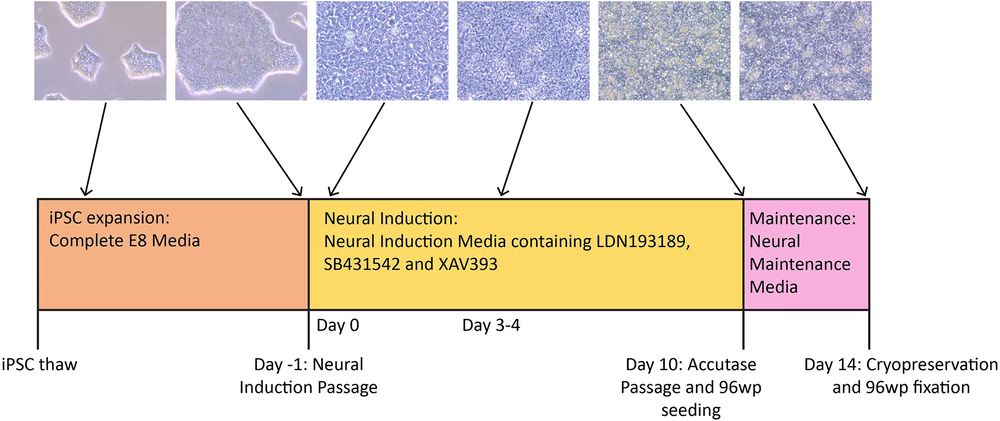 Fig. 1 Timeline of the neural differentiation protocol.1,3
This study investigated the characteristics of iPSC-derived NPCs during differentiation. Morphological characteristics of the NPCs, including soma area, neurite length, and the number of neurite branches, were examined on selected differentiation days. Physiological functions were assessed by recordings of sodium current, spontaneous excitatory postsynaptic current (sEPSC), and spontaneous inhibitory postsynaptic current (sIPSC).
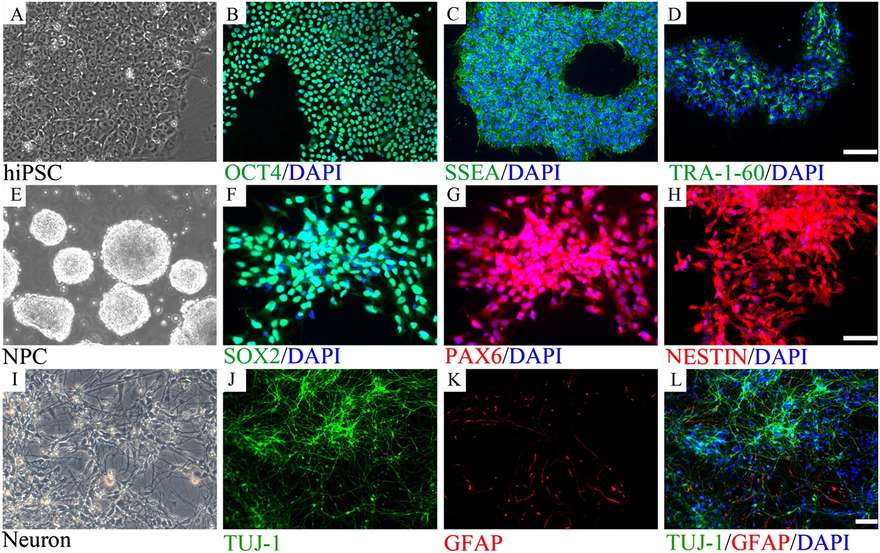 Fig. 2 Neural progenitor cells (NPCs) were differentiated from hiPSCs, which were then further induced to differentiate into neurons.2,3
What Our Clients Say
"Creative Biolabs supported our Parkinson's disease program by generating iPSC-derived dopaminergic neurons from both patient-derived and isogenic control lines. What impressed us most was the consistency of the differentiation process and the clarity of the QC package. The TH-positive neuronal population, morphology images, and marker expression data gave our team confidence to proceed with downstream mitochondrial and compound-response assays."
— Dr. Elena Morris, Neuroscience Program Lead
"We were developing an ALS disease model and needed motor neurons from multiple iPSC lines within the same experimental window. Creative Biolabs helped us design a parallel differentiation strategy, suggested appropriate motor neuron and maturation markers, and delivered cultures that were compatible with our downstream electrophysiology workflow. Their documentation made it easy for our internal team to compare results across disease and control lines."
— Prof. Daniel Hartwell, Translational Neuroscience Researcher
"Our lab had struggled with variability in cortical neuron differentiation, particularly when moving from small pilot batches to plate-based imaging assays. Creative Biolabs optimized the culture format, seeding density, and maturation timing for our project. The resulting iPSC-derived cortical neurons showed strong neuronal morphology and were suitable for our high-content imaging platform."
— Dr. Priya Raman, Cellular Assay Scientist
"Creative Biolabs provided more than a standard differentiation service. Their scientists reviewed our disease biology, recommended a GABAergic neuron differentiation plan, and helped us select markers relevant to inhibitory neuronal identity. The final report included representative images, QC summaries, and recommendations for future co-culture experiments."
— Dr. Chen, Neurodevelopmental Disease Investigator
FAQs
Q: Can you help us choose the most appropriate neuronal subtype for our project?
A: Yes. If the target neuronal subtype has not yet been finalized, our scientific team can help evaluate the project goal, disease context, genetic background, expected phenotype, and downstream assay format. Based on this information, we can recommend a neuronal differentiation strategy that is biologically relevant and technically feasible. For example, a disease model focused on dopaminergic neuron degeneration may benefit from midbrain dopaminergic neurons, while a project involving excitatory-inhibitory balance may require glutamatergic neurons, GABAergic neurons, or a defined co-culture system.
Q: How long does it take to generate iPSC-derived neuronal cells?
A: The timeline depends on the iPSC line, target neuronal subtype, desired maturity, project scale, QC requirements, and final deliverable format. Some early-stage neuronal populations can be generated within a shorter differentiation period, while mature neuronal cultures suitable for synaptic analysis, calcium imaging, multi-electrode array recording, or disease phenotype development may require longer maturation.
Q: Can you differentiate multiple iPSC lines in parallel?
A: Yes. Parallel differentiation is commonly used for disease-control comparisons, patient cohort studies, isogenic pair analysis, gene-edited clone evaluation, and compound screening projects. Creative Biolabs can design batch-coordinated workflows to help reduce technical variation and improve comparability among lines. For parallel projects, we recommend discussing the number of lines, desired neuronal subtype, target time point, scale, QC readouts, and statistical considerations in advance.
Q: Can you generate co-culture models with astrocytes or other neural cells?
A: Yes. Co-culture systems can be developed to improve physiological relevance, support neuronal maturation, and model cell-cell interactions. Depending on the project objective, iPSC-derived neurons may be combined with astrocytes, microglia-like cells, oligodendrocyte-lineage cells, skeletal muscle cells, or other relevant cell types.
Q: Can you combine gene editing with neuronal differentiation?
A: Yes. Creative Biolabs can combine iPSC gene editing with downstream neuronal differentiation. This can include knockout models, knock-in models, point mutation introduction, mutation correction, reporter line generation, and isogenic control development.
Q: Can you customize the differentiation protocol?
A: Yes. Creative Biolabs can customize differentiation workflows based on neuronal subtype, disease context, assay format, marker requirements, maturation stage, culture scale, and deliverable format. Customization may involve modifying induction conditions, patterning factors, maturation supplements, extracellular matrix, plating density, culture duration, co-culture components, or QC endpoints.
Take the Next Step with Creative Biolabs







1. Contact Us
via the Inquiry Form or Email
2. Define Your Needs
Cell Type, Function, Quantity, Modifications
3. Kickstart the Project
Our Expert Team Guiding Every Step
Creative Biolabs is ready to support your neuronal differentiation project with customized design, reliable execution, and comprehensive quality control. Whether you need cortical neurons for neurodevelopmental research, dopaminergic neurons for Parkinson's disease modeling, motor neurons for ALS studies, sensory neurons for pain research, or a customized neuronal model for drug discovery, our team can build a solution around your scientific objectives.
By partnering with Creative Biolabs, you gain access to a dedicated stem cell service team capable of transforming iPSC resources into meaningful human neuronal models. Contact us to discuss your iPSC-derived neuronal cell differentiation project today.
References
- Neaverson, Alexandra, et al. "Differentiation of human induced pluripotent stem cells into cortical neural stem cells." Frontiers in cell and developmental biology 10 (2023): 1023340. https://doi.org/10.3389/fcell.2022.1023340
- Kang, Sai, et al. "Characteristic analyses of a neural differentiation model from iPSC-derived neuron according to morphology, physiology, and global gene expression pattern." Scientific reports 7.1 (2017): 12233. https://doi.org/10.1038/s41598-017-12452-x
- Distributed under Open Access license CC BY 4.0, without modification.