- Home
- ADC Development
- ADC In Vitro Analysis
- ADC In Vitro Efficacy Evaluation: Comprehensive Binding, Internalization & Cytotoxicity Assays
- ADC Affinity Measurement: SPR, ELISA & FACS Solutions for Pre-clinical Binding Analysis
ADC Affinity Measurement: SPR, ELISA & FACS Solutions for Pre-clinical Binding Analysis
Accurate determination of antigen binding affinity is essential for antibody-drug conjugate (ADC) pre-clinical development. Creative Biolabs provides comprehensive affinity measurement services to evaluate the binding activity of ADCs towards target antigens and Fc receptors. Our integrated analytical platform combines in vitro biochemistry with cell-based assays—including SPR, ELISA, and FACS—to deliver reliable data for informed candidate selection and optimization.
Inquire About Affinity MeasurementOverview: The Critical Role of Affinity in ADC Pre-Clinical Research
Antibody-drug conjugates (ADCs) are sophisticated targeted therapeutics designed to deliver cytotoxic payloads specifically to antigen-expressing tumor cells. The in vivo efficacy of an ADC is intrinsically linked to the antigen binding affinity of its antibody component. However, the relationship between affinity and therapeutic outcomes is complex—while higher affinity can enhance target engagement, it may also limit tumor penetration in solid tumor models.
Why Affinity Measurement Matters in Pre-Clinical Studies
In the pre-clinical discovery phase, understanding the binding characteristics of both the unconjugated antibody and the final ADC conjugate is essential for optimizing therapeutic index. Key considerations include:
- • Therapeutic Window Optimization: Antibodies with excessively high affinity may exhibit poor tumor penetration, while low-affinity variants may fail to achieve sufficient target engagement. Affinity measurement enables rational affinity window selection for optimal in vivo performance.
- • Conjugation Impact Assessment: Chemical conjugation of drug-linker complexes can alter antibody conformation and antigen binding sites. Re-evaluation of affinity post-conjugation is critical to confirm maintained target recognition.
- • Fc Receptor Engagement: For ADCs leveraging Fc-mediated cytotoxicity (ADCC/CDC), maintaining Fc receptor binding affinity is equally important. Comprehensive affinity profiling covers both target antigen and Fcγ receptor interactions.
Comprehensive Affinity Analysis Coverage
Our ADC affinity measurement services provide multi-dimensional characterization using orthogonal analytical platforms. We evaluate binding kinetics (association/dissociation rates), equilibrium affinity (KD), and concentration-dependent binding curves to support your pre-clinical development objectives. Each assay is tailored to your specific antibody format, antigen type, and research questions.
Overcoming Analytical Challenges in ADC Affinity Measurement
Accurate affinity measurement for ADCs is technically demanding due to the structural complexity introduced by drug conjugation. Common challenges in pre-clinical characterization include:
- ▶ Conjugation-Induced Affinity Shift: Drug-linker attachment can sterically hinder antigen binding sites or induce conformational changes, resulting in altered affinity that may not be predictable from the unconjugated antibody.
- ▶ Assay Format Limitations: No single analytical technique is universally optimal. SPR provides real-time kinetics but requires immobilization; ELISA is high-throughput but Endpoint-only; FACS uses native cell surface antigens but involves complex cellular environments.
- ▶ Fc Receptor Binding Complexity: ADC binding to Fcγ receptors (FcγRI, FcγRII, FcγRIII) involves multiple subtypes with distinct affinity profiles. Comprehensive Fc affinity profiling requires specialized reagents and expertise.
ADC Affinity Measurement Services
We provide comprehensive affinity measurement services tailored to your ADC development needs. Our integrated analytical platforms enable accurate determination of antigen binding affinity, Fc receptor engagement, and conjugation impact assessment. Each service is designed to deliver actionable data for your pre-clinical research and development decisions.
Tailored Analytical Solutions for Your Research
Every ADC project has unique characterization requirements. Our services can be customized to match your specific antibody format, target antigen, and research objectives. Whether you need rapid affinity screening for lead candidate selection or comprehensive multi-parameter kinetic analysis for mechanism of action studies, we work with you to design the optimal analytical strategy for your pre-clinical development timeline. Contact us to discuss your specific needs.
| Service Name | Technical Specifications | Analysis Capabilities | Service Deliverables |
|---|---|---|---|
|
Primary Method SPR-Based Kinetic Analysis Service Real-time, label-free analysis of ADC-antigen binding kinetics using surface plasmon resonance technology. |
• Immobilization Strategy: Antigen or Fc receptor captured on sensor chips (CM5, CM4) via amine or thiol coupling. • Kinetic Parameters: Association rate (ka), dissociation rate (kd), and equilibrium constant (KD). • Sample Types: Purified ADC, unconjugated mAb (as control), Fab fragments. • Data Quality: Multi-concentration series with reference subtraction for high-precision kinetics. |
• Real-time binding kinetics (ka, kd, KD) • Concentration-dependent binding curves • Replicate measurements for reproducibility • Comparison with unconjugated antibody |
• SPR sensorgrams with curve fitting • Kinetic rate constants and affinity values • Binding specificity assessment • Technical support for data interpretation |
|
High-Throughput ELISA-Based Affinity Assay Service Quantitative, plate-based affinity measurement for rapid screening and EC50/IC50 determination. |
• Plate Format: 96-well or 384-well plates coated with antigen or Fc receptor. • Detection Method: HRP-conjugated secondary antibodies with chromogenic substrates (TMB). • Concentration Series: Serial dilution of ADC (typically 8-12 points) for curve fitting. • Throughput: Suitable for comparing multiple ADC candidates or clone variants simultaneously. |
• EC50/IC50 values from binding curves • Relative affinity comparison across candidates • High-throughput screening capability • Lot-to-lot consistency assessment |
• Binding curves with curve-fitted parameters • EC50/IC50 summary table • Comparative analysis report • Raw data and processing parameters |
|
Cell-Based FACS/Cell Binding Assay Service Native cell surface antigen binding measurement using fluorescence-activated cell sorting (FACS) technology. |
• Cell Models: Antigen-expressing cell lines (endogenous or engineered) maintained in culture. • Staining Protocol: ADC incubation followed by fluorescently labeled secondary antibodies. • Analysis Parameters: Mean fluorescence intensity (MFI), EC50 from cell binding curves. • Differentiation: Live/dead cell discrimination for accurate binding quantification. |
• Cell surface binding affinity (EC50) • Binding specificity (blocking studies) • Comparison of ADC vs. mAb binding • Internalization correlation analysis |
• FACS histograms and MFI quantification • Cell binding curves with EC50 values • Specificity assessment report • Recommendations for affinity optimization |
|
Fc Engineering Fc Receptor Binding Analysis Service Comprehensive profiling of ADC interactions with Fcγ receptors to evaluate Fc-mediated effector functions. |
• Target Receptors: FcγRI (CD64), FcγRII (CD32), FcγRIII (CD16) — human and murine isoforms. • Assay Formats: SPR for kinetics, ELISA for affinity ranking, FACS for cell-based validation. • Key Metrics: Binding affinity to each FcγR subtype, correlation with Fc glycosylation status. • Functional Correlation: Optional ADCC/CDC functional assays to link binding to effector activity. |
• FcγR binding affinities (KD or EC50) • Subtype-specific binding profiles • Comparison with untreated mAb control • Effect of conjugation on Fc binding |
• Fc receptor binding report with affinity matrix • Subtype-specific binding curves • Interpretation of Fc effector potential • Recommendations for Fc engineering |
Custom Analytical Services
Method Development & Optimization
Custom assay development for novel target antigens, non-standard ADC formats, or specialized research questions. We optimize assay conditions to your project specifications.
Comparative Analysis Service
Side-by-side characterization of multiple ADC candidates, clone variants, or conjugation conditions. Ideal for lead candidate selection and conjugation optimization.
Internalization Correlation Analysis
Integrated analysis of binding affinity and internalization rate to identify the optimal affinity window for maximal therapeutic efficacy in your target indication.
Regulatory Package Support
Comprehensive analytical reports formatted for regulatory submission, including method validation data, system suitability records, and Certificate of Analysis documentation.
Standardized Workflow for ADC Affinity Measurement
Our streamlined pre-clinical analysis workflow ensures data integrity, reproducibility, and comprehensive affinity characterization from sample receipt to final reporting:
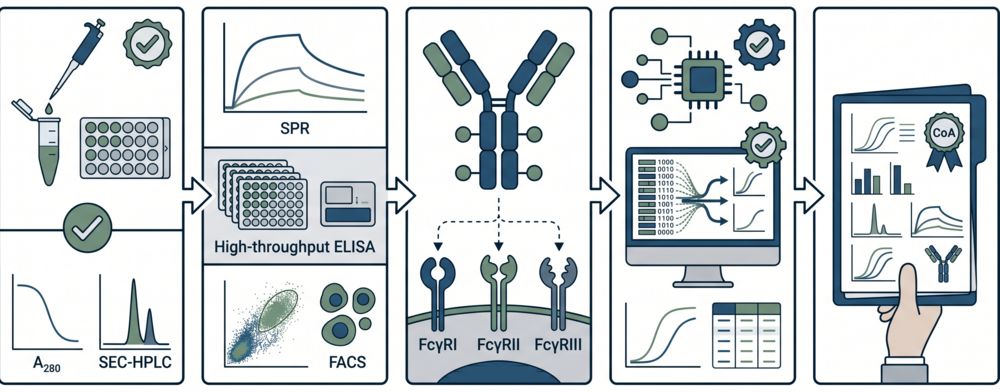
Phase 1: Sample Receipt & Quality Assessment
Upon sample receipt, we conduct initial quality checks including concentration determination (A280), purity assessment (SEC-HPLC), and antigen binding validation (rapid ELISA). This ensures the ADC sample is suitable for downstream affinity analysis and prevents misleading results from degraded or aggregated materials.
Phase 2: Multi-Platform Affinity Profiling
Parallel analysis using SPR for real-time kinetics, ELISA for high-throughput screening, and FACS for cell-based validation. This orthogonal approach provides comprehensive coverage of the ADC's binding characteristics across different assay formats and biological contexts.
Phase 3: Fc Receptor Binding Profiling (Optional)
For ADCs designed to leverage Fc-mediated effector functions, we profile binding to FcγRI, FcγRII, and FcγRIII using SPR and cell-based assays. This is particularly valuable for ADCs targeting hematological malignancies where ADCC/CDC contribute to efficacy.
Phase 4: Data Processing & Kinetic Modeling
Advanced bioinformatics pipelines fit binding curves, calculate kinetic rate constants (ka, kd) and equilibrium constants (KD, EC50). Quality control metrics ensure data accuracy and reproducibility across technical replicates and assay formats.
Phase 5: Comprehensive Reporting & Interpretation
Delivery of a complete analytical report including SPR sensorgrams, ELISA/ FACS binding curves, affinity values, and expert interpretation. Certificate of Analysis (CoA) provided for each batch, supporting your pre-clinical development decisions and candidate selection.
Advanced Platforms for ADC Affinity Measurement
Our multi-platform approach ensures accurate affinity determination across a wide range of ADC architectures, target antigens, and research objectives:
1. SPR (Surface Plasmon Resonance) Platform
A cornerstone platform for label-free, real-time kinetic analysis of ADC-antigen interactions. Using Biacore™ systems, we capture antigens or Fc receptors on sensor chips and monitor binding events in real-time.
- • High Sensitivity: Detects binding events in real-time without labeling, preserving native ADC structure and function.
- • Full Kinetic Profiling: Simultaneous determination of association (ka) and dissociation (kd) rates, providing KD with exceptional accuracy.
- • Minimal Sample Consumption: Requires only 10-50 μg of purified ADC per analysis, ideal for precious pre-clinical materials.
2. ELISA (Enzyme-Linked Immunosorbent Assay) Platform
A high-throughput platform for rapid affinity screening and relative binding potency assessment. Ideal for comparing multiple ADC candidates or monitoring affinity changes across conjugation conditions.
- • High Throughput: 96-well or 384-well formats enable rapid screening of multiple candidates or conjugation conditions.
- • Flexible Detection: Direct, indirect, and competitive ELISA formats available to match your antigen properties.
- • Cost-Effective: Lower reagent consumption and faster turnaround compared to SPR, suitable for initial affinity screening.
3. FACS (Fluorescence-Activated Cell Sorting) Platform
A cell-based platform for evaluating ADC binding to native cell surface antigens. This physiologically relevant assay captures the complexity of cell membrane environments and antigen presentation.
- • Native Antigen Presentation: Uses live cells with physiologically relevant antigen density, glycosylation, and membrane microenvironment.
- • Binding & Internalization: Can be coupled with internalization assays to correlate affinity with cellular uptake kinetics.
- • Multiparameter Analysis: Simultaneous assessment of binding affinity and cell viability/specificity using multiparameter flow cytometry.
4. Fc Receptor Binding Profiling Platform
A specialized platform for evaluating ADC interactions with Fcγ receptors. Essential for understanding the potential contribution of Fc-mediated effector functions to ADC efficacy.
- • Comprehensive Subtype Coverage: Analyzes binding to FcγRI, FcγRIIa, FcγRIIb, FcγRIIIa, and FcγRIIIb.
- • Orthogonal Validation: Combines SPR (kinetic analysis), ELISA (affinity ranking), and FACS (cell-based validation) for comprehensive Fc profiling.
- • Glycoengineering Correlation: Assesses impact of Fc glycosylation patterns on receptor binding affinity, supporting Fc engineering strategies.
Why Choose Our ADC Affinity Measurement Services?
Orthogonal Multi-Platform Validation
We employ orthogonal analytical methods—SPR, ELISA, and FACS—to cross-validate affinity measurements, ensuring data accuracy and reliability for your pre-clinical decision-making.
Conjugation Impact Expertise
Our analytical strategies specifically evaluate how drug-linker conjugation affects antigen binding affinity, enabling optimization of conjugation chemistry to preserve target recognition.
Cell-Based Physiological Relevance
Beyond biochemical assays, we provide FACS-based cell binding analysis using native cell surface antigens, delivering physiologically relevant affinity data for in vivo translation.
Accelerated Turnaround for Preclinical Research
Our streamlined workflow and dedicated analytical team deliver comprehensive affinity analysis reports within 2-3 weeks, supporting fast-paced pre-clinical ADC development timelines.
Research Insights: Advances in ADC Affinity Measurement Technologies
Recent advances in ADC affinity measurement technologies have demonstrated that comprehensive binding characterization—including both target antigen and Fc receptor interactions—is critical for predicting in vivo efficacy. According to Kim et al. (2022), ADC targeting through optimized antigen binding affinity can significantly impact tumor uptake and therapeutic outcomes in pre-clinical models.
Key Insights from Recent Research:
- • Affinity-Internalization Balance: Studies have shown that moderate affinity antibodies (KD in the 1-10 nM range) often exhibit superior in vivo efficacy compared to very high-affinity variants, due to improved tumor penetration in solid tumor models.
- • Conjugation Impact: Drug-linker conjugation can alter binding kinetics by 2-10 fold depending on conjugation site and drug-load. Pre-clinical characterization must evaluate ADC affinity, not just unconjugated mAb affinity.
- • Fc Receptor Contributions: For Fc-engineered ADCs, maintaining or enhancing FcγR binding can provide synergistic cytotoxicity through ADCC, complementing the targeted payload delivery (Joubert et al., 2020).
These insights underscore the importance of comprehensive affinity profiling in ADC pre-clinical development programs.
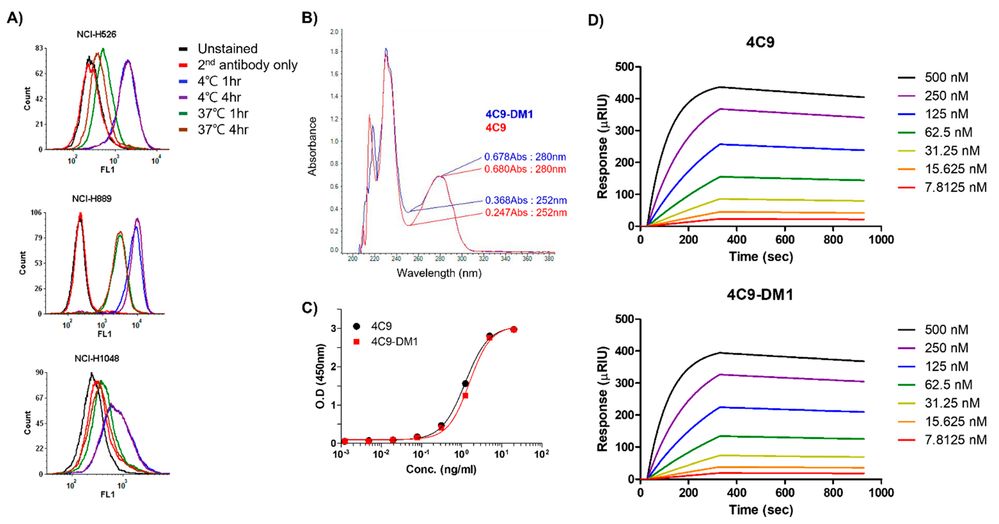
Fig.1 Characterization of the 4C9-DM1 conjugate.1,3
FAQs about ADC Affinity Measurement
Q: Why is it necessary to re-measure affinity after ADC conjugation?
A: Chemical conjugation of drug-linker complexes can alter antibody conformation, introduce steric hindrance at antigen binding sites, or affect Fc region structure. These changes may impact antigen binding affinity,Fc receptor engagement, or serum half-life. Re-measurement confirms that the ADC retains the desired binding characteristics of the unconjugated antibody.
Q: Which affinity measurement method is best for my ADC project?
A: The optimal method depends on your research objectives. SPR provides the most comprehensive kinetic data (ka, kd, KD) and is ideal for mechanism of action studies. ELISA is best for high-throughput screening of multiple candidates. FACS is essential when you need physiologically relevant data using native cell surface antigens. We recommend orthogonal validation using multiple methods.
Q: How much ADC sample is required for comprehensive affinity analysis?
A: For a complete affinity characterization package (SPR + ELISA + FACS), we typically require 200-500 μg of purified ADC. For SPR-only kinetic analysis, 50-100 μg is sufficient. Contact us if your sample is limited—we can often optimize methods for low-input pre-clinical materials.
Q: Can you evaluate the impact of conjugation on Fc receptor binding?
A: Yes. Our Fc receptor binding profiling service evaluates ADC interactions with all major Fcγ receptor subtypes (FcγRI, FcγRIIa, FcγRIIb, FcγRIIIa) using SPR and cell-based assays. We compare binding to unconjugated mAb controls to quantify the impact of conjugation on Fc-mediated effector functions.
Q: Do you provide internalization rate correlation with affinity data?
A: Yes. We offer integrated analysis that combines binding affinity data with internalization rate measurements. This correlation analysis helps identify the optimal affinity window for your target indication—whether high affinity is needed for hematological targets or moderate affinity for better solid tumor penetration.
Other ADC In Vitro Evaluation Services
Related Products
Related Resources
References:
1. Kim, K.H., Lee, H.J., Choi, J.H., et al. Antibody-Drug Conjugate Targeting c-kit for the Treatment of Small Cell Lung Cancer. Int J Mol Sci. 2022;23(4):2264. https://doi.org/10.3390/ijms23042264
2. Joubert, N., Beck, A., Dumontet, C., Denevault-Sabourin, C. Antibody-Drug Conjugates: The Last Decade. Pharmaceuticals (Basel). 2020;13(9):245. https://doi.org/10.3390/ph13090245
3. Distributed under Open Access License CC BY 4.0, without modification.
For Research Use Only. NOT FOR CLINICAL USE.
Online Inquiry
Welcome! For price inquiries, please feel free to contact us through the form on the left side. We will get back to you as soon as possible.
