- Home
- ADC Development
- ADC In Vitro Analysis
- 3D Cell Culture for ADC Evaluation: Targeting, Penetration & Efficacy Assays
- ADC Targeting Profile Evaluation: Assessing Antigen Specificity & Tissue Penetration
ADC Targeting Profile Evaluation: Assessing Antigen Specificity and Tissue Penetration
Precise targeting and deep tissue penetration are critical requirements for antibody-drug conjugates (ADCs) to achieve clinical efficacy. Creative Biolabs provides comprehensive targeting profile evaluation services to characterize how effectively your ADC candidates home to tumor tissues and penetrate solid tumor masses. Using advanced 2D/3D cell models and high-resolution imaging platforms, we deliver quantitative data on targeting specificity and penetration kinetics—enabling informed decisions in pre-clinical ADC development.
Inquire About Targeting EvaluationOverview: The Critical Role of Targeting and Penetration in ADC Efficacy
Antibody-drug conjugates (ADCs) are designed to deliver highly potent cytotoxic agents directly to antigen-expressing tumor cells while sparing healthy tissues. Achieving this selective delivery requires not only high antigen specificity but also the ability of the macromolecule to leave systemic circulation, extravasate into the tumor interstitium, and penetrate deeply through dense tumor tissue to reach every target cell.
Why Targeting and Penetration Profiles Matter in Pre-Clinical Studies
In pre-clinical discovery, evaluating the targeting and tissue penetration profiles of lead candidates is crucial for optimizing therapeutic performance. Key considerations include:
- • Solid Tumor Barriers: Solid tumors possess high interstitial fluid pressure and dense extracellular matrix barriers that significantly impede antibody diffusion, often trapping large macromolecules at the tumor periphery.
- • Antigen Heterogeneity: If an ADC cannot penetrate deeply, antigen-negative or low-expressing cell populations within the inner tumor core will escape treatment, leading to tumor recurrence.
- • Off-Target Accumulation: Detailed targeting profile studies identify non-specific binding and accumulation in normal tissues, preventing unexpected systemic toxicities in downstream in vivo studies.
Comprehensive Targeting Evaluation Coverage
Our targeting profile evaluation services provide multi-dimensional characterization using both standard biochemical techniques and physiologically relevant 3D cell-based models. We evaluate binding specificity, penetration kinetics, and intracellular accumulation to support your pre-clinical lead selection and optimization workflow.
Overcoming Analytical Challenges in ADC Targeting and Penetration Studies
Accurately measuring targeting specificity and tissue penetration kinetics is highly challenging due to the physical barriers of solid tumors and the need for realistic microenvironment modeling. Key technical challenges include:
- ▶ Limitations of 2D Cell Models: Conventional 2D cell monolayers lack physical diffusion barriers and extracellular matrix components, making them completely unsuited for predicting tissue penetration behavior.
- ▶ Binding Site Barrier Effect: Extremely high-affinity ADCs can bind tightly to the first target receptors they encounter at the tumor periphery, paradoxically preventing them from diffusing deeper into the tumor core.
- ▶ Microenvironment Modeling Complexity: Recapitulating extracellular matrix composition, hypoxia gradients, and interstitial pressure requires specialized 3D cell culture and microfluidic technologies.
ADC Targeting & Penetration Evaluation Services
We provide comprehensive targeting evaluation services tailored to your ADC development needs. Our integrated analytical platforms enable accurate assessment of targeting specificity, tissue penetration kinetics, and intracellular accumulation. Each service is designed to deliver actionable data for your pre-clinical research and development decisions.
Tailored Targeting Solutions for Your Research
Every target antigen and tumor indication presents unique physical and biological barriers. Our evaluation services can be customized to match your specific antibody format, tumor indication, and research objectives. Whether you need rapid screening of antibody clones or detailed 3D tissue-penetration profiling under physiological flow conditions, we work with you to design the optimal analytical strategy for your pre-clinical development timeline. Contact us to discuss your specific needs.
| Service Name | Technical Specifications | Analysis Capabilities | Service Deliverables |
|---|---|---|---|
|
Primary Method 3D Spheroid Penetration Service Real-time, spatiotemporal penetration analysis of fluorophore-labeled ADCs in multicellular tumor spheroids. |
• Models: Multicellular tumor spheroids (MCTS) with tumor and stromal co-cultures. • Detection: High-resolution confocal laser scanning microscopy (CLSM). • Timepoints: Continuous z-stack imaging from 0 to 48+ hours. • Readouts: Volumetric penetration depth, spatial fluorescence distribution curves. |
• Real-time penetration velocity and depth curves • Spheroid core vs. periphery accumulation ratio • Extracellular matrix barrier impact assessment • Comparison across different antibody affinities |
• 3D confocal z-stack images and time-course movies • Quantitative penetration depth profile graphs • Comparative analysis report for multiple clones • Methodological and raw image file packages |
|
Specificity Antigen Specificity Profiling Service Comprehensive specificity validation of ADC binding across antigen-positive and antigen-negative cell panels. |
• Assay Format: Multiparameter flow cytometry (FACS) and high-throughput ELISA. • Cell Panels: Knockout (KO) or engineered overexpression cell lines. • Controls: Isotype control ADCs and negative control cell lines. • Key Metrics: Relative binding avidity, specificity index calculation. |
• Confirmed selective target binding • Cross-reactivity profiling (species orthologs) • Off-target background binding identification • Antigen expression density correlation studies |
• Flow cytometry histograms and binding curves • Calculated specificity index matrix • Cross-reactivity data summary table • Technical consultation on off-target risk |
|
Tissue Models Organoid & Tissue Slice Evaluation Service Targeting and penetration analysis using patient-derived tumor organoids or fresh tumor tissue slices. |
• Assay Systems: Patient-derived organoids (PDOs) or precision-cut tissue slices. • Imaging: Light-sheet fluorescence microscopy (LSFM) and cleared-tissue imaging. • Complexity: Preserved native microarchitecture and tumor-stroma ratios. • Relevance: Superior translation to in vivo preclinical efficacy. |
• Penetration in patient-specific tissue architectures • Tracking of preferential stroma vs. tumor accumulation • Evaluation in complex histological structures • Clinical-like candidate ranking |
• High-resolution cleared-tissue 3D images • Volumetric penetration profiling reports • Histopathological correlation summary • Cleared-sample preparation documentation |
|
Flow Conditions Microfluidic Shear & Extravasation Service Evaluation of ADC extravasation and target tissue homing under physiological shear flow conditions. |
• System: Organ-on-a-chip or microfluidic flow chamber platforms. • Endothelium: Endothelial cell monolayer barriers mimicking blood vessel walls. • Flow Rate: Adjustable shear stress representing tumor microvasculature. • Measurements: Extravasation rate, trans-endothelial electrical resistance (TEER). |
• Trans-endothelial migration velocity profiling • Retention under shear flow conditions • Dynamic extravasation efficiency index • Endothelial cell toxicity screening |
• Real-time video of endothelial crossing kinetics • Extravasation efficiency quantitative graphs • Barrier integrity validation reports • Specialized microfluidic chip design records |
Custom Analytical Services
Binding Site Barrier Assessment
Evaluation of the mathematical and physical relationship between antibody affinity, target receptor expression density, and actual depth of tissue penetration. This helps determine if affinity reduction is required to improve solid tumor penetration.
Extracellular Matrix Modification Evaluation
Comparative penetration analysis in tumor spheroids treated with ECM-remodeling agents (e.g., collagenase or hyaluronidase), providing insight into combination therapies that can enhance ADC accumulation.
Cleared Tissue Imaging Technology
Advanced tissue clearing protocols combined with light-sheet microscopy, allowing deep, high-resolution imaging of ADC spatial distribution across large patient-derived organoid structures.
Regulatory Package Support
Comprehensive analytical packages documenting targeting specificity, cross-reactivity profiling, and tumor accumulation validation, fully prepared for inclusion in IND filings.
Standardized Workflow for ADC Targeting Profile Evaluation
Our standardized workflow ensures maximum accuracy, reproducibility, and biological relevance throughout the targeting evaluation process:
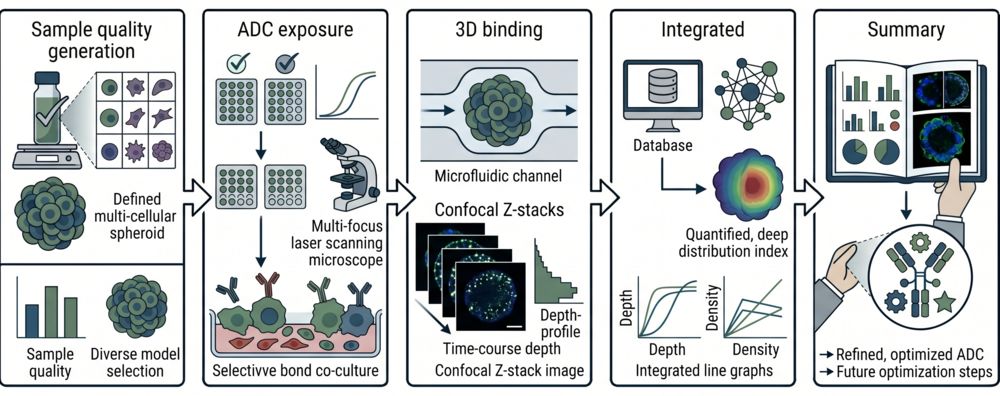
Phase 1: Candidate Cleavage & Fluorescent Conjugation
To evaluate spatial distribution, we select suitable stable fluorophores and conjugate them to your ADC candidates or unconjugated antibodies under mild conditions. Quality control checks (SEC-HPLC, UV/Vis) ensure fluorophore conjugation does not alter targeting affinity or physical stability.
Phase 2: 2D Specificity & Binding Avidity Validation
Initial screening using flow cytometry verifies selective binding of labeled ADCs to antigen-positive target cells and negligible background accumulation in antigen-negative controls. Replicate binding assays generate initial avidity parameters (KD).
Phase 3: 3D Multicellular Spheroid Assembly
Establishment of multicellular tumor spheroids using validated co-culture models containing tumor cells and extracellular matrix-producing fibroblasts. Spheroids are cultured to a uniform size (typically 400-500 μm) to represent realistic physical barriers.
Phase 4: Confocal Spatiotemporal Penetration Imaging
Live spheroids are incubated with labeled ADCs and imaged continuously over 24-48 hours using confocal laser scanning microscopy. Volumetric z-stack imaging tracks the migration of fluorescent signals from the spheroid periphery into the core.
Phase 5: Clearing, Volumetric Reconstruction & Reporting
Advanced optical clearing of tissue samples allows 3D volumetric reconstruction. Our software calculates precise penetration kinetics, depth parameters, and peripheral-to-core intensity ratios. We deliver a detailed comparison report for lead ranking.
Advanced Platforms for ADC Targeting & Penetration Studies
Our multi-platform analytical strategy combines biochemical specificity validation with advanced 3D volumetric tissue imaging:
1. 3D Spheroid & Organoid Penetration Platform
A Physiologically relevant imaging platform that uses multicellular tumor spheroids (MCTS) or patient-derived organoids to evaluate physical ADC transport. Recapitulates cell junctions, nutrient gradients, and extracellular barriers of solid tumor tissues.
- • Tumor-Stroma Co-culture: Includes primary fibroblasts and extracellular matrix matrices to mimic native tumor architecture.
- • Confocal Z-Profiling: High-resolution optical slicing measures precise physical transport and localization parameters.
- • Automated Imaging: High-throughput system for simultaneous kinetic evaluation of multiple candidates.
2. Multiparameter Flow Cytometry Specificity Platform
Provides single-cell resolution to quantify binding avidity and target specificity. Utilizes knockout cell lines and negative isotype controls to differentiate between true receptor binding and non-specific membrane interaction.
- • Target Validation: Direct correlation between target antigen expression density and ADC binding intensity.
- • Non-specific Profiling: Identification of non-specific binding in common off-target cell lines.
- • High-Throughput Profiling: Automated sampling allows rapid comparison across multiple candidate clones.
3. Light-Sheet Cleared Tissue Platform
An advanced imaging system for deep-tissue volumetric characterization. Fresh tissue slices or large organoid structures are optically cleared and reconstructed in 3D to visualize macro-level distribution.
- • Cleared Tissue Compatibility: Advanced chemical clearing techniques preserve fluorophore signal while eliminating light scattering.
- • Volumetric Reconstruction: Volumetric rendering software maps the spatial transport of ADC complexes through complex tissue structures.
- • Primary Patient Tissues: Capable of evaluating fresh precision-cut tumor slices for clinical correlation.
4. Microfluidic Organ-on-a-Chip Platform
A cutting-edge platform evaluating ADC homing and trans-endothelial migration. Simulates active blood flow, shear stress, and extravasation through vascular endothelial barriers.
- • Shear Stress Modeling: Mimics microvascular fluid dynamics to assess tissue homing capacity.
- • Extravasation Profiling: Measures rate of endothelial crossing and trans-endothelial electrical resistance (TEER) in real-time.
- • Co-culture Barriers: Integrates endothelial cells, tumor cells, and matrices to simulate a complete tissue barrier.
Why Choose Our ADC Targeting & Penetration Evaluation Services?
Physiologically Relevant 3D Models
We utilize co-culture spheroids, organoids, and precision tissue slices to preserve extracellular barriers and cellular junctions, providing realistic transport prediction.
High-Resolution Confocal & Cleared Imaging
Our advanced confocal and tissue-clearing platforms allow high-resolution, deep-tissue imaging for volumetric reconstruction and quantitative transport measurements.
Affinity-Penetration Correlation Analysis
We analyze the physical relationship between antibody affinity, target expression density, and tissue penetration depth to determine the optimal affinity window.
Streamlined Pre-clinical Timelines
Our standardized workflow and dedicated imaging team deliver comprehensive targeting and penetration analysis reports within 3-4 weeks to accelerate your program.
Research Insights: Overcoming the Binding Site Barrier to Improve Solid Tumor Accumulation
Recent advances in ADC transport analytics have confirmed that extremely high antibody-antigen binding affinity can create a "binding site barrier" that limits solid tumor penetration. According to Canals Hernaez et al. (2022), ADCs designed with optimized moderate binding affinities or those targeting tumor-specific glyco-epitopes often exhibit far more uniform spatial distribution and superior therapeutic indices compared to very high-affinity counterparts.
Key Insights from Recent Pre-clinical Research:
- • The Binding Site Barrier: When binding affinity is excessively high, ADC molecules bind rapidly to target cells located near vascular exits, trapping the macromolecule at the tumor periphery and leaving the inner tumor core untreated.
- • Affinity Tuning: Reducing binding affinity slightly (e.g., from sub-nanomolar to low nanomolar KD) can paradoxically improve tumor accumulation and therapeutic index by allowing deeper, more homogeneous tissue penetration.
- • Microenvironment remodeling: Pre-treating 3D models with matrix-remodeling enzymes or vascular-permeabilizing agents is shown to significantly enhance penetration velocity and core accumulation of ADCs (Matsuda et al., 2020).
These findings emphasize the importance of analyzing tissue transport kinetics—rather than relying solely on 2D affinity measurements—during early candidate characterization.
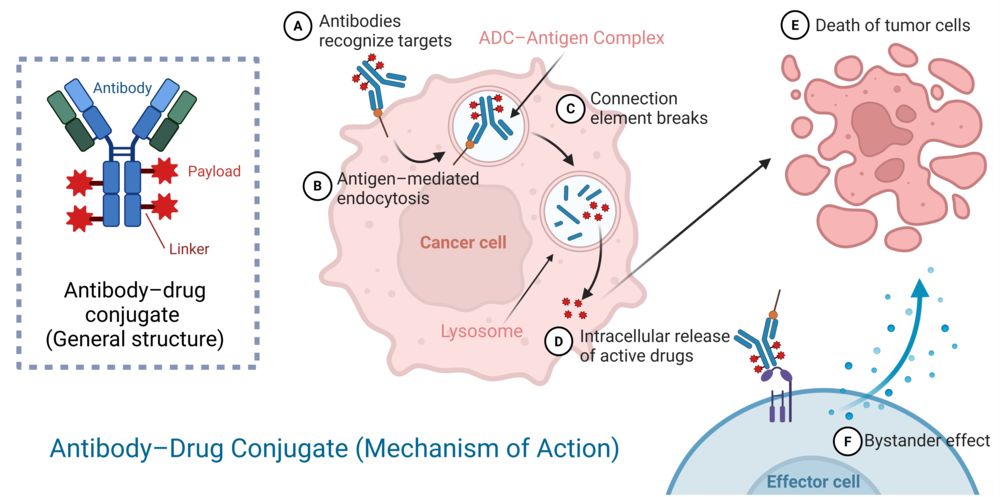
Fig.1 Time-course z-stack confocal imaging maps the spatial transport of labeled ADC candidates through a 3D tumor spheroid.1,3
FAQs about ADC Targeting & Tissue Penetration Analysis
Q: Why is tumor penetration a critical parameter in ADC targeting evaluation?
A: Solid tumors have high interstitial fluid pressure and dense extracellular matrix, which limit macromolecule penetration. Assessing penetration ensures the ADC can reach inner tumor cells, not just the periphery, to prevent recurrence.
Q: What is the advantage of using 3D multicellular tumor spheroids (MCTS) over 2D models?
A: 2D models lack extracellular matrix and cell-cell junctions. 3D spheroids mimic solid tumor architecture, oxygen/nutrient gradients, and physical barriers, providing realistic penetration and targeting data.
Q: How do you distinguish between specific tumor targeting and non-specific tissue accumulation?
A: We run dual-staining assays using antigen-positive and antigen-negative cell lines or co-cultures, alongside negative control antibodies, to subtract non-specific background binding.
Q: How long does a standard targeting profile evaluation project take?
A: A standard evaluation (including 2D/3D binding and penetration kinetics) takes 3-4 weeks. Timelines can adjust based on the complexity of cell lines or customized organoid requirements.
Q: Can you customize the 3D spheroid models with specific stromal cell types?
A: Yes. We can establish co-culture spheroids including tumor cells, fibroblasts, and immune cells (like macrophages) to better simulate the actual tumor microenvironment (TME) and its influence on targeting.
Other Pre-clinical Analysis Solutions
Related Products
Related Resources

References:
1. Canals Hernaez, Diana, et al. "Targeting a tumor-specific epitope on podocalyxin increases survival in human tumor preclinical models." Frontiers in Oncology 12 (2022): 856424. https://doi.org/10.3389/fonc.2022.856424
2. Matsuda, Y., Leung, M., Okuzumi, T., Mendelsohn, B. A Purification Strategy Utilizing Hydrophobic Interaction Chromatography to Obtain Homogeneous Species from a Site-Specific Antibody Drug Conjugate. Antibodies (Basel). 2020;9(2):16. https://doi.org/10.3390/antib9020016
3. Distributed under Open Access License CC BY 4.0, without modification.
For Research Use Only. NOT FOR CLINICAL USE.
Online Inquiry
Welcome! For price inquiries, please feel free to contact us through the form on the left side. We will get back to you as soon as possible.
