- Home
- ADC Development
- ADC In Vitro Analysis
- 3D Cell Culture for ADC Evaluation: Targeting, Penetration & Efficacy Assays
- ADC Solid Tumor Efficacy Evaluation: Assessing Direct & Bystander Killing Effects
ADC Solid Tumor Efficacy Evaluation: Assessing Direct and Bystander Killing Effects
Robust tumor cell-killing efficacy is the ultimate objective of antibody-drug conjugate (ADC) development. Creative Biolabs provides comprehensive solid tumor efficacy evaluation services using advanced 2D and 3D cell models. Our integrated analytical platforms help characterize both the direct cytotoxicity and the bystander killing effects of your antibody-drug conjugate (ADC) candidates—delivering critical data to support pre-clinical candidate selection.
Inquire About Efficacy EvaluationOverview: The Multi-Dimensional Nature of Solid Tumor Efficacy
Unlike hematological malignancies where target cells are highly accessible in circulation, solid tumors present major physical, physiological, and biological barriers. To eradicate a solid tumor mass, an ADC must execute a complex cascade of events: target binding, internalization, lysosomal degradation, and payload release. Furthermore, solid tumors frequently exhibit heterogeneous antigen expression, meaning that direct cell-killing alone is often insufficient for complete tumor eradication.
Why Bystander Killing Matters in Pre-Clinical Studies
In solid tumor indications, the overall therapeutic index of an ADC candidate is shaped by both direct and bystander mechanisms of action. Key considerations include:
- • Direct Cytotoxicity: Represents the targeted killing of antigen-positive cancer cells. This pathway requires efficient antigen-receptor internalization and subsequent lysosomal release of the active cytotoxin.
- • Bystander Killing Effect: Occurs when the active payload, once released inside the target cell, diffuses across the cell membrane into the extracellular space to kill neighboring target-negative or low-expressing tumor cells. This is crucial for overcoming tumor heterogeneity.
- • Selectivity and Potency: Establishing a high selectivity index (comparing toxicity on target-positive vs. target-negative cell lines) is essential to predict the therapeutic window before entering in vivo studies.
Comprehensive In Vitro Efficacy Assessment
Our solid tumor efficacy evaluation platform combines traditional 2D viability assays with advanced 3D spheroid co-culture models. By mixing target-positive and target-negative cells, we quantitatively distinguish and evaluate direct versus bystander killing kinetics—reproducing the cellular heterogeneity of actual clinical tumors.
Overcoming Key Hurdles in Solid Tumor Efficacy Assessment
Recapitulating the complex microenvironment and heterogeneous nature of solid tumors in vitro requires advanced cell-based assay designs. Key technical challenges include:
- ▶ Recapitulating Antigen Heterogeneity: Standard cell culture assays utilize homogeneous cell lines, which completely fail to model the survival of antigen-negative clones that escape treatment in heterogeneous solid tumors.
- ▶ Quantifying Payload Diffusion: Accurately measuring the diffusion radius and potency of released bystander payloads requires sophisticated co-culture setups and quantitative single-cell tracking.
- ▶ 2D vs. 3D Efficacy Shifts: ADCs often display significantly lower potency in 3D spheroid models compared to 2D monolayers due to physical penetration barriers, highlighting the need for 3D platform testing.
Our Solid Tumor Efficacy Evaluation Services
We provide comprehensive cell-based efficacy evaluation services designed to quantify both direct target cell death and indirect bystander transport effects:
Tailored Efficacy Solutions for Your Program
Every solid tumor indication exhibits distinct histological features, antigen densities, and stroma structures. Our evaluation services can be customized to utilize specific tumor-stroma ratios, patient-derived material, or specialized microfluidic chambers. Whether you need rapid screening of linker-payload combinations or deep, spatiotemporal mapping of bystander activity in live cleared micro-tissues, our scientific team will design the ideal assay scheme.
| Service Name | Technical Specifications | Analysis Capabilities | Service Deliverables |
|---|---|---|---|
|
Direct Potency 2D Cytotoxicity Screening Service Standardized high-throughput cytotoxicity screening to determine candidate IC50 values and selectivity index. |
• Assays: ATP-based luminescence or MTS/WST-1 viability assays. • Cell Panels: Standard tumor cell lines with validated antigen expression levels. • Controls: Unconjugated antibody and free payload controls. • Concentrations: 6-point to 10-point serial dose-response curves. |
• Dynamic range dose-response profiling • Precise IC50/IC90 value calculations • Selectivity index (SI) determination • Multi-batch stability comparisons |
• Curve-fitted dose-response graphs • Summary tables with IC50 values and SI • High-throughput screening heatmaps • Comprehensive methodology reports |
|
Bystander Killing Co-culture Bystander Efficacy Service Quantitative evaluation of payload diffusion and neighbor-cell killing using target-positive and target-negative co-cultures. |
• Setup: Co-cultures of target-positive (Ag+) and target-negative (Ag-) cells. • Labeling: Distinct fluorescent protein expression (GFP) or cell dyes. • Analysis: High-content imaging (HCI) or flow cytometry (FACS). • Payload Types: Cleavable vs. non-cleavable linker comparison. |
• Bystander killing efficiency quantification • Diffusion radius and rate determination • Target-negative cell survival mapping • Linker-payload combination optimization |
• Flow cytometry histogram gating records • Real-time or kinetic cell survival curves • Multi-color high-content cell images • Bystander efficiency index reports |
|
3D Microenvironment 3D Spheroid Efficacy Service Efficacy assessment using multicellular tumor spheroids that mimic native tissue penetration barriers and cell junctions. |
• Models: Spheroids generated using low-attachment (ULA) plates. • Composition: Tumor cells, stromal fibroblasts, or immune cells. • Readouts: Spheroid volume, cell viability (z-stack), payload transport. • Duration: Time-course monitoring (typically up to 72–96 hours). |
• 3D transport and cell-killing correlation • Depth of cytotoxicity profiling • Spheroid growth inhibition (SGI) profiling • Stromal cell impact on efficacy |
• Spheroid size and volume kinetic graphs • Confocal optical section images • 3D cell survival dose-response curves • Comparative 2D vs. 3D potency report |
|
Mechanism Apoptosis & Proliferation Assay Service Characterization of cell death mechanisms and proliferation arrest induced by the internalized payload. |
• Endpoints: Annexin V/PI staining, Caspase-3/7 activation, cell-cycle tracking. • Detection: Multi-color flow cytometry and high-content imaging. • Kinetics: Dynamic timepoint runs (12h, 24h, 48h, 72h). • Controls: Free drug-linker adducts and payload controls. |
• Mode of cell death (apoptosis vs. necrosis) • Cell-cycle arrest phase identification • Caspase cascade activation profiling • Proliferation inhibition index |
• High-resolution DNA content histograms • Annexin V quadrant gating charts • Caspase-activity kinetic profile curves • Structural-mechanism summary reports |
Specialized Preclinical Evaluations
Antigen Density Potency Profiling
Evaluation of cell-killing efficiency across cell panels with graded target expression levels. This maps the minimum antigen expression threshold required to achieve therapeutic cytotoxicity.
Patient-Derived Organoid Viability
Testing ADC cell-killing efficiency in 3D patient-derived cancer organoids (PDOs), conserving tumor phenotypic diversity and microarchitectures for highly translatable preclinical evaluation.
Vascularized Homing & Transmigration
Advanced microfluidic co-culture models evaluating the homing and extravasation of ADCs across a vascular endothelial cell barrier before reaching target cancer cells.
IND Submission-Ready Packages
Fully documented in vitro efficacy packages, including IC50 calculations, bystander indexes, and mechanism validation data, prepared according to preclinical documentation standards.
Standardized Workflow for Solid Tumor Efficacy Evaluation
We apply a strict, quality-controlled multi-phase process to guarantee accurate, reproducible cell-killing efficacy profiles:
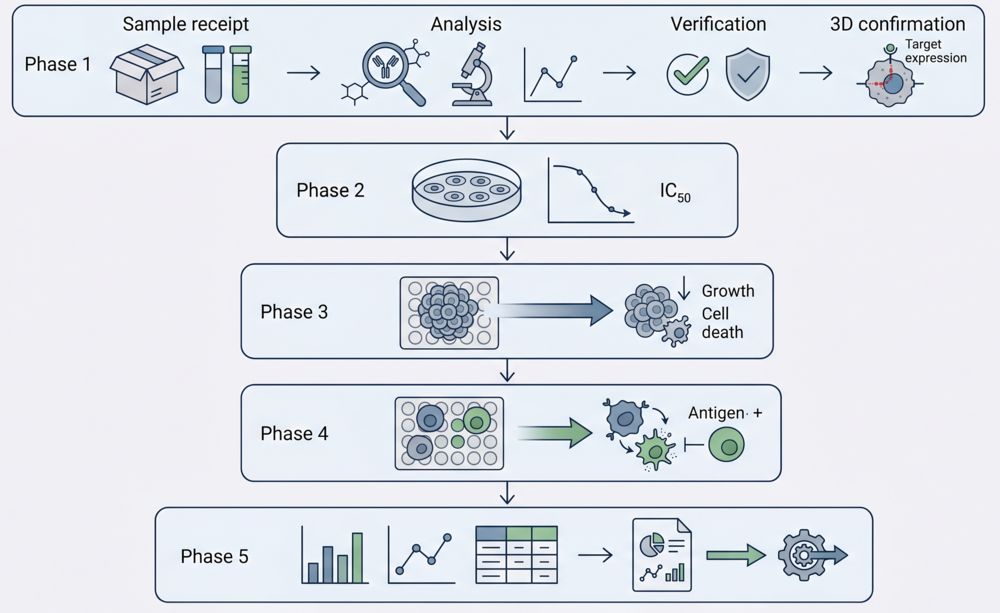
Phase 1: Cell Model Qualification & Validation
We verify target antigen expression levels (density) and binding avidity on selected tumor cell lines. Negative control lines are concurrently qualified to guarantee assay specificity and exclude off-target antibody binding.
Phase 2: High-Throughput 2D Cytotoxicity Run
Serial dilutions of your ADC candidates, unconjugated mAb, and free payload are incubated with tumor cell monolayers. Viability is quantified after 48-72 hours to generate precise dose-response curves and calculate IC50 values.
Phase 3: Co-culture Bystander Efficacy Assay
Ag+ (target-positive) and Ag- (target-negative) cells, pre-labeled with distinct fluorescent markers, are co-cultured and treated with the ADC. High-content imaging or flow cytometry tracks the specific survival rate of the Ag- cell population over time.
Phase 4: 3D Multicellular Spheroid Potency Evaluation
Heterotypic tumor spheroids containing tumor and stromal cells are treated with ADCs. Spheroid growth inhibition (SGI), cell viability z-stack profiling, and core penetration are tracked over 72-96 hours to model microenvironment barriers.
Phase 5: Mechanism Characterization & Reporting
Flow cytometric analysis of Annexin V/PI and Caspase-3/7 activation confirms apoptosis induction and cell-cycle arrest patterns. We compile all datasets into an IND-ready candidate selection report.
Advanced Platforms for Solid Tumor Efficacy Evaluation
We combine high-throughput cell viability screening with quantitative co-cultures and 3D organoid models to profile cell-killing dynamics with extreme precision:
1. High-Content Imaging (HCI) Bystander Platform
Our premier platform for spatiotemporal bystander killing tracking. By leveraging high-content fluorescence imaging, we continuously monitor the viability and migration of target-negative bystander cells in direct co-culture with target-positive cancer cells.
- • Fluorescent Discrimination: Employs stable GFP/mCherry cell tags to distinguish populations without cell scraping.
- • Spatial Transport Analysis: Computes the payload diffusion radius from target-positive hotspots to neighboring cells.
- • Automated Tracking: Microplate-based high-content systems enable rapid screening of multiple candidate linkers.
2. 3D Tumor-Stroma Spheroid Platform
Recreates the cellular and structural barriers of dense solid tumor tissues. Co-cultures of tumor cells and extracellular matrix-producing fibroblasts form uniform spheroids to evaluate transport-resistance effects on efficacy.
- • Vascular Barrier Modeling: Optional endothelial cell integration to assess extravasation alongside tissue diffusion.
- • Z-Stack Confocal Imaging: Maps cell viability and payload penetration gradients through the spheroid layers.
- • Long-Term Incubation: Cultured up to 96 hours to assess sustained payload release and core cell-killing efficacy.
3. Multiparameter Flow Cytometry (FACS) Platform
Provides single-cell resolution to profile cell death mechanisms and cell-cycle arrest patterns. This platform is essential for validating the intracellular mechanism of action of your ADC's active payload.
- • Apoptosis Gating: Precise quantification of early/late apoptotic vs. necrotic populations via Annexin V/PI.
- • DNA Content Tracking: Tracks cell-cycle arrest (e.g., G2/M arrest for microtubule inhibitors) in target cells.
- • Caspase Cascade Profiling: Measures Caspase-3/7 cleavage kinetics to confirm apoptotic pathway activation.
4. Patient-Derived Organoid (PDO) Platform
The most translatable in vitro efficacy platform available. Fresh or frozen patient-derived cancer organoids preserve the genomic profile, histological features, and cellular heterogeneity of individual patient tumors.
- • Heterogeneous Architecture: Recapitulates patient-specific differentiation states and target antigen expression.
- • Clinical Translation: Highly predictive of in vivo xenograft outcomes and clinical patient response.
- • Efficacy Profiling: Quantitative viability imaging provides high-fidelity candidate ranking for solid tumor indications.
Why Choose Our Solid Tumor Efficacy Evaluation Services?
Quantitative Bystander Assays
We use dual-fluorescent co-cultures and high-content imaging to quantitatively separate and profile direct targeted cytotoxicity from passive bystander killing effects.
Physiologically Relevant 3D Models
Our platform includes tumor-stroma co-culture spheroids and patient-derived organoids (PDOs) that preserve native physical barriers and cellular junctions for realistic transport and efficacy prediction.
Mechanistic Apoptosis Depth
Beyond simple IC50 determination, we provide detailed flow cytometric characterization of apoptotic pathways, caspase kinetics, and cell-cycle arrest to validate payload mechanism.
Streamlined Preclinical Timelines
Our standardized assay workflows and dedicated cellular biology team deliver comprehensive solid tumor efficacy evaluation reports within 3-4 weeks to accelerate lead selection.
Research Insights: Overcoming Antigen Heterogeneity via Optimized Bystander Killing
Recent advances in ADC efficacy profiling have confirmed that relying solely on direct tumor-cell killing often leads to clinical relapse in solid tumors due to heterogeneous antigen expression. According to Canals Hernaez et al. (2022), ADCs carrying membrane-permeable payloads can successfully overcome this barrier by executing a robust bystander killing effect, diffusing out of primary target cells to eliminate neighboring antigen-negative tumor cells.
Key Insights from Pre-clinical Solid Tumor Research:
- • Payload Hydrophobicity is Key: Payloads with optimized hydrophobicity (e.g., MMAE, DXd) readily cross cell lipid bilayers after lysosomal release, enabling bystander killing, whereas hydrophilic payloads (e.g., MMAF) remain trapped inside the primary target cell.
- • Target-Negative Clearance: In heterogeneous tumor models, co-cultures treated with bystander-capable ADCs demonstrate high clearance rates of target-negative cells, which would otherwise drive tumor resistance and recurrence.
- • Tissue-Penetration Synergy: High-affinity binders often trap ADCs at the tumor periphery. Combining moderate binding affinity with robust bystander release provides optimal therapeutic outcomes in dense solid tumors (Matsuda et al., 2020).
These findings highlight the necessity of characterizing bystander kinetics in heterogeneous 3D cell models during early-stage preclinical development.
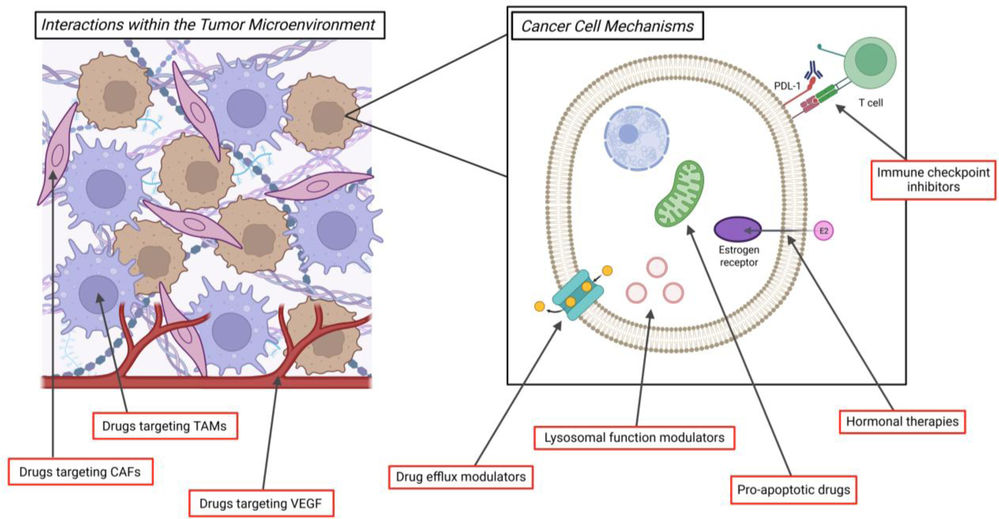
Fig.1 Time-course high-content imaging tracks the spatial diffusion and cytotoxic action of released bystander payloads through co-culture spheroids.1,3
FAQs about ADC Solid Tumor Efficacy Evaluation
Q: What is the difference between direct and bystander killing in ADC therapy?
A: Direct killing occurs when the ADC binds to target-positive tumor cells, undergoes internalization, and releases its cytotoxic payload to kill that cell. Bystander killing occurs when the released membrane-permeable payload diffuses out of the target cell to kill neighboring target-negative or low-expressing tumor cells, helping to overcome antigen heterogeneity.
Q: Why are 3D cell culture models essential for solid tumor efficacy evaluation?
A: 3D models like spheroids or organoids recapitulate dense tumor cell-cell junctions, oxygen/nutrient gradients, and extracellular matrix barriers. This allows researchers to evaluate drug transport, penetration limits, and bystander payload diffusion in a physiologically relevant environment that 2D monolayers cannot mimic.
Q: How do you quantitatively distinguish between direct and bystander killing effects?
A: We establish co-culture assays mixing target-antigen-positive and target-antigen-negative cells labeled with distinct fluorescent markers. Flow cytometry or high-content imaging is then used to track and quantify the survival rate of each individual population separately over time.
Q: What type of payloads are capable of mediating bystander killing effects?
A: Uncharged, hydrophobic payloads such as MMAE, DXd, or DM21 can easily cross the lipid bilayer membrane after release to mediate bystander killing. In contrast, highly charged or hydrophilic payloads (e.g., MMAF) are trapped inside the target cell and do not exert bystander effects.
Q: How much ADC sample is required for a complete solid tumor efficacy study?
A: For a complete solid tumor efficacy package (including 2D/3D viability, co-culture bystander assays, and confocal tracking), we typically require 200-500 μg of purified ADC. Lower amounts may be sufficient depending on the specific assay combinations selected.
Other Pre-clinical Analysis Solutions
Related Products
Related Resources

References:
1. Canals Hernaez, Diana, et al. "Targeting a tumor-specific epitope on podocalyxin increases survival in human tumor preclinical models." Frontiers in Oncology 12 (2022): 856424. https://doi.org/10.3389/fonc.2022.856424
2. Matsuda, Y., Leung, M., Okuzumi, T., Mendelsohn, B. A Purification Strategy Utilizing Hydrophobic Interaction Chromatography to Obtain Homogeneous Species from a Site-Specific Antibody Drug Conjugate. Antibodies (Basel). 2020;9(2):16. https://doi.org/10.3390/antib9020016
3. Distributed under Open Access License CC BY 4.0, without modification.
For Research Use Only. NOT FOR CLINICAL USE.
Online Inquiry
Welcome! For price inquiries, please feel free to contact us through the form on the left side. We will get back to you as soon as possible.
