- Home
- Resources
- Featured Solutions
- One-Stop ADC Development Solution
- ADC In Vitro Analysis Solution
- ADC In Vivo Analysis Solution
- Preclinical ADC Safety Assessment & Toxicology Services
Preclinical ADC Safety Assessment & Toxicology Services
Antibody-drug conjugates (ADCs) represent a structurally complex therapeutic modality in which three distinct components — monoclonal antibody, chemical linker, and cytotoxic payload — each contribute uniquely to the overall safety profile. This tripartite complexity demands specialized pre-clinical safety evaluation strategies that go beyond conventional small-molecule or biologic assessments. Creative Biolabs provides an integrated safety assessment platform covering toxicological screening, tissue cross-reactivity studies, immunogenicity profiling, and comprehensive histopathological analysis.
Inquire for Pre-clinical Safety SupportOverview: Multi-Dimensional Safety Evaluation for ADC Candidates
Pre-clinical safety assessment of antibody-drug conjugates requires a systematic approach that addresses target-mediated toxicity, off-tissue binding risks, immunogenic potential, and payload-related adverse effects simultaneously. Unlike conventional biotherapeutics, ADC safety evaluation must account for the dynamic interplay between antibody targeting specificity, linker stability, payload potency, and bystander effect mechanisms. Our assessment framework integrates four core pillars to deliver a holistic safety profile for your pre-clinical ADC candidates.
Core Pillars of ADC Safety Assessment
Toxicological Screening: We conduct single-dose acute toxicity, repeat-dose toxicity (14-day, 28-day, and 90-day regimens), and chronic toxicity evaluations across rodent and non-rodent species. Each study incorporates multi-analyte bioanalysis including total antibody ELISA, conjugated ADC ELISA, unconjugated payload LC-MS/MS quantification, and anti-drug antibody (ADA) bridging assays to establish exposure-toxicity relationships.
Tissue Cross-Reactivity (TCR) Studies: Following FDA guidance recommendations, our TCR screening covers 33 human tissue types in triplicate using immunohistochemical (IHC) staining on formalin-fixed paraffin-embedded (FFPE) specimens. Preliminary screens inform whether full-panel evaluation is warranted, optimizing resource allocation while maintaining regulatory compliance.
Immunogenicity & ADA Profiling: Anti-drug antibody responses can alter ADC clearance kinetics, compromise target engagement, and induce hypersensitivity reactions. Our tiered immunogenicity assessment includes screening, confirmatory, and titer determination assays alongside neutralizing antibody characterization to fully map the immunogenic risk landscape.
Histopathological Analysis: Comprehensive post-mortem evaluation including organ weight measurements, gross pathology documentation, microscopic examination by board-certified veterinary pathologists, and supplementary IHC staining where indicated. All analyses are conducted with IACUC oversight and full ethical compliance.
Assessment Scope Comparison
| Evaluation Dimension | Key Parameters | Animal Models |
|---|---|---|
| Toxicokinetics Exposure | Total Ab / Conjugated ADC / Free payload concentrations; Cmax, AUC, T1/2; DAR drift monitoring | Rodent (mouse, rat); Non-rodent (cynomolgus monkey) |
| Tissue Cross-Reactivity | 33 human tissues (triplicate); preliminary + full panel options; IHC scoring system | Human tissue microarrays; Animal tissue banks (NHP, canine, rabbit) |
| Immunogenicity Risk | ADA screening (bridging ELISA); confirmatory assay; titer; neutralizing antibody (NAb) | Species-matched to toxicology study design |
| Histopathology | Organ weights; gross necropsy; H&E staining; targeted IHC; pathology report | Rodent and non-rodent species per study protocol |
Key Challenges in Pre-clinical ADC Safety Evaluation
The unique structural and pharmacological properties of ADCs introduce distinct challenges that differentiate their safety assessment from both traditional chemotherapeutics and naked monoclonal antibodies:
- ▶ Target-Mediated Toxicity Complexity: On-target/off-tumor binding can cause toxicity in antigen-expressing normal tissues. Distinguishing target-dependent from payload-independent adverse effects requires sophisticated experimental designs including isotype control conjugates and antigen-negative animal models.
- ▶ Off-Target Binding & Bystander Effects: Payload release in non-target tissues due to linker instability or nonspecific cellular uptake creates unpredictable safety signals that standard tissue distribution studies alone cannot fully characterize without complementary histopathological correlation.
- ▶ Immunogenicity-PK Interaction: ADA formation against either the antibody component or the conjugate as a whole can accelerate clearance, reduce efficacy, or precipitate infusion-related reactions. Capturing this interaction requires longitudinal sampling integrated within repeat-dose toxicity studies.
- ▶ Species Relevance Translation: Target expression patterns often differ between pre-clinical species and humans, complicating the extrapolation of findings. Careful selection of pharmacologically relevant species combined with thorough TCR data is essential for meaningful risk projection.
Our Integrated Safety Assessment Solutions
Creative Biolabs offers a comprehensive service matrix designed to address each dimension of ADC-specific safety concerns during the pre-clinical development phase. Below is our solution portfolio structured by evaluation domain:
| Service Module | Scope & Deliverables | Methods & Instrumentation |
|---|---|---|
|
Core Module In Vivo Toxicological Screening Single-dose, repeat-dose (14-/28-/90-day), and chronic toxicity studies with integrated clinical observations, body weight tracking, food consumption monitoring, ophthalmic examination, and urinalysis. |
• Dose range finding (DRF) and maximum tolerated dose (MTD) establishment • Toxicokinetic (TK) sampling schedule aligned with PD endpoints • Clinical observation dataset with IACUC oversight • Study report with NOAEL determination |
• Multi-Analyte LBA Platform: Total Ab, conjugated ADC, and free payload quantification • LC-MS/MS Suite: Unconjugated payload and metabolite detection at sub-ng/mL sensitivity • Vital Signs Monitoring: Continuous telemetry-capable systems |
|
Regulatory-Focused Tissue Cross-Reactivity Program FDA-guidance-aligned TCR evaluation covering 33 human tissue types in triplicate, with optional extended panels for specific target families. Both preliminary screen and full GLP-compliant study formats available. |
• Preliminary single-replicate screen for cost-efficient go/no-go decisions • Full 33-tissue triplicate panel under GLP compliance • Staining optimization and antibody titration validation • Board-certified pathologist evaluation report with digital image archive |
• IHC Staining Platform: Automated Ventana/Bond systems with validated protocols • Tissue Microarray Library: Human, NHP, canine, rabbit, and rodent FFPE banks • Digital Pathology: Whole-slide imaging with quantitative scoring |
|
Immunology Immunogenicity & ADA Assessment Three-tier immunogenicity strategy covering screening, confirmation, titer characterization, and neutralizing antibody (NAb) evaluation to detect and quantify anti-drug antibody responses throughout the dosing period. |
• Tiered approach: Screen → Confirm → Titer → NAb • Cut-point establishment with statistical rigor • Longitudinal ADA impact analysis on PK parameters • Hypersensitivity reaction surveillance integration |
• Bridging ELISA Platform: High-sensitivity ADA detection (drug-tolerant format available) • Cell-Based NAb Assay: Reporter gene or ligand-binding competition formats • Surface Plasmon Resonance (SPR): Epitope mapping and affinity characterization |
|
Pathology Comprehensive Histopathology Full necropsy and histopathological examination by certified veterinary pathologists, including organ weight analysis, gross lesion documentation, H&E evaluation, and targeted special stains or IHC as indicated by findings. |
• Complete organ weight dataset (absolute and relative to body/brain weight) • Detailed gross pathology description with photography • Microscopic examination with standardized terminology (INHAND) • Integrated histopathology-toxicokinetic correlation report |
• Histology Laboratory: Routine and special staining capabilities (H&E, PAS, trichrome) • Targeted IHC Panel: Custom marker panels for mechanism-of-action correlation • Tissue Archiving: FFPE blocks and frozen specimens available upon request |
Structured Workflow for ADC Safety Assessment Programs
Our standardized process ensures scientific rigor, regulatory alignment, and efficient project execution from initial consultation through final reporting:
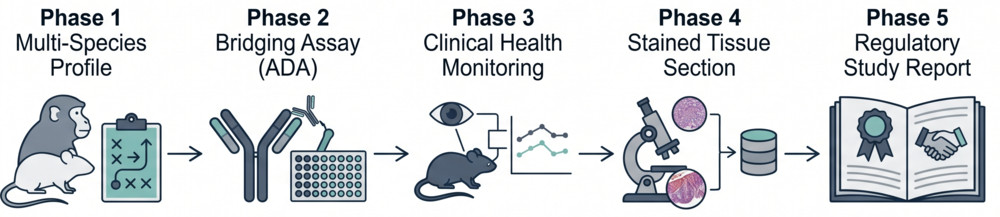
Phase 1: Project Design & Species Selection
We work closely with your team to define study objectives, select pharmacologically relevant species based on target cross-reactivity data, determine dose levels and administration route, and establish whether GLP compliance is required. For TCR studies, we evaluate preliminary vs. full panel needs based on target biology and available reagent quality.
Phase 2: Method Development & Validation
Bioanalytical methods for TK (total antibody, conjugated ADC, free payload) and immunogenicity (ADA bridging ELISA) are developed and qualified. For IHC-based TCR assays, we optimize antibody concentration, antigen retrieval conditions, and establish staining scoring criteria using positive and negative tissue controls.
Phase 3: In Vivo Study Execution
Toxicology studies are conducted under IACUC-approved protocols with continuous clinical observation. Blood collection follows a pre-defined TK sampling schedule. Terminal procedures include complete necropsy with organ weight recording and tissue collection for histopathology. Animals are monitored for body weight changes, food consumption, clinical signs, and any mortality/morbidity events.
Phase 4: Laboratory Analysis & Data Integration
All samples undergo bioanalytical testing (LBA, LC-MS/MS, ADA), tissue processing (embedding, sectioning, staining), and microscopic examination. Data streams — toxicokinetic exposure parameters, clinical observations, organ weights, and histopathology findings — are integrated into a unified database for correlation analysis.
Phase 5: Reporting & Consultation
A comprehensive study report is delivered including raw data, statistical summaries, individual animal narratives, and integrated interpretation. For GLP studies, reports follow applicable regulatory formatting requirements. A consultative session with our study director is included to discuss findings, address questions, and plan next steps for your pre-clinical program.
Technology Platforms Supporting ADC Safety Assessment
Our safety assessment infrastructure integrates multiple analytical platforms to capture the full spectrum of ADC-specific safety parameters:
1. Multi-Analyte Bioanalytical Platform
A cornerstone capability for ADC safety studies, enabling simultaneous quantification of three critical analytes from the same biological matrix: total antibody (TAb), antibody-conjugated ADC (acAb), and unconjugated free payload. This multi-analyte approach is essential for understanding exposure-response relationships because each analyte contributes differently to efficacy and toxicity outcomes. Our platform combines ligand-binding assays (LBA) for antibody-related analytes with LC-MS/MS for small-molecule payloads, providing a complete exposure profile at every timepoint.
- • Total Antibody ELISA: Captures all circulating antibody regardless of drug-loading status, establishing baseline exposure.
- • Conjugated ADC ELISA: Specifically detects drug-bearing antibody species, informing on therapeutically active exposure.
- • Payload LC-MS/MS: Quantifies free (unconjugated) payload at high sensitivity, detecting premature linker cleavage or systemic release.
- • Drug-Tolerant ADA Assays: Enables immunogenicity monitoring even in the presence of high circulating drug concentrations.
2. Tissue Cross-Reactivity IHC Platform
Our dedicated IHC laboratory performs tissue cross-reactivity screening following regulatory guidance documents. The platform supports automated staining workflows, whole-slide digital imaging, and quantitative scoring by board-certified pathologists. Our established tissue bank includes human, non-human primate, canine, rabbit, and rodent FFPE specimens, with proper ethical sourcing and commercial research consent documentation.
- • Automated Staining Systems: Ventana and Leica Bond platforms ensuring reproducibility and throughput consistency.
- • 33-Tissue Standard Panel: Covers cardiovascular, respiratory, gastrointestinal, urogenital, endocrine, nervous, immune, integumentary, and special sense organs.
- • Triplicate Testing Format: Each tissue type evaluated in triplicate per FDA recommendation for robustness.
- • Preliminary Screening Option: Cost-effective single-replicate screen before committing to full GLP panel.
3. Immunogenicity Detection & Characterization Suite
A comprehensive three-tier immunogenicity framework designed specifically for the complexities of ADC molecules, where both the protein component and the hapten-like conjugate can elicit immune responses. Our suite addresses the unique challenge of detecting ADAs in the presence of high circulating drug concentrations through acid-dissociation and drug-tolerant assay formats.
- • Screening Bridging ELISA: High-sensitivity detection of antibodies capable of bridging drug-labeled capture and detection reagents.
- • Confirmatory Competition Assay: Specificity verification through excess drug competition to eliminate false positives.
- • Neutralizing Antibody (NAb) Cell-Based Assay: Functional characterization of ADA capacity to interfere with target binding or biological activity.
- • Longitudinal Integration: ADA data correlated with PK profiles across all repeat-dose timepoints to assess clinical impact.
4. Histopathology & Digital Pathology Unit
Staffed by board-certified veterinary pathologists with extensive experience in ADC and oncology therapeutic evaluation. The unit provides complete gross-to-microscopic pathology services with digital archiving capabilities for retrospective review and regulatory submission support.
- • Standardized Terminology: Findings reported using INHAND (International Harmonization of Nomenclature and Diagnostic Criteria) guidelines.
- • Mechanism-Focused IHC: Targeted immunohistochemistry to correlate histologic lesions with target expression, apoptosis markers, or proliferation indices.
- • Whole-Slide Imaging: High-resolution digital scans enabling remote review, second-opinion consultation, and submission-ready image archives.
- • GLP-Compliant Documentation: Full audit trail, raw data retention, and QA oversight for regulated studies.
Why Choose Our ADC Safety Assessment Services?
Integrated Multi-Domain Approach
Unlike fragmented outsourcing models, we provide toxicology, TCR, immunogenicity, and pathology under one coordinated program. This ensures consistent methodology, unified timeline management, and seamless data integration across all safety dimensions — accelerating decision-making for your pre-clinical candidate.
Flexible GLP & Non-GLP Framework Options
We recognize that not every stage of pre-clinical development requires GLP-level investment. Our dual-track offering allows early-stage discovery projects to proceed efficiently under non-GLP standards while providing a clear pathway to GLP-compliant studies when regulatory submission approaches, optimizing budget allocation across your development timeline.
Comprehensive Tissue Repository & Species Coverage
Our established tissue bank spanning human, NHP, canine, rabbit, and rodent species enables rapid study initiation without the delays associated with custom tissue procurement. All human tissues are ethically sourced with documented commercial research consent, aligning with current regulatory expectations for TCR study conduct.
ADC-Specific Scientific Expertise
Our teams bring focused experience in the unique safety considerations of antibody-drug conjugates — from understanding DAR heterogeneity effects on toxicity profiles to interpreting complex PK/PD relationships involving multiple circulating analytes. This specialized knowledge translates into better study design, more informative results, and fewer protocol amendments.
Research Insights: Advances in ADC Safety Science
Recent literature has significantly advanced our mechanistic understanding of ADC-associated toxicities, enabling more predictive pre-clinical safety study designs. According to Chen et al. in Molecular Cancer, the field has moved toward recognizing distinct toxicity categories — target-mediated, off-target mediated by payload release, and Fc-effector function related — each requiring tailored mitigation strategies during pre-clinical development. Concurrently, Mak et al. emphasized in Scientific Reports that integrating immunogenicity assessment earlier in the ADC development pipeline substantially improves the translational accuracy of pre-clinical safety predictions.
Emerging Themes in ADC Safety Research:
- • Target-Mediated Toxicity Deconvolution: Modern approaches utilize antigen-knockout animal models and isotype-control conjugates to isolate target-dependent from payload-driven toxicities, enabling more accurate human risk projections.
- • Linker Stability as a Safety Determinant: Growing evidence positions premature payload release in circulation as a primary driver of off-target toxicities such as neutropenia and hepatotoxicity. Systematic linker stability benchmarking in serum and lysosomal conditions is now considered essential for candidate prioritization.
- • ADA Impact on Clearance Kinetics: Well-characterized ADA responses can reduce ADC half-life by 50–80%, fundamentally altering exposure profiles. Drug-tolerant assay formats and longitudinal integration of ADA/PK data are increasingly recognized as best practice.
- • Bystander Effect Considerations: Membrane-permeable payloads released after target cell internalization can affect neighboring antigen-negative cells. In vitro co-culture models incorporating this phenomenon provide additional safety context beyond standard cytotoxicity screens.
These evolving frameworks underscore the importance of a multidimensional safety assessment strategy that goes beyond conventional toxicology endpoints to address the unique pharmacological behavior of ADCs in pre-clinical models.
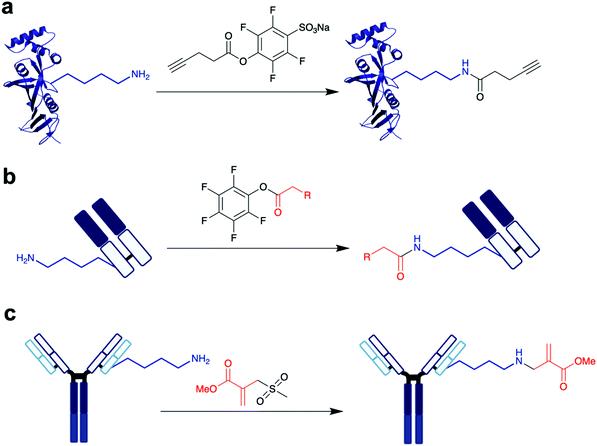
Fig.1 Strategies to improve ADC precision and delivery for enhanced therapeutic efficacy.1, 3
FAQs about ADC Safety Assessment
Q: What makes ADC safety assessment different from evaluating a naked monoclonal antibody?
A: ADCs require evaluation of additional safety dimensions driven by the cytotoxic payload component. Beyond standard antibody-related assessments (target binding, Fc effector function), ADC safety programs must quantify free payload exposure, assess off-tissue toxicity from premature linker cleavage, monitor DAR heterogeneity effects on distribution, and evaluate bystander activity potential. Multi-analyte bioanalysis (total antibody, conjugated ADC, and free payload) replaces simple concentration measurements, and histopathology must be interpreted in the context of both target-mediated and payload-mediated mechanisms of injury.
Q: What animal models do you use for ADC toxicology studies?
A: Species selection is guided primarily by target cross-reactivity data from our TCR program. For targets expressed in rodents, we typically employ mouse and/or rat models for initial screening, followed by a pharmacologically relevant non-rodent species (most commonly cynomolgus monkey) for pivotal repeat-dose studies. When the target lacks rodent cross-reactivity, transgenic or surrogate-approach models may be utilized. We advise on optimal model selection during the Phase 1 consultation based on your specific target biology.
Q: Can you perform studies under GLP compliance?
A: Yes. We offer both GLP-compliant and non-GLP study options across all service modules including toxicology, tissue cross-reactivity, immunogenicity, and histopathology. Non-GLP formats are ideal for early-stage discovery programs requiring rapid turnaround and cost efficiency, while GLP-compliant studies meet regulatory expectations for IND-enabling packages. Many clients begin with non-GLP proof-of-concept studies and transition to GLP for pivotal evaluations as candidates advance toward nomination.
Q: What is the typical timeline for a complete ADC safety assessment package?
A: Timelines vary significantly depending on scope, species, and GLP status. A standalone 28-day repeat-dose toxicology study in rodents typically requires 10–14 weeks from study initiation to draft report. TCR preliminary screens can be completed in 3–4 weeks, while full GLP-compliant 33-tissue triplicate panels generally require 6–8 weeks. For integrated packages combining toxicology, ADA, and histopathology, we recommend planning a minimum of 16–24 weeks for non-GLP programs and 24–36 weeks for GLP-compliant packages, accounting for method development, in-life phase, laboratory analysis, and reporting.
Q: What deliverables are included in the final safety assessment report?
A: Our comprehensive study report includes: study protocol with any amendments, raw analytical data (TK, ADA, clinical pathology), individual animal records with clinical observations and body weight trajectories, complete tabulated organ weight data, gross and microscopic pathology descriptions with diagnostic interpretations, integrated summary of findings correlating exposure parameters with observed toxicities, conclusion with NOAEL/NOEL determinations where applicable, and for GLP studies, full QA statement and audit trail documentation. All IHC images from TCR studies are provided digitally, and tissue blocks/slides can be retained or shipped upon request.
Case Study on ADC Safety Assessment
Related Products
Related Resources


References:
1. Chen, Bonan, et al. "Antibody–drug conjugates in cancer therapy: current landscape, challenges, and future directions." Molecular Cancer 24.1 (2025): 279. https://doi.org/10.1186/s12943-025-02489-2
2. Mak, Shi Ya, et al. "A simple and highly sensitive LC–MS workflow for characterization and quantification of ADC cleavable payloads." Scientific Reports 14.1 (2024): 11018.https://doi.org/10.1038/s41598-024-61522-4.
3. Distributed under Open Access License CC BY 4.0, without modification.
For Research Use Only. NOT FOR CLINICAL USE.
Online Inquiry
Welcome! For price inquiries, please feel free to contact us through the form on the left side. We will get back to you as soon as possible.
