- Home
- Resources
- Featured Solutions
- One-Stop ADC Development Solution
- ADC In Vitro Analysis Solution
The Critical Role of In Vitro ADC Analysis
In vitro analysis of Antibody-Drug Conjugates (ADCs) serves as the crucial bridge between ADC design and in vivo studies. At this stage, we not only confirm the successful construction of the ADC molecule but also systematically address a series of core questions.
- Is its structure stable?
- Can it accurately identify and bind to cancer cells?
- Can it effectively release its payload?
- What is its potential toxicity?
A comprehensive in vitro analysis enables the early identification of potential issues, preventing the investment of resources into ineffective or unsafe candidates and forming the cornerstone of a successful ADC development program.
Comprehensive In Vitro ADC Characterization & Efficacy Services
Biochemical and Structural Characterization
Before an ADC can exert its effect, we must first verify its identity and quality. This suite of assays is designed to fully assess the physicochemical properties of the ADC molecule.
Drug-to-Antibody Ratio (DAR) Determination
Precise measurement of the number of drug molecules conjugated to each antibody, a critical parameter influencing ADC efficacy and toxicity.
Stability Analysis
Evaluation of ADC stability in physiological mimics like human serum to ensure the payload does not prematurely detach before reaching the target.
Aggregation Analysis
Detection and quantification of aggregates that may form during storage and handling, mitigating potential immunogenicity risks.
Conjugation Sites Analysis
Accurate identification of the specific conjugation sites of the payload on the antibody via peptide mapping or mass spectrometry.
Structural Analysis
Assessment of the impact of drug conjugation on the antibody's higher-order structure using techniques like circular dichroism (CD).
Robust In Vitro Efficacy and Potency Testing
The core of this section is to verify that the ADC can effectively and specifically kill target cells.
Binding Affinity Analysis
Precise measurement of the association and dissociation rates of the ADC to its target antigen using technologies like SPR/BLI.
Cytotoxicity Assays
Dose-dependent cell-killing experiments across a panel of tumor cell lines to determine IC50 values and assess the fundamental potency of the ADC.
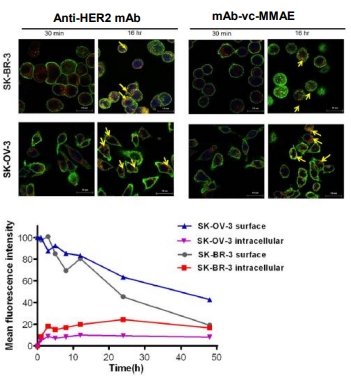
Internalization Assays
Direct visualization and quantification of ADC uptake by target cells using high-content imaging or flow cytometry.
Bystander Effect Evaluation
Study of the ability of the payload to kill neighboring antigen-negative tumor cells, critical for treating heterogeneous tumors.
ADCC and CDC Assays
Assessment of whether the antibody can trigger Antibody-Dependent Cell-mediated Cytotoxicity (ADCC) and Complement-Dependent Cytotoxicity (CDC).
Advanced 3D Model-Based ADC Evaluation
To better mimic the true performance of drugs in the human body, we offer advanced evaluation services based on 3D cell models: ADC Targeting Profile, ADC Tumor Penetration, ADC Solid Tumor Efficacy.
Tumor Spheroid Models
Evaluation of ADC penetration and killing efficacy in 3D structures that more closely resemble the actual tumor microenvironment.
Organoid Models
Use of patient-derived organoids for testing, providing more personalized and clinically relevant efficacy data.
Our Advanced Technologies for ADC Analysis
SPR / BLI
This technology enables real-time, label-free monitoring of molecular interactions. In ADC analysis, we use it to precisely measure the binding affinity (KD) and kinetics (ka/kd) of the antibody component to its target antigen, providing the gold standard for assessing an ADC's targeting specificity and binding strength.
High-Content Imaging (HCI)
HCI combines automated microscopy with intelligent image analysis to simultaneously capture multiple parameters from individual cells. We leverage HCI to visualize ADC internalization, subcellular localization, and quantitatively analyze various cellular phenotypes like apoptosis and DNA damage, offering far richer efficacy data than traditional methods.
Flow Cytometry
Flow cytometry is a powerful tool for rapid, multi-parameter, quantitative analysis of cells. For ADCs, it is widely used to measure target antigen expression levels, analyze cell cycle changes, precisely quantify different modes of cell death (apoptosis vs. necrosis), and assess the killing selectivity of an ADC against specific cell subpopulations.
Our Streamlined & Transparent ADC Analysis Workflow
Design
QC
Execution
Analysis
Reporting
Support
Consultation & Strategy Design
Our Ph.D.-level experts engage in in-depth discussions to understand your research goals and tailor the most suitable in vitro analysis plan.
Sample Reception & QC
You provide the ADC sample and related materials to our lab, where we perform stringent reception and initial quality control checks.
Assay Execution
Our experienced team executes all biochemical and cell-based assays according to the established plan.
Data Analysis & Interpretation
We conduct systematic processing and scientific interpretation of the raw data to uncover its underlying biological significance.
Comprehensive Reporting
We deliver a detailed, publication-quality report containing all methods, raw data, analyzed results, and a project summary.
Post-Delivery Support
We continue to provide ongoing technical support and answer any questions after the project is completed.
Why Choose Creative Biolabs?
One-Stop Solution
We offer a full spectrum of services, from biochemical characterization to complex 3D model efficacy testing.
Deep Expertise
Our team possesses over a decade of R&D experience in the ADC field with a profound understanding of these drugs.
State-of-the-Art Platforms
We invest in the latest instrumentation to ensure your project benefits from the highest quality and most reliable data.
Highly Customized Service
We flexibly design unique experimental plans based on your specific molecule and research needs.
Antibody Solutions Trusted by Leading Researchers










What Our Clients Say
Case Studies
Antibody Internalization Assay
With the success of these case studies, various approaches have been proven helpful in detecting internalization efficiency and are elucidated in this brochure.
- Case 1: Internalization of anti-HER2 mAb-vc-Toxin
- Case 2: Trafficking of anti-HER2 mAb and anti-HER2 mAb-vc-MMAE
- Case 3: Internalization kinetics of anti-Trop mAb-vc-auristatin
Anti-HER2 ADC Preparation & Potency Evaluation
This case study delves into key aspects such as optimized strategies for HER2 antibody selection, linker-payload conjugation techniques, in vitro and in vivo potency assessment data, and solutions to challenges encountered during development.
- Introduction
- Materials and Methods
- Results
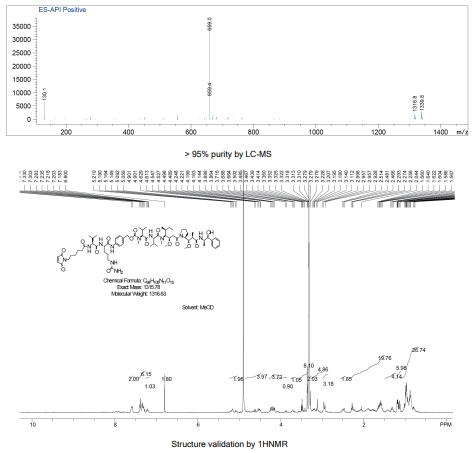
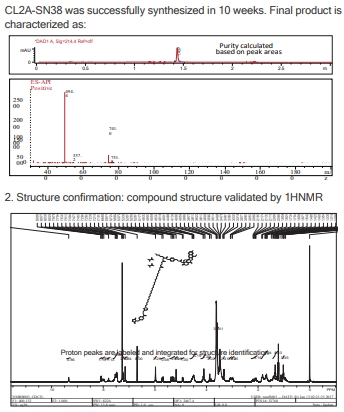
Custom Synthesis of ADC Linker-payload SET
Presented here is a case study for the synthesis of two customized payload-linker complexes via the "DrugLnk" organic synthesis services, ranging from traditional payloads to novel warheads.
- Introduction
- SN38: a novel payload for ADC development
- Case 1: Mc-vc-PAB-SN38
- Case 2: CL2A-SN38
FAQs About ADC In Vitro Analysis Services
Q: What materials do I need to provide to start a project?
A: Typically, you will need to provide a sufficient amount of purified ADC (usually in the mg range, depending on the scope), information on the parent antibody/payload (if disclosable), and your primary research objectives.
Q: Can you test my specific, proprietary tumor cell line?
A: Absolutely. In addition to our extensive library of common cell lines, we can work with cell lines provided by you or custom-culture specific lines to perform all relevant assays.
Q: How do you ensure the confidentiality of my ADC molecule?
A: We treat client intellectual property with the utmost importance. We execute a legally binding Non-Disclosure Agreement (NDA) before any project begins and strictly compartmentalize project information internally to ensure your data is secure.
Q: How long does a standard in vitro analysis package usually take?
A: The timeline depends on the specific services requested. A standard project including biochemical characterization and cytotoxicity assays can typically be completed within 4-6 weeks. More complex projects (e.g., involving 3D models) may require more time.
Q: What is included in the final report?
A: You will receive a highly detailed PDF report that includes: a project overview, detailed standard operating procedures (SOPs), instrument parameters, all raw data, graphed and statistically analyzed results, a scientific interpretation of the findings, and a clear project conclusion.
Featured Products

Featured Resources

For Research Use Only. NOT FOR CLINICAL USE.
Online Inquiry
Welcome! For price inquiries, please feel free to contact us through the form on the left side. We will get back to you as soon as possible.
